

You wouldn't use a butter knife to chop vegetables, so why use outdated mitts to handle 500°F heat? The tools you use have a direct impact on your safety and efficiency in the kitchen. While classic fabric mitts have their place, they have serious limitations when it comes to high-heat cooking, hygiene, and grip. That’s why so many culinary enthusiasts have made the permanent switch to silicone oven gloves. They provide a reliable barrier against extreme temperatures, a secure grip on even the slickest surfaces, and are incredibly easy to keep clean. This guide will walk you through our top picks and essential features to look for.
Key Takeaways
- Silicone Offers Superior Protection: Unlike fabric mitts that become dangerous when wet, silicone gloves are waterproof, preventing steam burns. They provide reliable high-heat resistance and a non-slip grip for confident handling of heavy pans.
- Check the Specs Before You Buy: To find the right pair, verify the temperature rating meets your cooking needs, ensure a textured surface for a secure grip, and choose a longer design for crucial forearm protection when reaching into hot ovens.
- Enjoy Effortless Cleanup and Food-Safe Handling: Silicone’s non-porous surface resists stains and is often dishwasher-safe. Look for food-grade, BPA-free gloves so you can safely handle hot foods directly, from shredding pork to steadying a roast.
What Are Silicone Oven Gloves?
If you've ever hesitated before grabbing a screaming-hot cast iron skillet or a pizza stone fresh from a 500°F oven, you know that not all heat protection is created equal. Enter silicone oven gloves. Think of them as the modern, high-performance upgrade to the quilted cloth mitts you grew up with. These gloves are specifically designed to give you a serious defense against high temperatures while offering way more dexterity and a better grip than a bulky mitt.
Unlike fabric, which can get stained, scorched, or become useless when wet, silicone is a non-porous, waterproof material. Most silicone gloves feature a textured surface that provides a strong, non-slip grip on even the slickest baking dishes or pan handles. This means more control and less risk of accidents when you're moving heavy, hot items. They are an essential tool for anyone serious about cooking, whether you're pulling a delicate soufflé from the oven or sliding a Neapolitan pizza out of your Alfa Forni oven. They offer the kind of confidence and safety that allows you to focus on the food, not the fear of getting burned. They protect your hands and forearms from hot plates, pans, and oven grates, making them a must-have for any well-equipped kitchen.
How They Protect Your Hands from Heat
The magic of silicone lies in its molecular structure. It’s a fantastic insulator, which means it’s very slow to transfer heat. When you grab a hot pan, the silicone material slows that thermal energy way down before it can reach your skin. High-quality silicone gloves can typically withstand temperatures up to 450-500°F, giving you plenty of time to move a pan from the oven to the stovetop.
This material is also inherently waterproof. This is a bigger safety feature than you might realize. If you’ve ever grabbed a hot pot with a slightly damp cloth mitt, you know that water instantly conducts heat and can cause a nasty steam burn. With silicone, that’s not a concern. You can confidently grab items from boiling water or handle a hot, juicy roast without worrying about moisture compromising your protection. The unique properties of silicone make it the ideal material for creating a reliable barrier between you and extreme heat.
Food-Grade vs. Regular Silicone: What's the Difference?
You might see the term "food-grade" or "BPA-free" when shopping for silicone gloves, and it’s worth knowing what it means. While all silicone is durable and heat-resistant, food-grade silicone is a higher standard of material that has been approved by the FDA for direct contact with food. It’s made without chemical fillers and is non-toxic, so it won’t react with or leach into anything you eat.
Do you need food-grade gloves? It depends on how you plan to use them. If you’re just grabbing hot pans, plates, and oven racks, standard silicone gloves are perfectly fine. But if you want the versatility to shred pulled pork right off the smoker or lift a whole roasted chicken, choosing food-contact substances that are certified safe is the best bet. It gives you the peace of mind that your kitchen tools are as safe as your ingredients.
Why Switch from Traditional Oven Mitts to Silicone?
If you peek into most kitchens, you’ll probably find a pair of quilted fabric oven mitts, likely stained with tomato sauce and sporting a few scorch marks. They’re a classic for a reason, but they have their limits, especially when you’re working with the high, sustained heat of a pizza oven or a cast iron skillet. This is where silicone oven gloves come in as a serious upgrade for your kitchen.
Think of them as the modern, high-performance version of the traditional mitt. They aren’t just a different material; they offer a completely different level of protection and convenience. Silicone is non-porous, incredibly heat-resistant, and offers a grip that clumsy fabric mitts just can’t match. Switching to silicone means you can handle hot pans with more confidence, stop worrying about messy spills ruining your mitts, and clean up with almost zero effort. For anyone who loves to cook, especially at high temperatures, making the switch is one of the easiest ways to improve your safety and efficiency in the kitchen.
Handle High Heat with Confidence (Up to 500°F)
The most important job of an oven glove is to protect you from burns, and silicone excels here. Most high-quality silicone gloves can handle heat up to 500°F, and sometimes even higher. This gives you the confidence you need when reaching into a blazing hot pizza oven or grabbing a searing hot pan.
Unlike fabric mitts, which can lose their protective qualities if they get damp, silicone is waterproof. A little steam or a splash of water won’t compromise its ability to shield your hands. This means you can move hot items with a steady, assured hand, knowing you’re well-protected from the intense heat required for the perfect pizza crust or a beautiful sear.
Say Goodbye to Stains and Spills
We’ve all been there: you grab a bubbling lasagna or a pot of sauce, and a little bit spills onto your brand-new oven mitt, leaving a permanent stain. With silicone gloves, that’s a problem of the past. Because silicone is non-porous, liquids and food don’t soak in. Splatter some sauce or grease on them? No problem. You can simply rinse it off under the tap.
This makes them not only cleaner in appearance but also more hygienic. Fabric mitts can harbor bacteria and odors in their fibers, especially if they get damp. Silicone’s smooth, waterproof surface doesn’t give germs a place to hide, keeping your hands and your kitchen cleaner.
Get a Better, Safer Grip
One of the biggest drawbacks of traditional oven mitts is their bulkiness. It can be hard to get a secure hold on pan handles or baking dishes, which is a safety risk. Silicone gloves solve this problem with a flexible design and a textured, non-skid surface. This sturdy grip works whether the surface is wet or dry, so you have more control and dexterity.
You can confidently lift a heavy Dutch oven, pull a delicate baking sheet from the oven, or even shred pulled pork without fumbling. This enhanced control not only makes you more efficient in the kitchen but also significantly reduces the risk of dropping a hot, heavy dish, making your cooking experience much safer.
Clean Them Easily in the Dishwasher
Cleaning fabric oven mitts is a chore. You have to throw them in the washing machine, and they can take forever to dry completely, sometimes coming out stiff and misshapen. Silicone gloves, on the other hand, are incredibly easy to clean. After a quick rinse in the sink to remove any large food particles, you can simply toss them into the dishwasher.
This feature is a game-changer for busy cooks. Your gloves can be washed and sanitized along with your other dishes, ready for their next use without any extra effort. The ability to put it in the dishwasher ensures they are always truly clean, not just surface-clean, making them a practical and low-maintenance tool for any kitchen.
Our Top Picks for the Best Silicone Oven Gloves
Choosing the right oven gloves might seem like a small detail, but it makes a huge difference in your confidence and safety in the kitchen. When you’re sliding a heavy pizza stone into a 500°F oven, the last thing you want to worry about is flimsy protection. We’ve looked at dozens of options to find the silicone gloves that truly perform, focusing on what matters most: superior heat resistance, a non-slip grip, long-lasting durability, and overall comfort.
Silicone gloves have become the go-to for serious home cooks because they outperform traditional cloth mitts in almost every way. They won’t stain from a stray splash of tomato sauce, they offer a much better grip on heavy pans, and you can simply rinse them off or toss them in the dishwasher. Whether you’re a seasoned chef or just getting started with high-temperature cooking in your new pizza oven, having the right pair of gloves is essential. Below are our top recommendations, each chosen for a specific strength, so you can find the perfect match for your cooking style.
Homwe: For Extra-Long Arm Protection
If you’ve ever singed your forearm on a hot oven rack, you’ll appreciate the design of the Homwe Extra-Long Silicone Oven Mitts. These gloves extend well past the wrist, giving you crucial protection when reaching deep into a hot conventional oven or a wood-fired pizza oven. According to extensive testing, the Homwe mitts offer one of the best combinations of heat protection, comfort, and maneuverability. The soft, quilted cotton lining makes them comfortable to wear, while the textured silicone exterior ensures you have a secure hold on heavy cast iron skillets and hot pizza peels. They are an excellent choice for anyone who frequently handles large dishes and needs that extra peace of mind.
OXO Good Grips: For a Superior Heat Shield
When your top priority is blocking intense heat, the OXO Good Grips Silicone Oven Mitt is a fantastic choice. Known for its thoughtful design, this mitt provides an exceptional heat shield that lets you hold hot pans longer without feeling the temperature rise. The glove’s construction focuses on both safety and usability, featuring a diamond-textured silicone that gives you a firm, confident grip on hot cookware. The fabric portion of the mitt is also designed to be flexible, allowing for natural hand movement. It’s a well-rounded performer that delivers the reliable heat protection the OXO brand is known for, making it a staple for any high-heat cooking.
Cuisinart: For Durable, Everyday Use
For a reliable glove that can handle the demands of daily cooking, Cuisinart is a name you can trust. These silicone gloves are true kitchen workhorses, built to last through countless meals. In head-to-head tests against other popular brands, Cuisinart's silicone gloves stood out for their durability and consistent performance in everyday scenarios. They provide solid heat protection and a secure grip without any unnecessary frills. If you’re looking for a no-fuss, dependable pair of gloves that you can reach for day in and day out, whether you're baking cookies or grilling, Cuisinart offers a practical and effective solution that holds up over time.
MEETOZ: For a Reliable, Budget-Friendly Option
Proving that you don’t have to spend a lot to get great protection, the MEETOZ Silicone Oven Mitts deliver impressive quality at an affordable price. These gloves are a great find for anyone who wants top-tier features without the premium cost. They offer excellent heat protection, a strong, textured grip for secure handling, and the easy-to-clean convenience of waterproof silicone. This makes them a perfect choice for someone buying their first set of silicone gloves or for anyone wanting a dependable backup pair for the kitchen or outdoor grill. With MEETOZ, you get all the essential safety features you need in a straightforward, budget-friendly package.
What Do Real Customers Say?
Product descriptions are great, but the real test comes from people who use these gloves day in and day out. I’ve spent time digging through reviews and forums to see what home cooks and pizza enthusiasts are actually saying about their silicone gloves. It turns out, their experiences highlight a few key themes: how well the gloves handle heat, their grip, overall comfort, and how they hold up over time. Let's look at what real users have to say about these essential kitchen tools.
How Well They Actually Protect from Heat
The number one job of an oven glove is to protect your hands, and this is where user feedback gets specific. Many people point out that not all gloves offer the same level of heat protection. The most praised models feature a dual-layer design: a heat-resistant silicone exterior paired with a soft, comfortable cotton lining on the inside. Users find that this combination provides excellent insulation from hot pans and pizza stones without making their hands sweat. The silicone shell handles the direct heat, while the inner lining makes it comfortable to hold onto hot items for more than just a few seconds.
Grip Performance on Wet and Dry Surfaces
A secure grip is non-negotiable when you're pulling a sizzling pizza out of a 500°F oven. Customers consistently rave about the textured, non-slip surface of silicone gloves. They report feeling much more confident handling heavy cast-iron pans, slippery glass dishes, and hot pizza peels. A standout feature mentioned in many reviews is that the grip remains reliable even when the gloves get wet. Unlike traditional cloth mitts, which can become slippery and even transfer heat when damp, silicone gloves maintain their hold, adding an extra layer of safety to your cooking.
Feedback on Sizing and Comfort
Comfort and fit can make or break the user experience. While some customers note that certain "one-size-fits-all" gloves can feel a bit bulky or too big for smaller hands, many brands offer different sizes to solve this. The best feedback comes from users who found a snug-fitting pair. They often mention that a proper fit makes it easier to handle utensils and grab smaller items. Another comfort feature that gets high marks is a moisture-wicking inner lining, which keeps hands dry and comfortable, even during a long cooking session by a hot oven.
Reports on Long-Term Durability
No one wants to replace their oven mitts every year. Durability is a major talking point in customer reviews, and high-quality silicone gloves consistently earn praise for their longevity. Users report that well-made gloves with reinforced seams and strong inner linings withstand years of regular use without tearing or degrading. In fact, some of the most recommended models, like the OXO Good Grips mitt, are celebrated for lasting significantly longer than their fabric counterparts. This long-term performance makes them a worthwhile investment for any serious home cook.
Your Silicone Glove Shopping Checklist
Ready to find the perfect pair of silicone gloves? It’s easy to assume they’re all the same, but a few key differences can have a big impact on your safety and comfort in the kitchen. Whether you’re pulling a sheet pan from your indoor oven or sliding a pizza out of a 900-degree outdoor oven, the right gloves are essential.
Think of this as your personal shopping guide. We’ll walk through the four most important features to look for so you can feel confident in your choice. Paying attention to these details will help you find a durable, reliable pair of gloves that will become your go-to for handling the heat. Let’s get started.
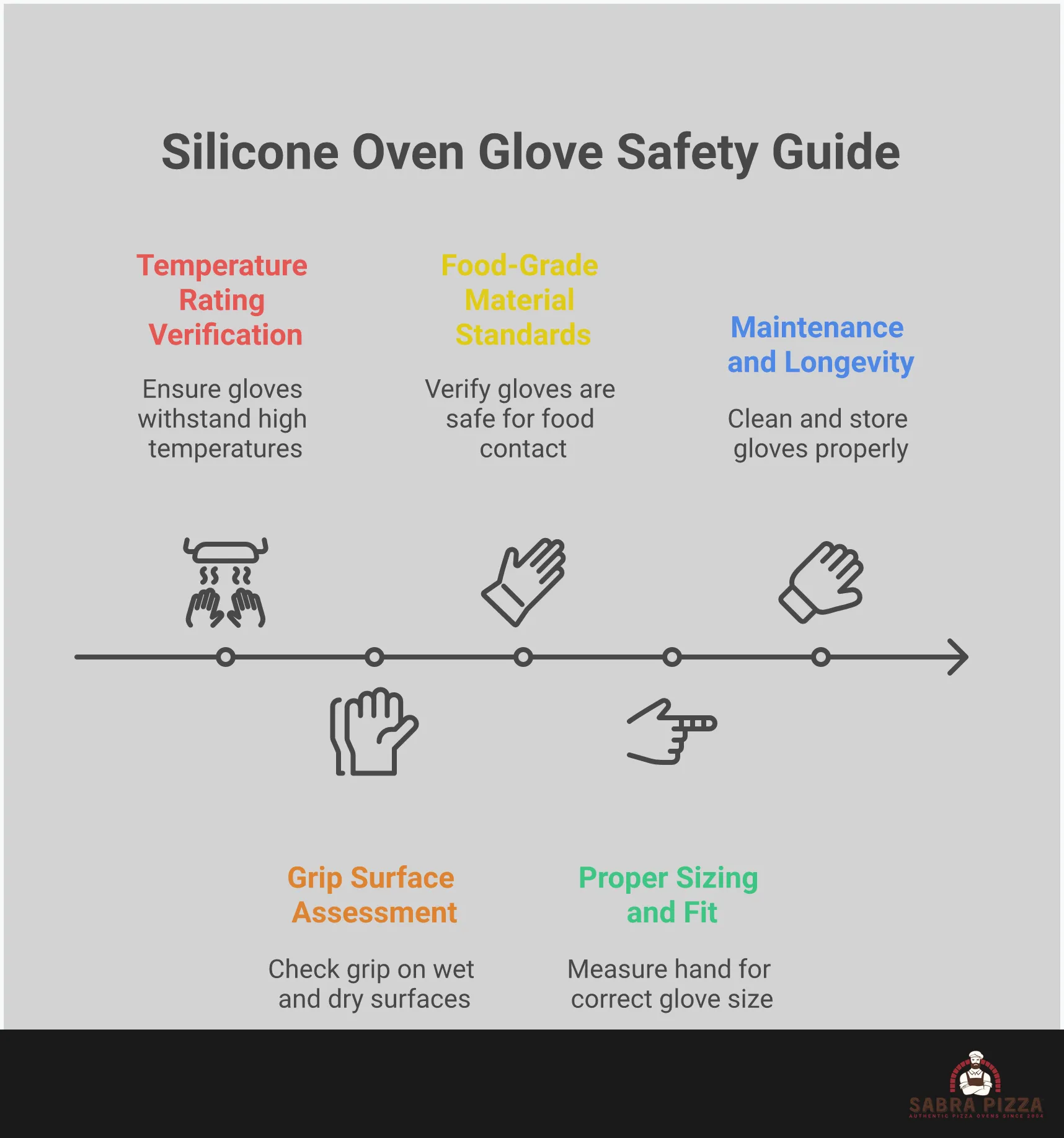
Check the Temperature Rating
First things first: heat resistance. This is the most critical feature, especially for high-temperature cooking. Always check the maximum temperature the gloves can safely handle. For example, some gloves can withstand heat up to 500°F, which is perfect for most home baking and grilling. Others, like certain industrial-grade silicone gloves, are designed to handle an even wider temperature range, protecting you from extreme heat and cold. Before you buy, think about the hottest temperatures you’ll be working with. For serious pizza makers using an outdoor oven, a higher rating is always a safer bet.
Find Your Perfect Fit
A clumsy glove is an unsafe glove. The right fit is crucial for maintaining dexterity so you can securely handle hot dishes. Look for gloves described as lightweight and flexible, which makes them much easier to work with than old-school, bulky oven mitts. A snug fit ensures you can grip tools and pans properly without the glove shifting around. Many users also find that silicone gloves perform much better than cloth when wet, giving you a reliable grip even if you’ve just handled a pot of boiling water. Read reviews to see what other people say about the sizing and flexibility before making your choice.
Look for a Textured Grip
When you’re moving a sizzling cast iron skillet or a heavy baking stone, the last thing you want is for it to slip. That’s why a textured surface is a non-negotiable feature. Most quality silicone gloves have a patterned or non-skid textured silicone exterior designed to provide a sturdy, reliable grip on any surface, from glass baking dishes to metal handles. This feature gives you more control and peace of mind when transferring hot items. Make sure the gloves you’re considering have a distinct pattern on the palms and fingers for maximum friction and safety.
Consider Glove Length for Forearm Safety
Don’t forget about your arms! A nasty burn can happen in a split second when you’re reaching into a hot oven. The length of your gloves plays a huge role in protecting your forearms from accidental contact with hot oven racks or doors. Some gloves are quite short, offering minimal coverage beyond the wrist. For the best protection, look for an extra-long design that extends well up your forearm, typically around 13 to 15 inches. This added length is especially valuable when you’re working with a deep pizza oven or a large grill where you need to reach further in.
Busting Common Myths About Silicone Gloves
Let's clear the air about silicone gloves. They've become a kitchen staple, but a few persistent rumors might be holding you back from making the switch. If you've heard they're all the same, have a slippery grip, or are unsafe around food, it's time to set the record straight. We're going to tackle these common myths head-on so you can feel confident choosing the right hand protection for your culinary adventures, especially when firing up that pizza oven.
Myth: All Silicone Gloves Are Created Equal
It’s easy to assume that one pair of silicone gloves is just like the next, but that couldn't be further from the truth. The reality is that the effectiveness of these gloves varies widely based on their quality, thickness, and design. A cheap, thin pair might be fine for pulling a cookie sheet from a 350°F oven, but it won't stand a chance against the intense heat of a pizza oven or a cast-iron skillet. When shopping, look for gloves made from high-quality, thick silicone with a high temperature rating. This ensures you’re getting the serious heat protection you need to handle hot cookware safely and confidently.
Myth: They Have a Poor Grip Compared to Fabric
This myth probably started because silicone feels smoother than a traditional quilted cotton mitt. However, any well-designed pair of silicone gloves features a textured surface—think raised patterns, ridges, or bumps—to provide a non-slip grip. This texturing is crucial for securely handling heavy pans, slippery glass dishes, and even the peel for your pizza. While some silicone oven mitts prioritize flexibility, the best ones offer a balance of dexterity and a rock-solid hold. You can confidently grab a hot cast-iron handle or a baking stone without worrying about it slipping from your grasp.
Myth: They Aren't Safe for Direct Food Contact
This is a big one, but it’s simple to clear up: it all comes down to the type of silicone used. High-quality kitchen gloves are made from food-grade silicone, which is non-toxic and specifically designed to safely come into contact with what you eat. This is a huge advantage over fabric mitts. You can use them to shred hot pulled pork right off the smoker, steady a chicken while carving, or even handle sticky baked goods without a mess. Just be sure to check that the gloves you’re buying are labeled as "BPA-free" and made from food-grade silicone. This ensures they are completely safe for all your hands-on kitchen tasks.
How Do Silicone Gloves Compare to Other Options?
If you’ve used traditional oven mitts your whole life, you might wonder if silicone gloves are really that different. While fabric and leather have been kitchen staples for years, silicone brings some unique advantages to the table, especially when you’re working with the high heat of a pizza oven. Understanding the key differences can help you decide which type of protection is the best fit for your cooking style. Let's break down how silicone gloves stack up against the classic options you might have in your kitchen drawers right now.
Silicone vs. Fabric Mitts
The biggest difference between silicone gloves and your classic fabric mitts comes down to performance with moisture. We’ve all been there—a little steam or a small splash of water makes a cloth mitt damp. When that happens, the fabric instantly loses its protective qualities, and you can get a nasty burn. Silicone, on the other hand, is non-porous and waterproof. This means your gloves maintain their full heat resistance even when wet, giving you a much safer way to handle hot cookware. Many people also find that the textured surface of silicone provides a more secure grip on heavy pans and pizza stones compared to traditional cloth mitts.
Silicone vs. Leather Gloves
Leather gloves are a popular choice for grilling, but when it comes to cooking, silicone is often the better choice. The main reason is that silicone is a non-toxic material that won't react with acidic foods like tomato sauce or high-salt ingredients. Some leather gloves are treated with chemicals that you may not want coming into contact with your meal. Because it’s a food-safe material, you can handle ingredients directly with clean silicone gloves without any worry. Plus, silicone offers excellent heat protection while remaining flexible, giving you the dexterity and grip you need to confidently manage your cooking.
Which Option Offers the Best Value?
When you look at the big picture, silicone gloves deliver incredible value for their versatility alone. They can handle an impressive range of temperatures, often from below freezing to nearly 500°F, making them useful for everything from grabbing a hot pizza peel to rearranging frozen items in a chest freezer. Users frequently point out how much they appreciate the lightweight and flexible design, which offers more comfort and freedom of movement than bulky, heavy mitts. This blend of superior heat resistance, food-safe properties, and user-friendly design makes a quality pair of heat-resistant silicone gloves a worthwhile investment for any serious cook.
How to Care for Your Silicone Gloves
You’ve invested in a great pair of silicone gloves, and a little care will go a long way in keeping them in top shape. Unlike fabric mitts that get permanently stained, silicone is incredibly resilient. With proper maintenance, your gloves will last a long time, keeping you safe and your kitchen clean. This isn't just about longevity; it's about ensuring your gloves continue to provide the heat protection you rely on, whether you're pulling a pizza from your Alfa Forni oven or handling a hot skillet. Taking a few moments to care for them properly means they'll be ready for action whenever you are.
Simple Cleaning and Storage Tips
One of the best features of silicone gloves is how simple they are to clean. Since silicone is non-porous, messes like tomato sauce and grease wipe right off. For a quick clean, wash them with warm, soapy water in the sink. For a deeper clean after a messy cook, you can just put them in the dishwasher. Most high-quality silicone gloves are completely dishwasher safe, making cleanup effortless. Once they’re clean and dry, store them flat in a drawer or hang them by their loops to help them keep their shape and stay within easy reach.
How to Make Your Gloves Last Longer
Silicone gloves are built to be tough, and many feature a special inner lining for added strength and durability. To get the most life out of your pair, treat them like the specialized tool they are. Avoid using sharp objects like knives or pizza cutters near them, as you could accidentally puncture the silicone. While they are highly heat-resistant, it's best to avoid exposing them to a direct flame for an extended period. A quick inspection before and after each use is also a great habit. This helps you spot any small signs of wear and tear early on.
Know When It's Time for a New Pair
Even the most durable gloves wear out, and knowing when to replace them is key to staying safe. If you notice your gloves have become slippery and you're struggling to get a good grip on pans, it’s time for a new pair. More importantly, their primary job is to protect you from burns. Over time, the silicone can degrade and fail to provide sufficient heat protection. If you start to feel more heat coming through than usual, or if you see any cracks, holes, or thinning areas, retire them immediately. Your safety is always the top priority.
Are Silicone Gloves the Right Choice for You?
Deciding on the right hand protection for your kitchen adventures can feel surprisingly personal. It’s a common belief that all oven gloves offer the same level of heat protection, but in reality, their effectiveness varies quite a bit. Your cooking style, the temperatures you work with, and even what feels most comfortable in your hands all play a role in finding your perfect match. If you’re frequently firing up a pizza oven or searing on cast iron, you need gear that can handle serious heat without fail.
One of the biggest draws of silicone is its safety profile. High-quality, food-grade silicone is non-toxic and won’t react with acidic foods like tomato sauce, which is a huge plus for any pizza maker. Unlike some materials, you don’t have to worry about anything leaching into your food. The real question is whether the unique features of silicone gloves align with your day-to-day needs. Think about the tasks you do most often. Are you grabbing hot, heavy pans, or do you need something for a quick pull from the oven? Let’s break down where silicone truly shines and where a classic mitt might still have the edge.
The Best Ways to Use Silicone Gloves
Silicone gloves are fantastic for tasks that require both high-heat protection and a secure grip. Think of pulling a bubbling cast iron pan from your pizza oven or rearranging logs in the firebox. The five-fingered design gives you more dexterity than a traditional mitt, allowing you to handle tools and trays with greater control. They are especially useful in the kitchen for managing hot pots and pans.
Most high-quality silicone gloves also feature a soft cotton lining. This is a crucial feature because while the silicone exterior provides an excellent heat barrier, the interior lining ensures they remain comfortable to wear, even when holding something hot for more than a few seconds. This combination of grip, flexibility, and comfort makes them a go-to for serious home cooks.
When a Traditional Mitt Might Still Be Better
While silicone gloves are incredibly versatile, there are moments when a traditional fabric mitt might be more convenient. If you’re just quickly grabbing a lightweight baking sheet from your indoor oven, a simple quilted mitt is easy to slip on and off. Some cooks also just prefer the softer, more pliable feel of fabric for everyday baking tasks.
However, the biggest weakness of a classic cloth mitt is moisture. If a fabric mitt gets even slightly damp, it loses its heat-insulating properties almost instantly, which can lead to a nasty steam burn. This is where silicone has a major advantage, as it works just as well when wet. So, if you’re dealing with boiling water, steaming foods, or just tend to be a bit clumsy around the sink, silicone is by far the safer choice.
Where to Find the Best Silicone Oven Gloves
Okay, you're sold on silicone gloves and ready to buy a pair. The good news is that they're widely available, but knowing where to look can help you find the best quality and price. You can find great options everywhere from big-box stores to specialty kitchen retailers and online marketplaces like Amazon. The key is to know which brands consistently deliver on their promises of heat protection and durability. When you're handling a piping hot pizza stone from your Alfa Forni oven, you want gloves you can trust completely.
Our Favorite Places to Shop
You don't have to search far and wide for a top-tier pair of silicone gloves. Many of the best-performing brands are available at your favorite online retailers. After years of testing and reviewing kitchen gear, publications like The New York Times consistently give top marks to brands like Homwe and OXO Good Grips. Their extensive reviews highlight these gloves for their excellent heat protection and easy handling. If you're looking for a fantastic budget-friendly option that doesn't skimp on safety, the MEETOZ brand is another great choice that gets rave reviews for its firm grip and easy cleaning.
How to Spot a Good Deal
Finding a good deal isn't just about the lowest price—it's about getting the best value for your money. Keep an eye out for sales at major retailers, especially around holidays, but don't let a low price tag be your only guide. A quality pair of silicone gloves is an investment in your safety. As more people get serious about home cooking, there's a growing awareness of kitchen safety, and manufacturers are responding with better products. Look for gloves with high heat ratings and features that match your cooking style. Sometimes, spending a few extra dollars on a trusted brand like OXO means you're getting a product that will last for years, which is a much better deal in the long run.
Related Articles
- 5 Best Pizza Peels for Your Pizza Oven (2025 Guide)
- How to Choose a Pizza Oven Accessory Kit
- Beyond the Pie: Other Things to Make in a Pizza Oven
- The Ultimate Guide to a Pizza Oven Turning Peel
Frequently Asked Questions
Can I use these gloves for more than just the oven, like on my grill or for handling frozen foods? Absolutely. High-quality silicone gloves are incredibly versatile tools. Their excellent heat resistance makes them perfect for grilling, where you might need to move hot grates or handle skewers. Because they're also waterproof and provide a great grip, they're useful for tasks like grabbing corn on the cob from boiling water. They even work well for handling extremely cold items, protecting your hands from freezer burn when you're rearranging a deep freezer.
My hands tend to get sweaty in gloves. Are silicone gloves comfortable to wear for longer periods? That's a common concern, and the best silicone gloves are designed with comfort in mind. Look for pairs that feature a soft, quilted cotton or fabric lining on the inside. This inner layer helps absorb moisture and provides a comfortable barrier between your skin and the silicone, which keeps your hands from feeling sweaty and clammy, even when you're standing by a hot pizza oven.
Is it really safe to touch my food directly with these gloves? Yes, as long as you choose a pair made from food-grade, BPA-free silicone. This type of silicone is non-toxic and designed specifically for direct contact with food, so it won't leach any chemicals or unwanted flavors. This feature is a huge advantage, allowing you to do things like shred pulled pork, lift a whole roasted chicken, or steady a roast for carving without worry.
I have small hands and find most oven mitts too bulky. How do I find a pair that fits well? Fit is crucial for safety, as a clumsy glove can lead to accidents. While many silicone gloves come in a "one-size-fits-most" style, look for brands that offer different sizes or are known for a more flexible, less bulky design. Reading customer reviews can be very helpful here, as people often comment on how a specific pair fits smaller or larger hands, giving you a better idea of what to expect.
How will I know when it's time to replace my silicone gloves? Even the most durable gloves will need to be replaced eventually. The most important sign is a decrease in heat protection—if you start feeling the heat from a pan more quickly than you used to, it's time for a new pair. You should also replace them if you notice any cracks, tears, or holes in the silicone, as these compromises can lead to serious burns.