

Mastering your pizza oven is about understanding its entire heat cycle, not just its peak temperature. The roaring fire that cooks a pizza in 90 seconds is only the beginning of the story. As the flames die down and the oven begins its slow, steady cool-down process over hours, it opens up a world of culinary possibilities. This gentle, retained heat is perfect for baking crusty artisan breads, slow-roasting meats until they are fall-apart tender, or making a bubbling dessert. This guide will teach you how to work with these different temperature zones, revealing all the other things to make in a pizza oven.
Key Takeaways
- Cook for Days with One Fire: Plan your meals around your oven's natural heat cycle. Use the roaring flames for pizza and steaks, the moderate retained heat for roasting, and the gentle warmth the next day for baking bread or slow-cooking.
- Get Superior Texture and Flavor: Use the intense, dry heat to achieve results your indoor oven can't, like a perfect steakhouse crust, impossibly crispy chicken skin, and beautifully charred vegetables that stay tender inside.
- Rely on Cast Iron and Proper Care: A cast iron skillet is your most versatile tool for searing, roasting, and baking. To keep your oven in top shape, use its high heat to burn off any residue, then simply brush the ashes away once it's cool.
Why Your Pizza Oven is for More Than Just Pizza
You likely bought your pizza oven with one glorious goal in mind: crafting perfect, restaurant-quality pizzas right in your backyard. And it certainly delivers on that promise. But thinking of it as just a pizza maker is like owning a sports car and only driving it to the grocery store. Your pizza oven is one of the most versatile and powerful cooking tools you can own, capable of producing a stunning variety of dishes that will impress any guest.
The secret lies in its unique ability to generate and retain incredible heat. That blazing-hot environment, often reaching over 700°F, is perfect for more than just crisping up a margherita. It’s the key to getting a deep, flavorful sear on a thick-cut steak, roasting vegetables to tender-crisp perfection in minutes, and flash-cooking seafood so it stays juicy and tender. This high-heat cooking method is something most indoor kitchen ovens simply can't replicate.
But the magic doesn't stop when the flames die down. As your oven gradually cools over hours, or even days, it opens up a whole new world of culinary possibilities. This gentle, residual heat is ideal for baking crusty artisan breads, slow-roasting a whole chicken, or even making a bubbling fruit cobbler for dessert. By learning to work with these different temperature zones, you can truly expand your cooking options and transform your pizza oven into the true centerpiece of your outdoor kitchen.
Meats to Cook in Your Pizza Oven
If you thought your pizza oven was a one-trick pony, get ready to be amazed. The same intense, radiant heat that creates the perfect pizza crust is also your secret weapon for cooking unbelievably delicious meats. From a steakhouse-quality sear to a perfectly roasted chicken with impossibly crispy skin, your oven can do it all. The high temperatures lock in juices, creating a tender, moist interior while developing a beautiful, flavorful crust on the outside.
Whether you have a wood-fired oven that imparts a subtle smokiness or a gas model that offers precise temperature control, you can produce restaurant-worthy results right in your backyard. The key is to understand how to manage the heat and to use the right cookware. A good cast iron skillet or grizzler pan is your best friend here, as it can handle the extreme temperatures and transfer heat evenly. Get ready to move beyond margheritas and explore a whole new world of culinary possibilities.
Get the Perfect Sear on Steaks and Chops
Forget the grill—your pizza oven is the best way to get a flawless sear on a thick-cut ribeye or pork chop. The intense heat creates a deep brown crust in minutes, locking in all the juices for a tender, perfectly cooked interior. To achieve this, you’ll want to get your oven roaring hot, around 900°F. Place a cast iron skillet or grizzler pan inside to preheat with the oven. Once it’s smoking hot, carefully place your seasoned steak in the pan. It will only need about 90 seconds to two minutes per side for a perfect medium-rare. This high-heat method delivers an incredible steakhouse-style crust that’s hard to replicate anywhere else.
Roast a Whole Chicken or Turkey
There’s nothing quite like a roast chicken with golden, crispy skin, and your pizza oven is the perfect tool for the job. The high, ambient heat cooks the bird evenly from all sides, resulting in incredibly moist meat and skin that crackles with every bite. For roasting a whole chicken or even a small turkey, you’ll want to let the oven temperature come down to a more moderate 400-450°F. Place your seasoned bird in a sturdy roasting pan or large cast iron skillet and let the oven work its magic. The circulating heat ensures a beautiful, even color without you having to do much at all. It’s a simple, impressive way to prepare a main course for any gathering.
Cook Tender Pork and Lamb
From slow-roasted pork shoulder to quick-seared lamb chops, your pizza oven can handle a wide variety of cuts with fantastic results. For tougher cuts like a pork roast, a lower, more sustained heat allows the connective tissues to break down, leaving you with tender, pull-apart meat. For quicker-cooking items like lamb cutlets, the high heat is your friend. It gives them a beautiful char on the outside while keeping the inside rosy and juicy. The intense heat is what makes all the difference, creating a charred finish that adds a layer of smoky, complex flavor while ensuring the meat stays incredibly tender. It’s an ideal method for cooking lamb to perfection.
Grill Flavorful Seafood and Fish
Delicate seafood and fish cook in a flash, and the high heat of a pizza oven is perfect for getting the job done quickly without drying them out. Heartier fish like salmon, swordfish, or tuna steaks are fantastic when cooked on a preheated cast iron pan or a cedar plank. The intense heat gives the fish a deliciously charred exterior while the inside remains flaky and moist. You can even cook whole fish, like branzino stuffed with herbs and lemon, for a truly impressive meal. A simple drizzle of olive oil and a sprinkle of salt is all you need to let the flavor of the fish shine. This method is fast, easy, and delivers consistently delicious results.
Vegetables That Thrive in High Heat
If you think your pizza oven is only for carbs and cheese, get ready to have your world rocked. The intense, dry heat that creates the perfect pizza crust is also the secret to unbelievably delicious vegetables. Unlike a conventional oven, which can slowly bake the life out of your produce, a pizza oven blasts vegetables with high temperatures, creating a gorgeous char on the outside while locking in moisture and flavor. This rapid cooking process caramelizes their natural sugars, resulting in a sweet, smoky taste that’s simply impossible to replicate indoors.
From hearty root vegetables that turn creamy and tender to delicate greens that get a perfect, crisp blister in minutes, your oven is a versatile tool for making sides that might just steal the show. The high heat enhances their natural flavors, turning a simple head of broccoli or a handful of carrots into something truly special. Plus, you can take advantage of the oven’s entire heat cycle. Use the peak temperatures for a quick sear, and as the oven cools, you can use the retained heat for slower roasting. It’s an efficient and flavorful way to cook.
Roast Hearty Root Vegetables
There’s nothing quite like root vegetables roasted in a wood-fired oven. Potatoes, sweet potatoes, carrots, and parsnips develop a crispy, blistered skin while the inside becomes wonderfully soft and fluffy. The key is to cut them into uniform, bite-sized pieces to ensure they cook evenly. Toss them in a bowl with a good glug of olive oil, coarse salt, freshly ground black pepper, and some hardy herbs like rosemary or thyme. Spread them in a single layer in a heavy-duty cast-iron skillet or a sturdy baking pan and slide them into the hot oven. They’ll be perfectly roasted in a fraction of the time it takes in your kitchen oven.
Quickly Cook Delicate Greens
Say goodbye to soggy, overcooked green vegetables. A pizza oven cooks delicate items like asparagus, broccoli, bell peppers, and zucchini in just a few minutes. This quick blast of heat is the perfect way to get that delicious char while maintaining a satisfyingly crisp-tender texture. Simply trim your vegetables, toss them with a light coating of oil and your favorite seasonings, and spread them on a pan. At high temperatures, they’ll be ready in under 10 minutes. This method works beautifully for shishito peppers or green beans, giving them a smoky blister that makes for an incredible appetizer or side dish. A final squeeze of lemon juice is all you need to finish them off.
How to Prep Veggies for Maximum Flavor
To get the best results, a little prep goes a long way. First, make sure your vegetables are dry before tossing them with oil; moisture is the enemy of crispiness. Second, don't overcrowd the pan. Give your veggies plenty of space so they roast instead of steam. Use a high-quality oil that can handle the heat—avocado oil is a great choice, but a good olive oil also works well for flavor. Season them more generously than you think you need to, as some of it will cook off. Finally, preheating your pan in the oven for a few minutes before adding the vegetables will help you get an even better sear right from the start.
Baked Goods to Create in Your Pizza Oven
Think of your pizza oven as more than just a pizza-making machine—it’s a high-performance baker’s oven right in your backyard. The intense, dry heat and stone hearth that create the perfect pizza crust are the same elements that produce incredible baked goods. The dome shape circulates heat evenly, giving loaves of bread a beautiful rise and a crackly, golden-brown crust that’s hard to replicate in a conventional oven. From rustic, artisan-style breads to delicate pastries, your oven’s capabilities are surprisingly broad.
The key is learning to manage the heat. While pizzas cook in minutes at scorching temperatures, most baked goods require a more moderate and stable environment. This often means letting the fire die down to glowing embers or simply using the retained heat in the oven floor and dome after you’ve finished cooking your main meal. By mastering this rhythm of heating and cooling, you can turn out a huge variety of foods and make the most of every bit of fuel. It’s a rewarding process that connects you to a more traditional way of baking.
Bake Artisan Breads and Sourdough
If you’ve ever tried to bake a truly crusty loaf of sourdough at home, you know the challenge of getting that perfect "oven spring" and blistered crust. Your pizza oven is the solution. The high initial heat helps the dough expand rapidly, creating a light, airy interior, while the hot, dry air forms a deeply caramelized and crunchy exterior. For best results, let the roaring flame die down to a bed of hot coals. This provides a consistent, radiant heat that bakes the bread through without burning the top. Slide your loaf directly onto the hot oven floor and watch the magic happen.
Create Perfect Focaccia and Flatbreads
Focaccia and other flatbreads are a natural fit for a pizza oven. The direct contact with the hot stone floor gives them an irresistibly crispy bottom, while the ambient heat cooks the dough and toppings perfectly. You can bake focaccia with a low flame, but many bakers prefer to cook it without any flame at all, relying on the oven’s residual heat as it slowly cools. This gentle, even heat prevents the delicate toppings like herbs and garlic from burning. Just dimple your dough, drizzle generously with olive oil, sprinkle with sea salt, and slide it in. You’ll have a golden, pillowy flatbread in no time.
Make Dinner Rolls and Sweet Pastries
Don’t let that wonderful residual heat go to waste after you’re done making pizzas. As your oven’s temperature drops, it enters the perfect range for baking softer items like dinner rolls, cinnamon buns, or even simple pastries. This is an incredibly efficient way to get more out of your oven. A great technique is to proof your dinner rolls in a buttered cast-iron skillet or cake pan. Once the oven has cooled to a moderate temperature, you can place the entire pan inside to bake. The pan protects the soft dough from the intense direct heat of the stone, resulting in perfectly fluffy, golden-brown rolls.
Desserts That Will Wow Your Guests
Just because the last pizza is out of the oven doesn’t mean the cooking is over. Your pizza oven’s retained heat is perfect for creating incredible desserts that will leave your guests speechless. The same intense, radiant heat that gives you a perfect pizza crust can produce desserts with unforgettable textures—think crispy-edged skillet cookies with gooey centers or fruit crumbles with bubbling, jammy fillings under a golden-brown top. It’s a brilliant way to use the oven’s residual heat as it gradually cools down, making your oven a multi-purpose star of the evening.
Instead of heading back to your indoor kitchen and leaving the fun, you can keep the party outside and gather around the warm glow of the oven. This transition from savory to sweet feels seamless and special. From rustic, family-style desserts baked in cast iron to elegant individual tarts, your pizza oven is your secret weapon for the perfect sweet finish to any meal. It’s simpler than you might think, and the results are always impressive, adding a memorable final touch to your outdoor dining experience. You'll find that almost any dessert that benefits from high, even heat can be adapted for your pizza oven.
Bake Fruit Cobblers and Crumbles
There’s nothing quite like a warm fruit dessert, and your pizza oven is the ideal tool for making it. The high heat creates a wonderfully crispy, golden topping while keeping the fruit filling tender and juicy. This contrast in textures is what makes a cobbler or crumble so satisfying. Simply toss your favorite seasonal fruits—like peaches and berries in the summer or apples and pears in the fall—with a little sugar and spice, top with your crumble or biscuit dough, and slide it into the oven. A great cast-iron skillet cobbler recipe is a perfect starting point for any fruit you have on hand.
Make Skillet Cookies and Brownies
For a truly show-stopping dessert, a giant skillet cookie or brownie is the way to go. Baked in a cast-iron skillet using the oven's residual heat, this dessert develops a perfectly crisp edge while staying warm and gooey in the middle. It’s a fun, shareable treat that’s meant to be eaten with spoons, straight from the skillet. Just prepare your favorite cookie or brownie dough, press it into a buttered skillet, and bake until the edges are set. Serve it warm with a few scoops of vanilla ice cream for a dessert experience your guests won't soon forget.
Create Individual Tarts and Desserts
If you’re aiming for a more elegant presentation, your pizza oven can bake individual tarts to perfection. The high temperature is fantastic for achieving a beautifully crisp crust without overcooking the delicate filling. This quick-baking method ensures that fruit fillings stay bright and fresh, while custard or chocolate fillings set up perfectly. These personal-sized desserts look stunning and are a wonderful way to serve something special. Learning the basics of making a perfect tart crust will open up a world of dessert possibilities, from classic lemon tarts to rich chocolate ganache creations.
A Guide to Cooking Times and Temperatures
Mastering your pizza oven is all about understanding how to work with different levels of heat. Think of it as having three distinct cooking zones, not just one blazing-hot setting. Once you get a feel for managing the temperature as it naturally rises and falls, you’ll be able to cook almost anything. It’s less about hitting an exact number on a thermometer and more about knowing what kind of heat you need for the food you’re making. Let’s break down the three main temperature ranges and what they’re best for.
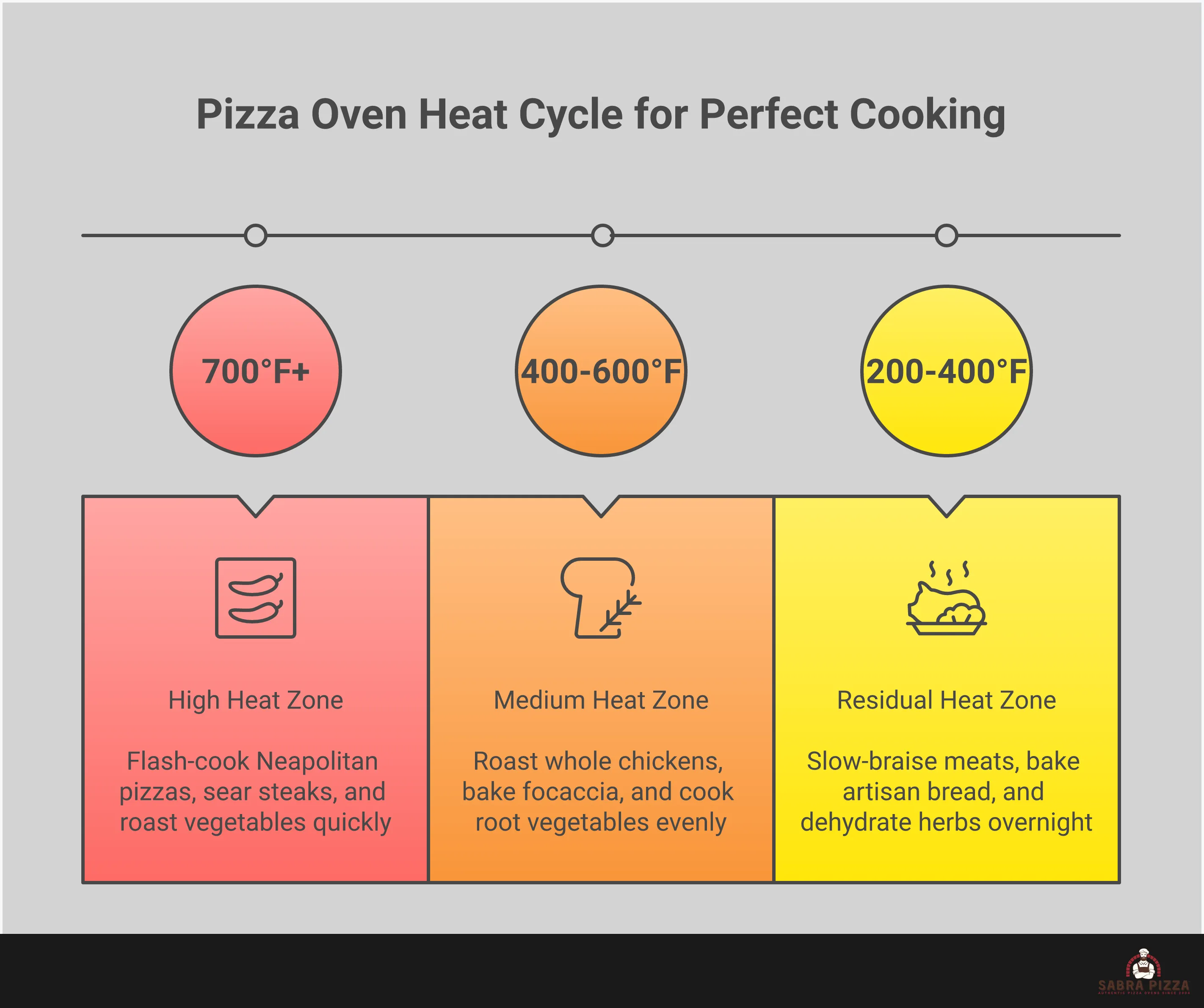
Cooking with High Heat (700°F+)
This is the temperature range that makes pizza ovens famous. When your oven is roaring hot, from 700°F to over 900°F, you’re in the fast lane of cooking. This intense, direct heat is perfect for getting a Neapolitan-style pizza crust in 90 seconds, but it’s also your secret weapon for other quick-cooking foods. Use this environment to get a fantastic sear on a thick-cut steak or pork chop, locking in the juices for an incredibly tender result. It’s also ideal for flash-roasting delicate vegetables like asparagus, bell peppers, and shishito peppers. At these temperatures, things happen fast, so have your tools ready and don’t walk away from the oven.
Cooking with Medium Heat (400-600°F)
After the initial fire has calmed down a bit, your oven will settle into a beautiful, even heat between 400°F and 600°F. This is your all-purpose roasting and baking zone. It’s the perfect temperature for roasting a whole chicken to crispy-skinned perfection, cooking a side of salmon on a cedar plank, or baking a cast-iron skillet of cornbread. You can also use this steady heat for heartier vegetables like potatoes, broccoli, and cauliflower. For breads like focaccia, you can let the flame die down completely and use the retained heat in the dome and floor to create beautifully baked artisan loaves with an amazing crust.
Cooking with Residual Heat (200-400°F)
Don’t shut the door when the party’s over! As your oven slowly cools down, the gentle, residual heat is a valuable resource. This low-and-slow environment, typically between 200°F and 400°F, is ideal for dishes that need time to become tender. Think about slow-cooking a batch of baked beans, braising a tough cut of meat until it’s falling apart, or warming through a fruit crumble for dessert. You can even use this fading heat to dehydrate fruits or herbs overnight. Using the residual heat is a smart, efficient way to get the absolute most out of every fire you build, turning one cooking session into multiple delicious meals.
Tips for Cooking Different Types of Food
Cooking in a pizza oven is more of an art than a science, but a few key tips can help you get consistent, delicious results every time. Once you get the hang of managing the heat and using the right tools, you'll find yourself using your oven for much more than just Friday night pizza. It’s all about understanding how your oven works and planning your cooking around its natural heat cycle. Think of your oven not just as a high-temperature machine, but as a versatile cooking station that offers a wide range of temperatures if you know how to use them. Mastering this will transform your oven from a single-purpose gadget into the true heart of your outdoor kitchen.
The real magic happens when you learn to work with the oven's entire temperature curve, from the roaring flames perfect for Neapolitan pizza to the gentle, retained heat ideal for slow-cooking the next day. This approach is not only incredibly efficient, saving you fuel and effort, but it’s also deeply satisfying. There's a certain pride that comes from pulling a perfectly baked loaf of bread out of the oven on a Sunday morning, using the heat left over from Saturday’s pizza party. It connects you to a more traditional, resourceful way of cooking. Let's walk through how to make the most of every firing, turning one session into a weekend's worth of incredible meals.
Manage Your Oven's Heat Zones
One of the biggest advantages of a quality pizza oven is its incredible heat retention. This means you can cook a variety of dishes over several days as the oven slowly cools. Think of it not as a single temperature, but as a series of heat zones over time. On day one, when the oven is roaring hot, you’ll cook your pizzas. As the flames die down to glowing embers, it’s the perfect time for searing steaks. The next day, the retained warmth is ideal for baking bread or slow-roasting a chicken. To master this, an infrared thermometer is your best friend, allowing you to accurately read the temperature of the oven floor and know exactly when to put in your next dish.
Choose the Right Cookware and Tools
While your pizza peel is essential, expanding your menu requires a few more tools. A high-quality cast iron skillet is non-negotiable; it can handle the extreme temperatures needed for searing steaks, blistering vegetables, and baking skillet cookies. You’ll also want some sturdy metal pans for roasting or baking casseroles. Don’t forget a good pair of long, heat-resistant gloves and a set of long-handled tongs to safely move dishes in and out of the intense heat. Having the right equipment not only makes cooking easier and safer but also opens up a whole new world of culinary possibilities beyond pizza, allowing you to experiment with confidence.
Time Multiple Dishes Perfectly
The secret to becoming a true pizza oven pro is planning your meals around the heat cycle. This approach lets you cook multiple dishes with a single firing, which is both efficient and satisfying. For example, you could host a pizza party on Saturday night when the oven is at its peak temperature. After the pizzas are done, throw in a cast iron skillet with steaks to cook over the hot coals. On Sunday, the oven will have cooled to a perfect baking temperature. You can bake a loaf of artisan bread in the morning and then roast a whole chicken for dinner that evening, all using the oven's residual heat. This method turns one fire into a whole weekend of incredible meals.
Common Mistakes to Avoid
Your pizza oven is an incredibly versatile cooking tool, but it does work a bit differently than your indoor kitchen oven. Getting the hang of it just takes a little practice. To help you get consistently amazing results right from the start, let's walk through a few common slip-ups and how to sidestep them. Mastering these basics will make you feel like a pro and ensure everything you cook—from steaks to sourdough—comes out perfectly.
Controlling the Temperature
One of the biggest learning curves with a high-heat oven is temperature management. If you don't preheat your oven properly, you can end up with inconsistent temperatures and unevenly cooked food. It’s essential to give your oven enough time for its thermal mass to fully absorb and stabilize the heat. Always follow the manufacturer’s instructions for your specific model, preheating it to the recommended temperature for what you’re cooking. This simple step is the key to achieving a perfect crust on bread or a beautiful sear on a steak. Patience during preheating pays off every time.
Overcrowding the Oven
It can be tempting to load up the oven to cook everything at once, but overcrowding is a recipe for disappointment. When you pack too much food in, you block the flow of hot air, which leads to uneven cooking and can even create steam, making your food soggy instead of crispy. Think of it as giving each dish its own personal space to cook properly. Whether you're roasting vegetables or baking multiple small flatbreads, leaving a bit of room between items ensures that the intense, dry heat can circulate and work its magic on every surface.
Using the Wrong Fuel or Equipment
The fuel you choose directly impacts your oven's temperature and the flavor of your food. Make sure you’re using the recommended fuel for your specific oven, whether it’s a certain type of hardwood, propane, or natural gas. For wood-fired ovens, using seasoned, dry hardwood is non-negotiable; damp or green wood will produce a lot of smoke and won't burn hot enough. Similarly, using the right pizza oven accessories and cookware designed for high heat, like cast iron pans or ceramic dishes, will prevent damage and give you the best possible results for all your non-pizza creations.
How to Keep Your Pizza Oven Clean
Your pizza oven is an investment in incredible food and memorable gatherings. Keeping it clean is the best way to protect that investment and ensure every meal is as delicious as the last. A little maintenance goes a long way, and it’s much simpler than you might think. Regular cleaning prevents grease and soot buildup, which can affect your oven's performance and the taste of your food. Think of it less as a chore and more as part of the cooking process. We’ll walk through the simple daily tasks, the occasional deep clean, and proper storage.
Daily Cleaning and Upkeep
The easiest way to handle oven care is to do a little bit after every cook. Once your oven has completely cooled down—a crucial safety tip—take a few minutes for a quick sweep-out. Use a firm brush with brass bristles to clear away any ash and leftover food from the cooking floor. For wood-fired ovens, be sure to empty the ash tray into a metal container. For the pizza stone, simply brush it clean or wipe it with a dry cloth. It’s important to avoid using soap or water, as the porous material will absorb it and can crack when heated. The high heat naturally sanitizes the surface, so a good brushing is all you need for maintaining your pizza oven.
Techniques for a Deep Clean
Every so often, your oven will benefit from a more thorough cleaning. The best method is to let the oven clean itself with heat. Fire it up and let it get hot, around 500-600°F, for 20 to 30 minutes. This intense heat will incinerate any stubborn, baked-on cheese or sauce, turning it into a fine ash. It’s a highly effective way to burn off any stains on the stones. Once the oven has fully cooled, you can easily brush out the ash or use a shop vacuum to remove the debris. For the exterior, a simple wipe-down with a damp cloth and a mild, material-safe cleaner is usually all that’s needed to keep it looking sharp.
Proper Storage and Long-Term Care
Protecting your oven from the elements is key to its longevity. When you’re not using it, a high-quality, weather-resistant cover is your best friend. This will shield it from rain, snow, and sun, preventing rust and other weather-related damage. Make sure the oven is completely cool before you put the cover on. If you live in an area with harsh winters or plan to go a long time without using your oven, consider moving it to a more protected spot. A garage, shed, or covered patio provides an extra layer of defense. Proper storage ensures your oven will be ready to fire up the moment you are.
Related Articles
- The 5 Best Tabletop Pizza Ovens (2025 Review)
- Perfect Outdoor Wood Oven Pizza: The Complete Guide
- The Ultimate Italian Pizza Oven Buyer's Guide
- Outdoor Pizza Ovens for Sale: A Buyer's Guide
Frequently Asked Questions
Do I really need special cookware, or can I use my regular kitchen pans? For the high temperatures in a pizza oven, you absolutely need cookware that can handle the heat. Your standard kitchen pans, especially those with non-stick coatings or plastic handles, are not safe to use and can be damaged. Your best investment is a set of quality cast iron skillets or pans. They handle extreme heat beautifully, provide an incredible sear, and will last a lifetime.
Is a wood-fired oven better for this kind of cooking than a gas one? Both wood-fired and gas ovens are fantastic for cooking a wide variety of foods. A wood-fired oven will give your food a distinct, subtle smoky flavor that many people love. A gas oven, on the other hand, offers incredible convenience and precise temperature control with the turn of a knob. All the techniques discussed here work perfectly in either type of oven, so it really comes down to your personal preference for flavor versus convenience.
How do I cook something that needs a lower temperature, like bread, after I've had the oven blazing hot for pizza? This is where you learn to work with your oven's natural heat cycle. After you're done making pizzas, you simply stop adding fuel. The fire will die down to embers, and the oven will begin to slowly cool over many hours. An infrared thermometer is a great tool to help you track the temperature of the oven floor. You just have to be patient and wait for it to drop into that perfect baking range for bread or roasts.
What's the best way to cook different foods at the same time for one meal? Planning is key. A great strategy is to cook in stages based on the oven's temperature. You can start by searing steaks or flash-cooking vegetables when the oven is at its hottest. As it cools slightly, you can roast a chicken or bake a side of potatoes. It’s about thinking through your menu and timing each dish to correspond with the ideal heat level, ensuring everything comes out perfectly.
Is it safe to cook directly on the oven floor, or should everything go in a pan? The oven floor, or hearth, is perfect for foods like bread and pizza that benefit from direct, intense bottom heat. However, you should never cook fatty meats, oily vegetables, or anything that will drip directly on the stone. The grease can soak into the porous material, causing stains and smoke. For those items, always use a cast iron skillet or another high-heat-safe pan to contain the juices and prevent a mess.