

Before you can host your first pizza night, you have to decide what kind of person you are. Do you relish a weekend project, finding satisfaction in building something with your own hands? Or do you prefer to get straight to the fun part, trusting expert engineering to deliver flawless results right out of the box? This is the essential question at the heart of the DIY pizza oven vs pre built decision. Your answer will guide you toward the right choice for your skills, your free time, and your budget. We’ll explore the pros and cons of each approach, from installation to cooking performance, so you can invest wisely.
Key Takeaways
- Decide if you want a project or a product: Building your own oven is a rewarding construction project that offers total creative control. Buying a pre-built model is an investment in a high-performance appliance that's ready for immediate use.
- Factor in your time for both setup and cooking: A DIY oven is a multi-week construction commitment, and wood-fired models require hours to heat up. A pre-built oven is ready in minutes, making it a better fit for spontaneous meals and busy schedules.
- Calculate the true cost beyond the initial price: A DIY kit is just the starting point; you also need to budget for a foundation, finishing materials, and tools. A pre-built oven has a higher upfront cost but includes professional engineering, a warranty, and predictable expenses.
Build or Buy? Key Differences Between Pizza Ovens
The dream of pulling a perfect, bubbling pizza from a fiery oven in your own backyard often leads to one big question: should you build it yourself or buy a pre-built model? There’s a certain romance to the idea of a custom brick oven, a true labor of love. On the other hand, the sleek, powerful performance of a modern oven that’s ready to go in minutes has an undeniable appeal. The right path for you really comes down to what you value most—unlimited customization and a hands-on project, or professional-grade engineering and near-instant gratification.
Choosing between DIY and pre-built isn't just about the final product; it's about the entire experience. Your decision will be shaped by your budget, your timeline, how comfortable you are with a construction project, and your cooking style. To help you decide, let's break down the key differences in three major areas: the materials they’re made of, how much you can personalize them, and what it actually takes to get one up and running. Understanding these factors will make it much easier to pick the perfect oven for your outdoor kitchen.
What Are They Made Of?
The materials an oven is made from directly impact its heat retention, durability, and cooking performance. Traditional, DIY ovens are often built from heavy-duty materials like brick, clay, and concrete. These materials are fantastic at absorbing and holding heat, which is why they cook food so evenly and can maintain high temperatures for hours. This is the classic method that has been used for centuries.
Pre-built ovens, especially premium models, use a combination of traditional and modern materials engineered for efficiency and longevity. For example, many Alfa Forni ovens feature a stainless steel exterior for weather resistance and a proprietary refractory material on the inside that heats up incredibly fast. With proper care, a high-quality pre-built oven can easily last for a decade or more, giving you years of delicious results.
How Much Can You Customize?
If you have a specific vision for your outdoor space, customization is a huge factor. A DIY oven offers you complete creative control. You can decide the exact size, shape, and finish to perfectly match your patio or landscape design. Whether you envision a rustic stucco dome or a modern tiled facade, building it yourself means you can add your own special touches. This is the ideal route for anyone who enjoys a hands-on project and wants a truly one-of-a-kind centerpiece.
While pre-built ovens have a set design, you still have plenty of choices. You can select from various sizes, colors, and fuel types, including wood-fired, gas, and even hybrid pizza ovens that offer the best of both worlds. You can also choose between countertop models that sit on an existing surface or freestanding ovens with their own integrated cart. The trade-off is less aesthetic freedom for a design that has been professionally engineered and optimized for performance right out of the box.
What Does Installation Involve?
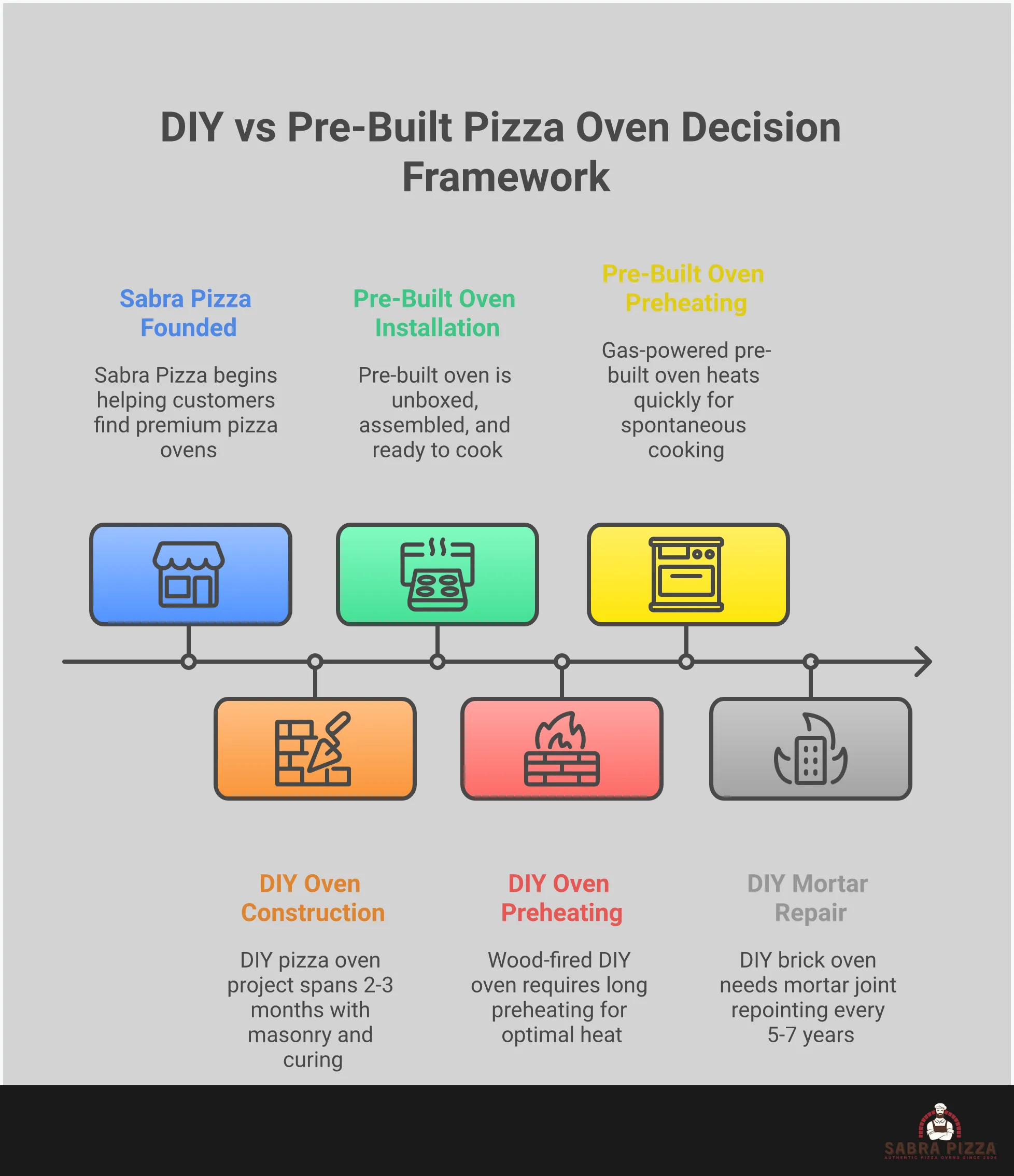
This is where the two paths really diverge. Building a pizza oven is a significant construction project. It requires laying a foundation, careful masonry work, and a proper curing process that can take several weeks before you can even think about cooking. While DIY kits come with instructions, they can be tricky to follow and require a good amount of skill, time, and patience. It’s a rewarding process, but it’s definitely not a weekend project.
In contrast, pre-built ovens are designed for convenience. Most are incredibly easy to set up and can be ready to use the same day they arrive. Installation usually involves unboxing the oven, placing it on a stable stand or countertop, and connecting the fuel source if it’s a gas or propane model. For busy homeowners who want to start cooking as soon as possible, the simplicity of a pre-built oven is a massive advantage. You can go from delivery to delicious pizza in a matter of minutes, not months.
What's the Real Cost to Build vs. Buy?
Let's talk numbers. When you're dreaming of that perfect Neapolitan-style pizza, the budget is often the first reality check. On the surface, building your own oven seems like the more affordable route, but the final price tag for both building and buying can vary wildly. The real cost isn't just about the initial purchase; it's a mix of materials, your time, additional tools, and long-term value.
Choosing between a DIY kit and a ready-made oven comes down to your budget, your timeline, and how hands-on you want to be. A pre-built oven gets you cooking faster and often comes with the peace of mind of a professional build and warranty. A DIY project, on the other hand, offers a deep sense of satisfaction and customization, but requires careful planning to keep costs from creeping up. Before you decide, it’s important to look beyond the sticker price and consider every expense that will go into your new backyard centerpiece.
The True Cost of a DIY Oven
Building a pizza oven with a DIY kit can definitely be the more budget-friendly option upfront. These kits typically range from around $500 for a basic setup to over $6,000 for more elaborate, high-end packages. However, the kit itself is just the starting point. You’ll also need to account for the cost of building a proper foundation, which usually involves pouring a concrete slab. Then there are the finishing materials—stucco, tile, or brick veneer—to give your oven its final look. Don't forget the tools you might need to buy or rent, and the value of your own time, which can add up to many weekends of work.
How Much Do Pre-Built Ovens Cost?
Pre-built pizza ovens cover a huge price spectrum, so there’s likely an option that fits your space and budget. On the more accessible end, you’ll find popular portable models that can range from $300 to $1,000. These are fantastic for getting started without a major commitment. For those looking for a permanent, high-performance centerpiece, premium pre-assembled ovens from brands like Alfa Forni represent a significant investment, sometimes costing upwards of $10,000. With these, you’re paying for superior engineering, high-quality materials, brand reputation, and the convenience of having a professionally crafted oven ready to go.
Factoring in Hidden Costs and Long-Term Value
When you’re weighing your options, think about the total investment. For a DIY project, hidden costs can include mistakes that require you to rebuy materials or hire a professional to fix them. For a pre-built oven, you might have delivery fees or need to purchase a specific stand. The long-term value is also a key consideration. A professionally manufactured oven is an investment in convenience and quality, backed by a warranty and customer support. The value of a DIY oven is tied directly to the quality of your work, which can be a rewarding challenge but also carries more risk.
Top Pre-Built Pizza Oven Brands to Consider
Once you decide to buy a pre-built oven, the next step is choosing a brand. The market is filled with fantastic options, and the right one for you really comes down to your space, budget, and how you plan to cook. Are you looking for a permanent backyard centerpiece that will last a lifetime, or do you want something portable you can take to a friend’s house? Do you dream of the smoky flavor of a wood fire, or do you prefer the simple convenience of gas?
To help you find the perfect fit, I’ve put together a list of some of the most respected and reliable brands in the pizza oven world. Each one has a unique strength, from authentic Italian craftsmanship to innovative, space-saving designs. Think of this as your starting point for finding an oven that will help you make incredible pizza for years to come. We’ll look at the top players and what makes each of them stand out from the crowd.
Alfa Forni Premium Italian Ovens
If you’re looking for the absolute gold standard in pizza ovens, look no further than Alfa Forni. These are the ovens for the true culinary enthusiast who wants unparalleled performance and authentic Italian design. Handcrafted in Italy, Alfa Forni ovens are renowned for their superior materials and brilliant engineering, which allow them to heat up incredibly fast and maintain consistent temperatures for a perfect, crispy crust every time. They are more than just cooking appliances; they are stunning centerpieces that transform your backyard into an outdoor kitchen. An Alfa is an investment in quality that you’ll enjoy for a lifetime.
Ooni Portable Options
Ooni has built its reputation on making high-heat pizza ovens accessible and portable. If you want the flexibility to make amazing pizza in your backyard, at a campsite, or at a friend’s party, Ooni is a fantastic choice. The Ooni Karu 16 is often praised as one of the best home pizza ovens because it’s a multi-fuel model, giving you the option to cook with wood, charcoal, or gas. For those who want simplicity, the gas-powered Ooni Koda 12 is a budget-friendly powerhouse that heats up in minutes and delivers consistently great results.
Gozney Roccbox Models
The Gozney Roccbox is another top contender, especially for those who are new to making pizza at home but still want professional-level results. It’s known for being incredibly easy to use right out of the box. The Roccbox can reach scorching temperatures of over 900°F, which is essential for cooking a Neapolitan-style pizza in about 60 seconds. Its thick stone floor ensures a crispy, delicious base. With its retractable legs and detachable burner, the Roccbox is also highly portable, making it a preferred outdoor option for its blend of convenience and quality.
BakerStone Grill Attachments
What if you could get the performance of a pizza oven without buying a whole new appliance? That’s the clever idea behind BakerStone’s grill attachments. These innovative boxes are designed to sit directly on top of your existing gas or charcoal grill, transforming it into a high-heat pizza-making machine. The stone baking chamber absorbs and radiates intense heat, mimicking the cooking environment of a traditional oven. Options like the BakerStone Pizza Oven are perfect for anyone who wants to expand their grilling capabilities without committing to a standalone oven.
Weighing the Pros and Cons of Each Option
Deciding between building your own pizza oven and buying a pre-built one really comes down to what you value most: customization and a hands-on project, or convenience and professional-grade performance right away. Both paths lead to incredible, homemade pizza, but the journey to get there is completely different. To help you make the right call for your backyard, your budget, and your free time, let's walk through the honest pros and cons of each approach. This isn't just about the final product; it's about the entire experience, from the initial setup to your very first pizza night.
Pros and Cons of Building Your Own
The biggest draw of a DIY pizza oven is the incredible sense of accomplishment. You get to create something with your own hands that will be the centerpiece of your backyard for years to come. This route offers total personalization—you can choose the exact size, shape, and finish to match your home’s aesthetic. Building your own can also be more budget-friendly, especially if you’re resourceful with materials. However, it’s a serious commitment of time and energy. You’ll need to be prepared for a complex construction project that requires focus, patience, and a fair bit of skill to avoid design flaws or material sourcing headaches.
Pros and Cons of Buying Pre-Built
If you want to get straight to the fun part—making pizza—a pre-built oven is your best bet. These ovens offer unmatched convenience and are ready for action almost immediately. When you invest in a premium model, you’re paying for professional craftsmanship, high-quality materials, and engineering that ensures durability and perfect cooking conditions. Brands like Alfa Forni™ are designed for optimal heat retention and efficiency. Plus, you get the peace of mind that comes with a manufacturer's warranty and customer support. The main trade-offs are a higher upfront cost and fewer options for customization, as you’ll be choosing from a lineup of existing designs.
How Much Time and Skill Do You Need?
Be honest with yourself about your DIY skills. Are you truly comfortable with masonry and construction, or does the thought of mixing mortar fill you with dread? Even DIY kits can come with surprisingly complex instructions. Beyond the build itself, consider the time commitment for cooking. Many pre-built gas ovens heat up in minutes, perfect for a spontaneous weeknight pizza party. A traditional wood-fired oven, which many DIYers aim to build, requires more time to heat up and manage the fire. It’s a more involved, ritualistic process that many people love, but it’s not for everyone. Reading through discussions from other builders can give you a realistic picture of the undertaking.
How Do They Compare in Cooking Performance?
Ultimately, both a DIY and a pre-built oven can produce spectacular, restaurant-quality pizza. The real difference lies in the cooking experience itself. Your choice will shape everything from how long it takes to get your oven hot to the subtle flavors in your crust and the effort required to keep it clean. Let’s look at how these two paths compare when it’s time to actually fire up the oven and make some pizza.
Controlling Heat and Temperature
One of the most significant differences you'll notice is the time it takes to get to cooking temperature. Many pre-built gas pizza ovens can be ready to go in as little as 20 minutes. This means spontaneous weeknight pizza parties are always an option. You can decide you want pizza at 6:00 and be eating by 6:30.
A traditional DIY wood-fired oven, on the other hand, is a lengthier commitment. Depending on its size and materials, it can take up to three hours to properly heat-soak the dome and floor. This makes cooking a more intentional event—a weekend project rather than a quick weeknight meal. It requires learning to manage a live fire to maintain the perfect temperature, which is a rewarding skill in itself.
Comparing Cooking Quality and Flavor
Here’s the debate every pizza enthusiast loves: flavor. There’s no denying the incredible, smoky aroma and distinct taste that a true wood fire imparts on a pizza. For many, this authentic flavor is the primary reason to build their own oven. The dry heat from the wood creates a crispy, leopard-spotted crust that is hard to replicate.
However, modern pre-built ovens have come a long way. Premium brands like Alfa Forni use advanced materials and engineering to ensure perfect heat circulation, cooking pizzas in as little as 90 seconds. Many high-end models are also available as hybrids, giving you the convenience of gas for heating with the ability to add wood for that classic smoky flavor. This offers a fantastic compromise without sacrificing performance.
What to Expect for Setup and Maintenance
With a DIY oven, the "setup" is the entire construction process. Once it's built, maintenance involves sweeping out ash after each use and inspecting the masonry for cracks over time. For a pre-built oven, setup is usually a simple assembly process that takes an afternoon. You place it, connect the fuel source if it's gas, and you're ready to cook.
Ongoing maintenance for pre-built models is also typically more straightforward. It usually involves brushing the cooking stone clean and wiping down the exterior. Because they are made from durable, weather-resistant materials like stainless steel, they are built to last with minimal fuss. Having the right pizza oven accessories, like a good quality brush and cover, makes upkeep simple for either option.
What Common Challenges Should You Anticipate?
Whether you decide to build from scratch or buy a ready-made model, it’s smart to know what you’re getting into. Each path has its own set of potential roadblocks, and being prepared for them can make all the difference between a frustrating experience and a fantastic one. Understanding these challenges ahead of time will help you make a choice you’ll be happy with for years to come, ensuring your backyard becomes the pizza destination you’ve always imagined.
Hurdles in DIY Construction
Building your own pizza oven is an incredibly rewarding project, but it’s important to be realistic about the commitment. The biggest challenge is the sheer amount of time and focus required. You might run into unexpected design flaws or have trouble sourcing the right materials. Beyond the build itself, a common mistake is failing to set up and cure the oven properly. This can lead to inconsistent temperatures and unevenly cooked pizzas. To avoid these common pizza mistakes, it’s critical to understand the principles of thermal mass and heat stabilization to get that perfect, crispy crust every time.
Choosing and Installing a Pre-Built Oven
Opting for a pre-built oven helps you sidestep many of the headaches of a DIY project. While you still need to choose the right model and location, the installation process is far more straightforward. Many people choose these because they are simpler to install, saving you a significant amount of time and labor. This convenience lets you get straight to the fun part: making pizza. The main challenge here is picking the perfect oven from the start, as you won't have the flexibility to make changes later on. It’s all about finding the right fit for your space and cooking style from the get-go.
Choose the Perfect Pizza Oven for Your Backyard
Picking the right pizza oven for your backyard is a big deal. It’s not just an appliance; it’s the centerpiece for future gatherings and delicious meals. The choice between building your own oven and buying a pre-built one really comes down to what you value most: convenience, cost, or creative control. Let's break down the key factors to help you decide.
First, think about your budget. While a DIY project might seem like the more budget-friendly route, the cost of materials can quickly add up. In many cases, pre-made ovens are actually more affordable because they’re mass-produced. It's worth comparing the cost considerations before you commit to a project.
Next, consider your time and how you want to use the oven. If you’re dreaming of spontaneous weeknight pizza parties, a pre-built gas oven is your best friend. They heat up in minutes and are incredibly easy to use—just turn a knob and you’re ready to cook. A wood-fired oven, on the other hand, is more of an event. It takes longer to heat up and requires managing the fire, making it a more time-consuming affair that some people find deeply rewarding. Many home cooks discuss this trade-off between speed and the hands-on experience.
Finally, how important is personalization to you? Building your own oven gives you complete freedom to design something that perfectly matches your backyard’s aesthetic. You can choose the size, shape, and finish for a truly one-of-a-kind look. Pre-built ovens offer less flexibility, but they deliver professional quality and performance right out of the box. Ultimately, you're weighing the pros and cons of a custom project versus ready-made convenience. By thinking through these points, you’ll find the perfect oven for your space and lifestyle.
Related Articles
- The Built In Outdoor Pizza Oven Buyer's Guide
- DIY Pizza Oven Kit: A Complete Buyer's Guide
- Wood Burning Pizza Oven For Sale: A Buyer's Guide
- Churrasqueira Pré Moldada com Forno de Pizza: O Guia 2025
Frequently Asked Questions
Is a pre-built oven a better investment than a DIY one? Thinking in terms of investment is smart. A pre-built oven from a reputable brand is an investment in professionally engineered performance, reliability, and your own time. It comes with a warranty and customer support, and its value is predictable. A DIY oven is more of an investment in a personal project and a custom aesthetic. The return is the satisfaction of the build itself, but its long-term performance and value are tied directly to the quality of your work, which can be a bit of a gamble.
Can I still get that authentic, smoky flavor with a convenient gas oven? This is the question every pizza lover asks. While nothing can perfectly replicate a pure wood fire, modern ovens get incredibly close. High-end gas ovens are engineered to create the perfect high-heat, low-moisture environment for a crispy crust. For those who don't want to compromise, hybrid ovens are the perfect solution. They give you the turn-of-a-knob convenience of gas to get the oven hot, with the option to add wood for that classic smoky flavor.
How long will a high-quality pre-built oven last compared to a traditional brick oven? Both types of ovens can last for decades with proper care. A well-built brick oven is incredibly durable, but it requires ongoing maintenance to check for cracks in the masonry. Premium pre-built ovens are constructed with modern, weather-resistant materials like stainless steel and proprietary refractory composites that are designed for longevity and efficiency with minimal upkeep. They are built to withstand the elements and years of use.
Besides pizza, what else can I cook in these ovens? You can cook almost anything you’d make in a conventional oven or on a grill, but with much better results. The intense, dry heat is perfect for roasting vegetables until they’re caramelized, searing a thick-cut steak with an incredible crust, or baking crusty, artisan-style bread. You can also cook fish on a plank, roast a whole chicken, or even make desserts like a fruit crumble in a cast-iron skillet. It truly transforms into the workhorse of your outdoor kitchen.
Realistically, how much time does it take to build a DIY oven from a kit? It’s important to be honest with yourself here—this is not a weekend project. Even with a kit, you’re looking at a multi-stage construction process. You have to build the foundation, assemble the oven itself, apply the exterior finish, and then let it cure properly. The curing process alone can take several weeks before you can safely fire it up. All in all, you should plan for this to be a project that spans many weekends over a month or two.