

Let’s be direct: your pizza oven’s thermostat is probably lying to you. It’s a well-known issue that most built-in temperature gauges can be off by a significant margin, sometimes by as much as 50 degrees. For most foods, that might not be a dealbreaker. But for pizza, which cooks in minutes at incredibly high temperatures, that inaccuracy can ruin your dinner. You need to know the true temperature of your baking stone, not just a rough estimate of the air around it. A good digital oven thermometer is the single most effective tool for getting that crucial information and achieving consistent, delicious results.
Key Takeaways
- Your Oven's Thermostat Isn't Accurate Enough for Pizza: The temperature dial on your oven is often off by 15 degrees or more, making a separate digital thermometer essential for achieving the consistent, high heat needed for a perfect crust.
- Prioritize Accuracy, Readability, and Durability: When choosing a thermometer, look for one with guaranteed accuracy within a few degrees, a large and easy-to-read display, and a durable, heat-resistant probe. These core features are the most important for great results.
- Correct Placement and Care Guarantee Good Readings: To get a reliable temperature, always place the probe in the center of the oven, away from the walls. Keeping the probe clean and regularly checking the batteries will ensure your thermometer performs perfectly every time you cook.
What is a Digital Oven Thermometer (and Do You Really Need One?)
Have you ever followed a pizza recipe to the letter, only to have the crust come out a little too soft or the cheese a bit too browned? The problem might not be your recipe or your dough—it’s likely your oven’s temperature. This is where a digital oven thermometer becomes an essential tool for any serious pizza maker.
So, what is it? A digital oven thermometer is a straightforward device designed to give you a precise, real-time reading of the actual temperature inside your oven. Unlike the dial on your oven, which is often more of a suggestion than a fact, a digital thermometer provides an accurate temperature on a clear LCD screen. This allows you to monitor the heat without constantly opening the oven door and letting that precious heat escape.
Here’s the thing your oven manufacturer doesn’t always advertise: most built-in thermostats are surprisingly inaccurate. It’s common for an oven’s actual temperature to be off by as much as 10 to 15 degrees hotter or colder than what you set it to. For a casserole, that might not be a dealbreaker. But for pizza, which relies on intense, consistent heat to achieve that perfect crust, that temperature swing can be the difference between a triumph and a tragedy.
To answer the big question: yes, you really do need one if you're serious about making great pizza. A reliable digital oven thermometer is the single best way to take the guesswork out of your cooking. It ensures your oven deck is perfectly preheated and helps you maintain the ideal environment for a crispy, perfectly cooked pizza every single time. Think of it as the secret weapon for achieving pizzeria-quality results in your own backyard.
What to Look For in a Digital Oven Thermometer
Shopping for a digital thermometer can feel like you need an engineering degree, but it doesn't have to be complicated. When you're investing in a tool that stands between you and the perfect pizza, a few key features make all the difference. Think of it as choosing the right sous chef—you want one that's reliable, easy to communicate with, and won't quit on you mid-service. Let's break down the essential qualities to look for so you can choose a thermometer that helps you bake incredible pizza every single time.
Accuracy and Temperature Range
This is the most important job of a thermometer, so it has to be the top priority. Your pizza oven’s built-in thermostat can be off by 10, 15, or even more degrees. That's the difference between a beautifully leopard-spotted crust and a burnt disappointment. A high-quality digital thermometer is the only way to know the true temperature of your cooking surface. Look for models that promise accuracy within one or two degrees and have a wide temperature range, especially if you're using a wood-fired oven that can reach scorching hot temperatures. This precision is the secret to consistent cooking results.
A Clear, Easy-to-Read Display
When you’re peering into a blazing hot oven, the last thing you want to do is squint at a tiny, poorly lit screen. A great digital thermometer should have a large, high-contrast display that you can read at a glance from a few feet away. Backlit screens are a huge plus, especially for evening cookouts. This isn't just about convenience; it's about safety and efficiency. The less time you spend with the oven door open trying to read the temperature, the more stable your heat remains, leading to a better, more evenly cooked pizza.
A Durable, Long-Lasting Probe
Your thermometer's probe is the part that does the heavy lifting, so it needs to be tough. Look for probes made from high-grade stainless steel that are designed to withstand extreme heat without degrading. The cable connecting the probe to the display unit should also be heat-resistant and well-constructed to prevent fraying or melting. A durable probe means you can count on your thermometer for years of pizza nights, making it a worthwhile investment in your outdoor kitchen setup.
Wireless and Bluetooth Capabilities
For those who love to multitask or entertain while cooking, wireless features are a game-changer. Thermometers with Bluetooth or Wi-Fi connectivity send temperature updates directly to your smartphone. This means you can mingle with your guests or prep your next pizza without being glued to the oven. Many of these smart thermometers come with apps that let you set custom temperature alerts, track cooking times, and even save cooking profiles for your favorite recipes. It’s a fantastic way to add a layer of convenience and precision to your process.
Reliable Battery Life and Helpful Alarms
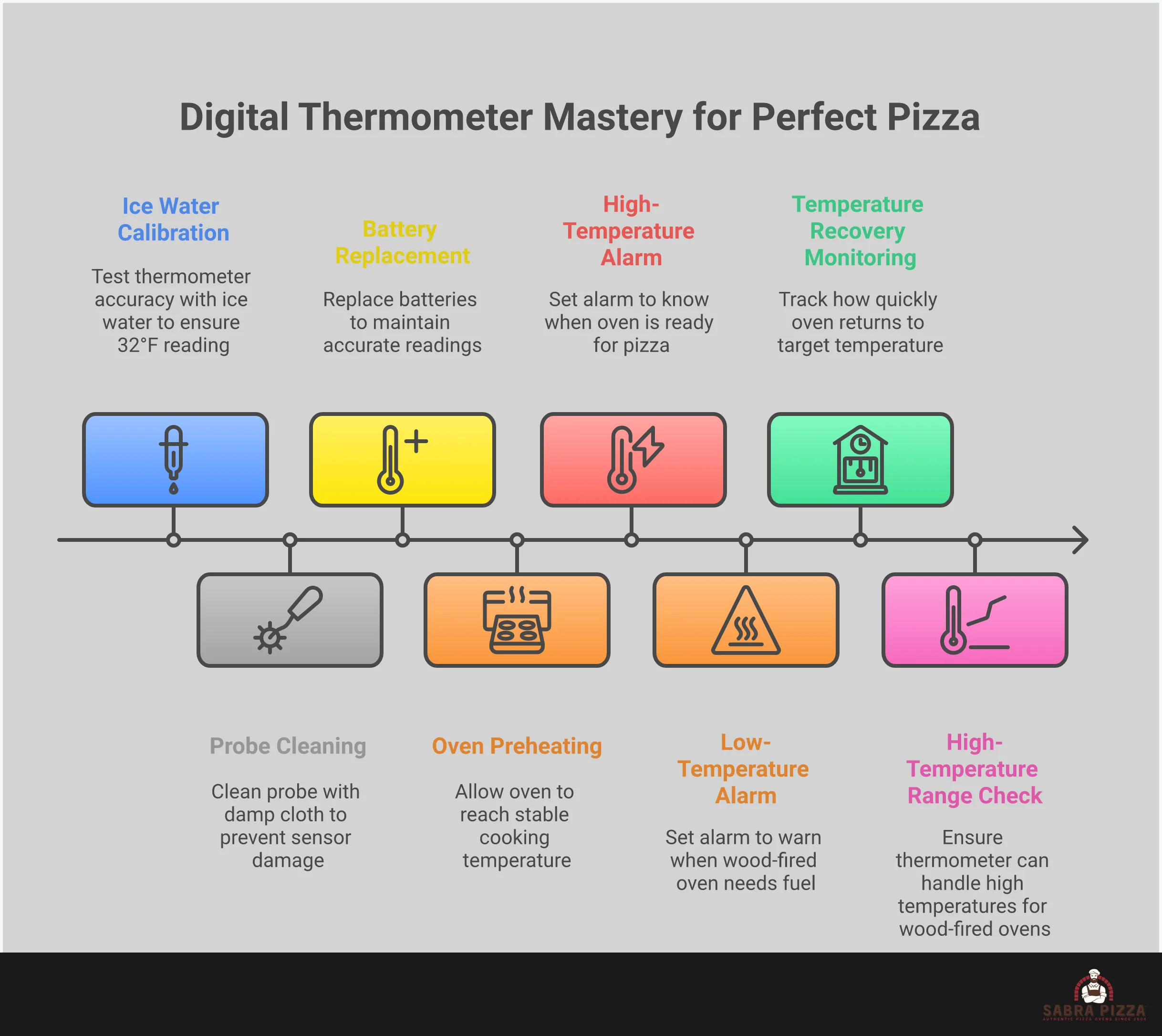
A thermometer is useless if its battery dies halfway through preheating. Check for models with long battery life or rechargeable options. Just as important are the alarm features. A good thermometer will do more than just display the temperature; it will alert you when you’ve reached your target. Look for models with both high and low temperature alarms. A high-temp alarm tells you when the oven is perfectly preheated, while a low-temp alarm can warn you if your fire is dying down and needs more fuel. These simple alerts help you maintain the ideal baking environment with minimal effort.
Digital vs. Analog: Which Thermometer Wins?
When you’re aiming for that perfect, pizzeria-quality crust, temperature isn’t just a detail—it’s everything. While you might have an old-school analog dial thermometer kicking around in a drawer, it simply can’t keep up with the demands of a high-performance pizza oven. For pizza lovers, the debate between digital and analog isn't much of a debate at all. Digital thermometers are the clear winner, and it comes down to a few crucial factors.
Speed and Precision
A great pizza cooks in minutes, and your oven's temperature can fluctuate rapidly. Digital thermometers give you an instant, precise reading, so you know the exact moment your baking stone is ready for launch. Analog thermometers, with their slow-moving needles, can lag significantly, leaving you guessing. Many digital models also track temperature changes over time, giving you a much clearer picture of your oven's performance and helping you achieve consistent results with every bake.
Unbeatable Accuracy
Here’s the hard truth: your oven’s built-in thermostat is probably lying to you. It’s not uncommon for an oven’s actual temperature to be off by 10 to 15 degrees from what the dial says. While some analog thermometers are better than nothing, they can also have an accuracy variance of around 10 degrees. For pizza, that’s a huge margin of error. In contrast, the best digital thermometers are incredibly accurate, often to within a single degree. This level of precision is what separates a good pizza from a truly spectacular one.
Versatility and Modern Features
Beyond just reading the ambient temperature of your oven, many digital thermometers come with probes that offer incredible versatility. You can use them to check the internal temperature of your toppings to ensure they’re perfectly cooked or even monitor your dough’s temperature during proofing. With features like wireless connectivity, timers, and high-temp alarms, digital models are designed for the modern cook who values control and convenience. An analog thermometer just can't offer that kind of multi-functional support.
Top Digital Thermometer Brands to Know
When you start shopping for a digital thermometer, you'll notice a few names pop up again and again. That's for good reason. Certain brands have built a solid reputation for creating accurate, reliable, and user-friendly tools that both professional chefs and home cooks trust. Getting familiar with these top players can help you narrow down your choices and find a thermometer that truly meets your needs. From high-precision instruments designed for the most discerning cooks to budget-friendly workhorses that don't skimp on quality, these are the brands that consistently deliver. Let's look at a few of the most respected names in the game.
ThermoWorks
If precision is your top priority, ThermoWorks is a name you need to know. This brand is famous for its high-quality, professional-grade instruments that are a favorite in restaurant kitchens and among serious home cooks. They are known for their incredible accuracy and reliability, which is exactly what you need when you're aiming for that perfectly crisp pizza crust. Products like the ChefAlarm are consistently praised for their spot-on temperature readings and durable build. While they often come with a higher price tag, the investment pays off in performance and peace of mind.
CDN (Component Design Northwest)
For those who want reliability without a hefty price tag, CDN is a fantastic option. This brand has earned a reputation for making affordable thermometers that are surprisingly accurate and dependable. They prove that you don't have to break the bank to get a tool that helps you monitor your oven temperature effectively. The CDN ProAccurate Oven Thermometer, for example, is often highlighted as a top value pick, offering excellent performance for a fraction of the cost of premium models. It's a great choice for pizza enthusiasts who want quality on a budget.
Taylor Precision Products
Taylor is a classic brand in the world of kitchen gadgets, and their thermometers are a testament to their long-standing reputation for reliability. They offer a wide range of products, from simple dial thermometers to more advanced digital models. What makes Taylor stand out is their ability to deliver fast and accurate readings in a straightforward, no-fuss package. Their Classic Series Large Dial Oven Thermometer is a great example of a budget-friendly option that gets the job done well, making it a popular choice for home cooks who want a dependable tool from a trusted name.
Rubbermaid
You probably know Rubbermaid for its durable food storage containers, and they bring that same commitment to durability and practicality to their kitchen tools. A Rubbermaid digital oven thermometer is a solid, no-nonsense choice for any home cook. These thermometers are designed to be easy to use and built to last, standing up to the high heat of a pizza oven. If you're looking for a reliable and straightforward tool from a brand you already know and trust, Rubbermaid offers a practical solution that will help you keep a close eye on your oven's temperature for countless pizza nights to come.
The 8 Best Digital Thermometers for Your Pizza Oven
Finding the right digital thermometer can feel like searching for a needle in a haystack, but the perfect one for your pizza oven is out there. A great thermometer gives you the confidence to launch your pizza at the exact right moment, ensuring a perfectly cooked crust every time. To make it easier, I’ve rounded up eight of the best digital thermometers that are perfect for any pizza enthusiast, from the weekend warrior to the seasoned pro. Let's find the right one for you.
1. ThermoWorks ChefAlarm
If you’re looking for a thermometer that’s as serious about pizza as you are, the ThermoWorks ChefAlarm is a fantastic choice. It’s known for its incredible durability and pinpoint accuracy, which are non-negotiable when you're working with the high heat of a pizza oven. This is a "leave-in" thermometer, meaning you can place the probe on your pizza stone or inside your oven to monitor the temperature continuously. The build quality is top-notch, designed to withstand the demands of a busy kitchen. As one review from Sizzle and Sear puts it, "the ChefAlarm has an incredibly durable build quality, it's extremely accurate, and it's very user-friendly." It’s a reliable workhorse that delivers consistent readings for that perfect bake.
2. Weber iGrill 2
While it has "grill" in the name, the Weber iGrill 2 is a versatile tool that’s brilliant for pizza ovens, too. This thermometer is all about convenience, connecting via Bluetooth to an app on your smartphone. You can monitor your oven's temperature from up to 150 feet away, which is perfect for when you’re entertaining guests or prepping ingredients inside. The iGrill 2 comes with two probes and has the capacity for four, allowing you to track the temperature of your pizza stone, the ambient dome temperature, and even the internal temp of a thick-crust Sicilian pizza all at once. The app is intuitive, with customizable alarms that let you know the second your oven hits that ideal 750°F.
3. ThermoPro TP20 Wireless Remote Digital Thermometer
The ThermoPro TP20 is a fan favorite for a reason: it offers incredible freedom and reliability without a complicated setup. This thermometer comes with a wireless receiver that lets you move up to 300 feet away from your oven while still keeping a close eye on the temperature. It’s a game-changer for backyard pizza parties. The TP20 includes two probes and a simple, pre-programmed setup for different types of food, though you can easily set your own temperature targets for your pizza stone. The large, backlit LCD screen is easy to read day or night, and the durable probes are designed to handle the intense heat of a wood-fired oven. It’s a straightforward, dependable choice for hands-free temperature monitoring.
4. Inkbird IBT-4XS Bluetooth Wireless Grill Thermometer
For the tech-savvy pizza maker who loves a good value, the Inkbird IBT-4XS is a standout. This thermometer uses Bluetooth to connect to your phone, offering a range of up to 150 feet. What makes it special is its magnetic back and rechargeable battery, which are thoughtful design touches that make it easy to stick to the side of your oven cart and use without worrying about replacements. The app is clean and simple, displaying real-time temperature graphs, which can be helpful for learning your oven's heating patterns. It supports up to four probes, giving you plenty of data to perfect your pizza-making process. It’s a modern, user-friendly thermometer that packs a lot of features for its price.
5. MEATER Plus Wireless Smart Meat Thermometer
The MEATER Plus is the definition of a truly wireless thermometer, and its sleek design is perfect for the modern outdoor kitchen. There are absolutely no wires involved—the single probe communicates directly with your smartphone via Bluetooth. While it’s marketed as a meat thermometer, its ambient temperature sensor makes it a clever tool for pizza ovens. You can place it inside the oven to get a reading of the dome temperature while the other end monitors your food. The app is beautifully designed and guides you through the cooking process, estimating cook times. The MEATER Plus is ideal for anyone who wants a minimalist setup without sacrificing high-tech functionality.
6. FireBoard 2 Drive Wireless Thermometer
If you're a data-driven cook who wants the ultimate in precision and control, the FireBoard 2 Drive is in a league of its own. This is a professional-grade device that connects to the cloud via Wi-Fi, allowing you to monitor your oven's temperature from literally anywhere with an internet connection. It supports up to six external probes, so you can track every variable imaginable. The FireBoard’s real power comes from its ability to chart your entire cook session, giving you valuable insights into your oven’s performance over time. It’s a premium tool for the serious enthusiast who wants to analyze and perfect every aspect of their pizza-making technique. It’s an investment, but its performance and capabilities are unmatched.
7. Taylor Precision Products Digital Probe Thermometer
Sometimes, you just need a simple, reliable tool that gets the job done without any fuss. The Taylor Precision Products Digital Probe Thermometer is exactly that. This is a straightforward, wired probe thermometer that gives you fast and accurate readings. The 4-foot silicone cord allows you to place the probe inside the oven while the display unit sits safely outside. You can program your own target temperature, and an alarm will sound when it’s reached. It’s an affordable, no-frills option that’s perfect as a primary thermometer or as a trusty backup. Taylor is a classic name in kitchen measurement tools, and this device lives up to the brand's reputation for dependability.
8. OXO Good Grips Chef's Precision Digital Thermometer
OXO is known for making thoughtfully designed kitchen tools, and their Chef's Precision Digital Thermometer is no exception. This leave-in probe thermometer is incredibly user-friendly, with a simple dial interface and a large, easy-to-read screen. The probe and cord can withstand temperatures up to 700°F, making it suitable for many pizza ovens, though you'll want to be mindful in ultra-hot wood-fired environments. What sets it apart is its intuitive design—the base twists to become a stand, and the cord wraps neatly for storage. It’s a great all-arounder from a trusted brand, perfect for the home chef who values both function and smart design in their tools.
Common Mistakes to Avoid with Your Digital Thermometer
Getting a great digital thermometer is the first step, but using it correctly is what truly makes the difference between a good pizza and a great one. Even the most advanced tool won't help if it's not used properly. A few common slip-ups can lead to inaccurate readings, which can throw off your entire cooking process. By avoiding these simple mistakes, you can ensure your thermometer is a reliable partner in your quest for the perfect pizza, giving you consistent and delicious results every single time you fire up the oven. Let's look at what to watch out for.
Placing the Probe in the Wrong Spot
Where you place your thermometer probe matters—a lot. An oven’s temperature can vary significantly from one spot to another. Placing the probe too close to the walls, floor, or door can give you a misleading reading. For the most accurate measurement of the ambient heat your pizza will actually cook in, you need to find the sweet spot. As the experts at Serious Eats recommend, you should "place your oven thermometer in the middle of the middle oven rack." If that’s not an option, get it as close to the center as you can without letting it touch any of the oven's interior surfaces, which are often much hotter than the air inside.
Forgetting to Calibrate
Think of calibration as a quick tune-up for your thermometer. Over time and with regular use, even the best digital thermometers can drift from their factory settings, leading to inaccurate readings. Forgetting to calibrate is like trying to bake with a recipe that has the wrong measurements—it just won't turn out right. Making calibration a regular part of your routine ensures you can trust the numbers you see. It’s a simple step that helps maintain precision. In fact, it's a good idea to consider replacing your digital food thermometer every year or two, even with proper care, to guarantee accuracy.
Neglecting the Battery
This one seems obvious, but it’s one of the most common reasons for a thermometer to fail or give a faulty reading. A weak or dying battery can cause the display to dim, the numbers to be incorrect, or the device to shut off right when you need it most. Before you even start preheating your pizza oven, make it a habit to check the battery indicator. It’s a great idea to keep a spare set of the required batteries on hand so a low-power warning doesn’t derail your pizza night. Always check the manufacturer's instructions, as some models require specific batteries that you may have to buy separately.
Mishandling the Probe
The probe and its cable are the workhorses of your digital thermometer, but they aren’t indestructible. The probe is designed to withstand extreme heat, but the base unit—the part with the screen and buttons—is not. A very common mistake is leaving the entire device inside the oven. According to Kitchen Supply's care instructions, you should "not leave the thermometer inside a closed oven; the unit is not heat-resistant." Always position the base unit outside the oven, away from direct heat. Also, avoid kinking the probe’s cable or submerging the connection point in water, as this can damage the internal wiring and lead to inaccurate readings.
How to Keep Your Digital Thermometer Working Perfectly
You’ve found the perfect digital thermometer to pair with your pizza oven—that’s a huge step toward consistently delicious pizza. But like any precision tool, it needs a little TLC to perform at its best. A well-maintained thermometer is an accurate thermometer, and accuracy is everything when you’re aiming for that perfectly crisp crust and bubbly, melted cheese.
Taking just a few minutes for proper care can make a world of difference, extending the life of your device and ensuring you can trust its readings every single time you fire up the oven. It’s not complicated, but it does require a bit of intention. By focusing on three key areas—cleaning and storage, regular calibration, and battery life—you can protect your investment and keep your thermometer in prime condition for years of pizza-making adventures. Think of it as simple maintenance that pays off with every perfect pie.
Proper Cleaning and Storage
Keeping your thermometer clean is crucial for both food safety and the device's longevity. After each use, once the probe has cooled down, wipe it clean. The best approach is to simply "clean the unit with a damp cloth whenever necessary." Avoid harsh chemicals or abrasive scrubbers that could damage the probe's sensor.
Most importantly, remember that the digital housing is not waterproof or heat-resistant. Never submerge the main unit in water or leave it inside a hot oven. When you’re done, loosely coil the probe’s cable to prevent kinks or damage, and store the thermometer in a safe, dry place like a drawer or cabinet where it won’t get knocked around.
How and When to Calibrate
Calibration is just a fancy word for checking your thermometer’s accuracy and adjusting it if needed. An easy way to do this at home is with the ice water test. Just fill a glass with ice and top it with cold water, then insert the probe. After about 30 seconds, it should read 32°F (0°C). If it’s off by more than a degree or two, check your user manual to see if you can recalibrate it.
Even with great care, digital thermometers can lose their precision over time. As a general rule, it’s smart to consider replacing your digital food thermometer every one to two years to ensure you’re always working with the most accurate tool.
Staying on Top of Battery Changes
A weak battery is one of the most common culprits behind inaccurate temperature readings. When the power gets low, your thermometer might give you slow or incorrect numbers before it dies completely. This can be the difference between a perfectly cooked pizza and a disappointing, underdone crust.
Get into the habit of checking the battery level regularly. Most digital thermometers have a low-battery indicator on the display. As soon as you see it, swap in a fresh set of batteries. It’s also a good idea to keep a spare set on hand so you’re never caught with a dead thermometer right when you need it most. This simple step ensures your device is always ready to perform.
What Real Pizza Lovers Say About Their Thermometers
When it comes to perfecting your pizza, sometimes the best advice comes from people who are just as passionate as you are. We’ve spent a lot of time talking with home chefs and pizza pros, and they all agree that a reliable digital thermometer isn't just a nice-to-have gadget—it's a total game-changer.
One of the first things you’ll hear is that your oven’s built-in thermostat can be misleading. Many pizza lovers discover their ovens are off by 50 degrees or more, which can be the difference between a perfectly crisp, leopard-spotted crust and a disappointing, undercooked base. Using a separate, accurate thermometer helps you achieve the cooking precision needed for that perfect bake, every single time. It takes the guesswork out of the equation so you can focus on the fun part.
Beyond just getting an accurate reading, people appreciate thermometers that make the whole process smoother. Features like high and low-temperature alerts are a huge help, letting you know exactly when your oven is ready or if the temperature starts to drop. A large, easy-to-read display and a built-in timer are other features that seasoned pizza makers say they can’t live without. It’s all about having a tool that works with you, not against you.
Of course, there’s always a friendly debate between digital and analog. While many swear by the advanced features of digital models, others still love the simplicity of an old-school dial thermometer. The consensus seems to be that the best oven thermometers are the ones you’ll actually use consistently. Whether you prefer a high-tech gadget or a classic tool, the most important thing is that you trust its reading.
Where to Find the Best Deals on Digital Thermometers
Once you’ve picked out the perfect thermometer, the next step is finding it at a great price. You don’t have to spend a ton to get a reliable tool, but it pays to do a little comparison shopping. To make it easier, here are a few of my go-to places to check for the best deals on quality digital thermometers.
A great place to start your search is Amazon. It’s no surprise that they carry a massive range of digital oven thermometers from dozens of brands, covering every price point imaginable. The sheer volume of customer reviews can be incredibly helpful for making a final decision, and you can often find flash sales or coupons that make a good price even better.
Don’t overlook big-box stores, either. Walmart is a solid option for finding a quality digital oven thermometer without breaking the bank. They often have competitive prices on kitchen essentials, and you might snag a great deal on a model you saw for more elsewhere. It’s a smart stop if you’re looking for value without compromising on necessary features.
If you’re leaning toward a brand known for its precision, going directly to the source can be a good move. Taylor, for example, is a trusted name in kitchen tools. You can browse their dedicated collection of cooking thermometers on their site, and they sometimes run sales that you won’t find at other retailers.
Finally, while you might think of Best Buy for TVs and laptops, their kitchen gadget section is worth a look. They carry a curated selection of oven thermometers, often at low everyday prices. Plus, if you want to see a model in person before buying, you have the option for in-store pickup, which is a nice perk. A little browsing across these sites can save you some money and ensure you get the perfect tool for your pizza-making adventures.
Related Articles
- Best Laser Infrared Thermometer: A Buyer's Guide
- ALFA™ Infrared Laser Pizza Cooking Thermometer [Below MSRP]
Frequently Asked Questions
Why can't I just trust the temperature dial on my pizza oven? Think of your oven's built-in dial as a rough estimate. These thermostats often measure the air temperature in one specific spot, which can be wildly different from the temperature of your cooking deck. It's common for them to be off by 25, 50, or even more degrees. For pizza, which depends on intense, direct heat, knowing the precise temperature of the stone is everything. A separate digital thermometer is the only way to get that true reading.
What's the difference between a "leave-in" probe and an "instant-read" thermometer? A leave-in thermometer has a probe connected by a heat-safe cable to a base unit that stays outside the oven. You use it to monitor the temperature continuously as your oven preheats. An instant-read thermometer, on the other hand, is a handheld device you use for quick spot-checks. For a pizza oven, a leave-in model is essential because it allows you to track the stone's temperature without opening the door and letting heat escape.
Where is the best place to put the thermometer probe inside a pizza oven? For the most accurate and useful reading, you want to measure the temperature of the surface your pizza will actually cook on. Place the tip of the probe directly on the center of your pizza stone or oven deck. This tells you the exact temperature of the cooking surface, which is far more important than the ambient air temperature in the dome.
Do I really need a wireless or Bluetooth model? You don't need one, but they are incredibly convenient. A standard wired thermometer works perfectly well. The main advantage of a wireless model is freedom. It sends temperature updates to your phone or a separate receiver, so you can mingle with guests or prep your next pizza inside without being tied to the oven. It's a feature that many pizza makers find is well worth it for a smoother cooking experience.
How often should I check my thermometer's accuracy? It's a good habit to check your thermometer's accuracy every few months, or anytime you get a reading that seems off. The easiest way is the ice water test: fill a glass with crushed ice and a little water, then insert the probe. It should read 32°F (0°C) within about 30 seconds. If it's off by more than a couple of degrees, it might be time to recalibrate it or consider a replacement.