

There's nothing more frustrating than launching a perfectly topped pizza onto a stone you thought was hot enough, only to end up with a soggy, disappointing crust. The problem isn't your dough or your oven; it's a lack of precise information. Your oven's built-in thermometer tells you the ambient air temperature, but the real key to a great crust is the surface temperature of the cooking deck. A laser infrared thermometer is the simple, affordable solution to this common problem. It gives you an instant, exact reading of your pizza stone, removing all the guesswork. In this article, we'll cover how to choose the right model and use it correctly, ensuring every pizza you make has that perfect, crispy bottom.
Key Takeaways
- Measure the Stone, Not Just the Oven: The secret to a perfect crust is knowing the exact temperature of your cooking surface, which can be hundreds of degrees different from the ambient air. An infrared thermometer is the only tool that gives you this precise surface reading, taking the guesswork out of preheating.
- Invest in Features That Matter for High Heat: When choosing a thermometer, prioritize a wide temperature range that exceeds 900°F, a high distance-to-spot ratio for safe and precise aiming, and adjustable emissivity to get accurate readings on different types of pizza stones and pans.
- Master the Technique for Reliable Readings: To get a true measurement, get close enough to measure only the stone, not the cooler oven walls around it. Always ensure a clear line of sight, free from steam or smoke, as these can block the sensor and give you a false reading.
What's a Laser Infrared Thermometer?
If you've ever wondered how chefs get that perfect, crispy-bottomed pizza crust every single time, the secret isn't magic—it's data. Specifically, it's knowing the exact temperature of the cooking surface. This is where a laser infrared thermometer comes in. Think of it as a temperature gun; you simply point, pull the trigger, and get an instant, accurate reading of a surface's temperature without ever having to touch it.
This handy gadget uses infrared technology to measure the thermal energy radiating from an object, whether it's your pizza stone, a cast-iron skillet, or even your car's engine. The laser you see is just a guide to help you aim precisely. While it’s an absolute game-changer for any pizza oven owner, its usefulness doesn't stop there. A quality infrared thermometer is a versatile tool for grilling, home maintenance, HVAC checks, and countless other tasks where knowing a surface temperature is key. It’s one of those tools you’ll find yourself reaching for more often than you’d expect.
How Do They Actually Work?
It might seem complex, but the principle behind an infrared thermometer is surprisingly straightforward. Every object with a temperature above absolute zero gives off invisible infrared energy, which is essentially heat. The thermometer's lens focuses this energy onto a sensor inside the device, which then converts that energy into an electrical signal. The device processes this signal to display the temperature on the screen.
So, what’s the laser for? It’s purely for aiming. The laser beam shows you exactly where the sensor is taking its reading from. The laser itself isn't measuring anything; it’s just a visual guide to ensure you're measuring the temperature of your pizza stone and not the oven wall next to it. It’s a simple, brilliant system that gives you precise control over your cooking.
Why You Need One for Your Pizza Oven (and More)
For making incredible pizza, the temperature of the oven floor—the deck—is everything. The thermometer built into your oven's dome measures the ambient air temperature, which can be hundreds of degrees different from the stone surface your pizza actually cooks on. A blazing hot deck is what creates that perfect leopard-spotted, crispy crust. An infrared thermometer is the only way to know for sure when your stone is properly preheated and ready for launch.
It’s important to know that this tool measures surface temperature, which makes it different from an instant-read probe thermometer you’d use for checking the internal temperature of a steak. They are two different tools for two different jobs. As many culinary experts will tell you, having both is essential for mastering high-heat cooking, from pizza making to grilling.
Key Features to Look For When Buying
When you start shopping for a laser infrared thermometer, you’ll notice a lot of technical specs on the packaging. It’s easy to get overwhelmed, but you don’t need an engineering degree to figure out what matters. A few key features separate a basic gadget from a reliable culinary tool that will help you get that perfect leopard-spotted crust on your pizza.
Think of it like buying any other important piece of kitchen equipment. You wouldn't buy a chef's knife without considering the blade's material or the handle's grip. The same principle applies here. Understanding what makes a good infrared thermometer will help you choose one that gives you fast, accurate readings every single time. From the temperature range to its durability, paying attention to these details ensures you’re making a smart investment that will serve you well, whether you're checking the floor of your pizza oven or tempering chocolate on your countertop. Let's walk through the five features you should always check before you buy.
Distance-to-Spot Ratio: What Does It Mean?
The distance-to-spot ratio is one of the most important specs, and it’s simpler than it sounds. It tells you how large of an area you’re measuring from a specific distance. For example, a common ratio is 12:1. This means if you stand 12 inches away from your pizza stone, the thermometer is measuring the temperature of a one-inch circle. If you move back to 24 inches, it’s measuring a two-inch circle. A higher ratio, like 30:1, lets you measure a smaller, more precise spot from farther away. For checking the temp of a hot pizza oven, a higher ratio is great because it lets you get a precise reading without putting your hand too close to the heat.
Temperature Range and Accuracy
A pizza oven can reach temperatures well over 900°F, so you need a thermometer that can handle the heat. When you’re shopping, look for a wide temperature range. A good quality infrared thermometer gun should be able to measure from below freezing to over 1,000°F. This versatility means you can use it for everything from checking your freezer to searing a steak. Just as important is accuracy. Look for a model that promises accuracy within 2°F or 1.5%. This precision ensures you’re launching your pizza onto a perfectly heated stone, which is the secret to a crispy, not soggy, bottom crust.
Understanding Emissivity Settings
Emissivity might be the most technical term you’ll encounter, but it’s crucial for accuracy. It refers to how well a surface emits thermal energy. Different materials release heat differently. A dull, dark surface like a pizza stone has high emissivity (close to 1.0), while a shiny stainless steel bowl has low emissivity (closer to 0.1). If your thermometer has a fixed emissivity setting (usually around 0.95), it will be accurate for some surfaces but not others. A model with adjustable emissivity lets you fine-tune the setting to match the material you’re measuring, giving you a much more precise and reliable reading every time.
Response Time and Display Features
When you’re working with a blazing hot oven, speed matters. The response time is how quickly the thermometer displays a temperature reading after you pull the trigger. You’ll want a tool that works almost instantly. Look for a response time of 500 milliseconds (half a second) or less. This allows you to get a quick, accurate reading without having to hold your hand inside a hot oven for too long. A clear, backlit LCD screen is also a must-have. It makes the temperature easy to read in any lighting condition, from a bright, sunny patio to a dimly lit evening cookout.
Built to Last: Durability and Weather Resistance
Your infrared thermometer will likely live in your outdoor kitchen or garage, so it needs to be tough. Look for a model with a sturdy, rugged design that can handle being dropped or bumped. Some of the best infrared thermometers are designed for professional job sites, which means they’re built to withstand dust, debris, and challenging environments—perfect for an outdoor cooking setup. A comfortable, ergonomic grip also makes the tool easier and safer to handle. Investing in a durable thermometer means you’ll have a reliable tool for years, ready for any culinary project you take on.
Top Brands to Trust
When you’re ready to invest in a tool that ensures a perfectly cooked pizza every time, brand reputation is a big deal. You need a thermometer that’s not just accurate out of the box but stays reliable cook after cook. While countless options are available online, a handful of brands consistently deliver on their promises of quality, durability, and precision. These are the names that professionals and serious home chefs turn to again and again for their most important temperature readings. Choosing a trusted brand means you’re getting a tool backed by solid engineering and customer support. It’s the difference between a gadget that gives you a ballpark guess and an instrument that gives you a confident reading.
Think of it this way: you’ve invested in a beautiful, high-performance pizza oven. The final step before launching your pizza is knowing if that stone is at the perfect temperature. A cheap, unreliable thermometer can lead to a soggy bottom or a burnt crust, undoing all your hard work. The right brand gives you the confidence to know the surface is exactly 750°F, not just "hot." Whether you’re looking for a rugged tool that can handle being left outside or a hyper-accurate device for culinary perfection, these brands have built their reputations on performance. Let’s look at the top players in the game so you can find the perfect match for your pizza-making style.
Fluke
If you’re looking for professional-grade precision, Fluke is a name you’ll see everywhere. They are leaders in industrial testing equipment, and that expertise shines through in their consumer products. Fluke’s infrared thermometers are designed to measure temperature from a safe distance, which is perfect for checking the floor of a blazing hot pizza oven without getting too close. Their tools are known for being incredibly accurate and built to withstand tough conditions. For the home chef who wants what the pros use, a Fluke thermometer is a fantastic investment in consistency and safety.
ThermoWorks
ThermoWorks is a superstar in the culinary world, and for good reason. They specialize in temperature tools for cooking, so they understand exactly what chefs and home cooks need. Their infrared temperature guns are designed to give you fast, accurate surface readings, making them ideal for knowing the precise moment your pizza stone is ready to go. Many culinary professionals consider ThermoWorks the gold standard for its reliability and user-friendly design. If your top priority is culinary accuracy for everything from pizza to candy making, this is the brand to check out first.
Klein Tools
For those who value durability above all else, Klein Tools is a name synonymous with toughness. Known for making tools for electricians and other tradespeople, their products are built to last. When it comes to their infrared thermometers, you can expect that same rugged construction. One review noted that for a "hardened and long-lasting" option, the Klein Tools IR1 is a top choice because of its rigid build and dependable performance. If your pizza oven setup is outdoors and you need a tool that can handle a few bumps, Klein Tools offers peace of mind.
Etekcity
You don’t have to break the bank to get a reliable and accurate thermometer. Etekcity has carved out a niche by offering high-quality, affordable tools that are perfect for home use. They are incredibly popular online, with thousands of positive reviews from home cooks who love the blend of performance and value. While they may not have the heavy-duty build of an industrial brand, Etekcity’s thermometers are more than capable of giving you the accurate readings you need for a perfect pizza crust. They are a fantastic starting point for anyone new to using infrared thermometers.
ThermoPro
ThermoPro strikes an excellent balance between advanced features and an accessible price point. They are a favorite among home chefs who want a bit more control without a professional price tag. The ThermoPro TP30, for example, is praised for its accuracy and adjustable emissivity settings. This feature is crucial for getting precise readings on different surfaces, like a cordierite pizza stone versus a steel one. If you’re a data-driven cook who loves to fine-tune your process, ThermoPro gives you the features you need to experiment and perfect your technique.
Comparing the Models: What's the Difference?
When you start shopping for an infrared thermometer, you’ll see a huge range of options, from simple point-and-shoot gadgets to high-tech professional tools. It can be a little overwhelming, but the key is figuring out what you really need. Are you a weekend pizza maker who just needs a quick temperature check, or are you aiming for Neapolitan-style perfection where every degree matters? The main differences between models come down to their build quality, accuracy, and the extra features they offer. Let's break down what separates the basic models from the pro-grade ones so you can find the perfect match for your pizza oven.
Entry-Level vs. Pro-Grade
Entry-level thermometers are perfect if you're just getting started or need a tool for occasional use. They’re affordable, easy to use, and generally get the job done for basic tasks like checking your pizza stone's temperature. User reviews often show that people are perfectly happy with the performance of these more budget-friendly models. However, pro-grade thermometers are built for enthusiasts who demand precision and durability. They typically offer better accuracy, wider temperature ranges, and more robust construction. If you’re serious about your cooking and want a tool that will last for years and give you consistently reliable readings, investing in a professional-grade model is definitely worth it.
Does Price Affect Accuracy?
This is the big question, right? Does spending more actually get you a more accurate thermometer? In most cases, yes. While you don't need to spend a fortune, price often correlates with the quality of the sensors and components inside the device. Higher-priced models tend to provide more consistent and precise readings, especially at the very high temperatures you need for a pizza oven. Some side-by-side comparisons show that cheaper models can sometimes be off by a significant margin, which can be the difference between a perfectly cooked pizza and a burnt one. For peace of mind and repeatable results, investing a bit more in a thermometer known for its accuracy is a smart move.
How Features Vary by Model
Beyond basic temperature readings, features can vary quite a bit. Pro-grade models often have adjustable emissivity, which is crucial for getting accurate readings on different surfaces like a pizza stone versus a cast-iron pan. They also tend to have better distance-to-spot ratios, allowing you to measure from farther away with precision. Durability is another key factor; some tools are known for their rigid construction and can handle the heat of an outdoor kitchen. Other features to look for include a backlit display for evening cookouts, min/max temperature tracking, and a quick response time so you get readings instantly. These details make a big difference in how easy and effective the tool is to use.
How to Get Accurate and Reliable Readings
Owning a great infrared thermometer is one thing; knowing how to use it correctly is another. Just pointing and shooting won't always give you the precise temperature you need for that perfect pizza crust. A few simple techniques can make all the difference between a good reading and a great one. By understanding how distance, your surroundings, and even the surface of your pizza stone affect the measurement, you can ensure your readings are spot-on every single time.
The Importance of Calibration
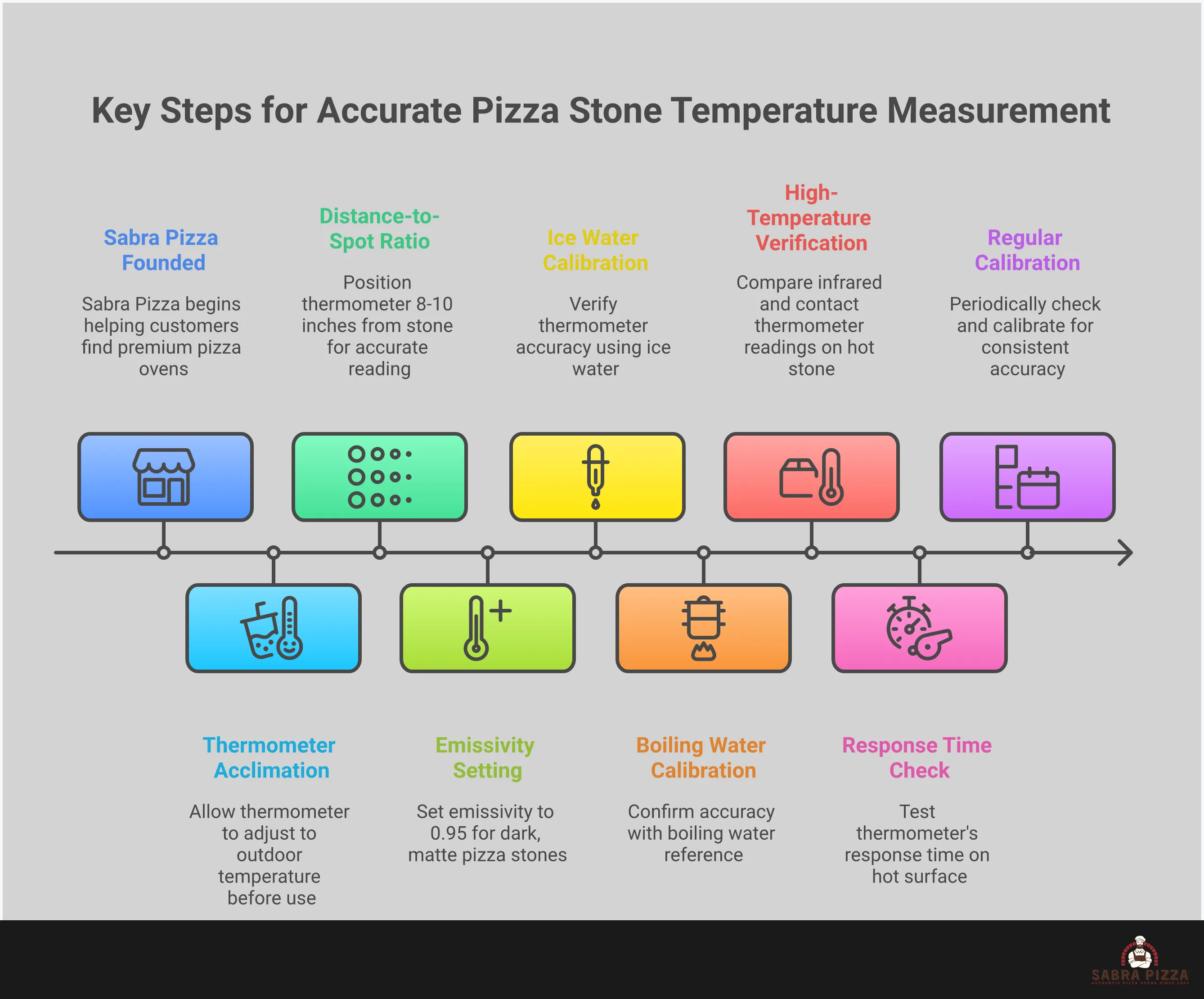
When we talk about "calibration" for an infrared thermometer, it’s mostly about mastering the distance-to-spot ratio. This ratio tells you how large an area the thermometer is measuring from a specific distance. For example, a 12:1 ratio means that from 12 inches away, you're measuring a one-inch circle. One of the most common mistakes is not maintaining the correct distance from your target. If you're too far away, the thermometer will average the temperature of your pizza stone along with the cooler oven walls around it, giving you an inaccurate, lower reading. Always check your device's ratio and get close enough to measure only the surface you care about.
How Your Environment Affects Readings
Your infrared thermometer is a sensitive tool, and its readings can be influenced by the environment around your pizza oven. Things like steam rising from a pizza, heavy smoke from your wood fire, or even dust and flour in the air can interfere with the infrared energy traveling from the stone to the sensor. To get the most reliable measurement, try to get a clear, unobstructed line of sight to the surface. It’s also a good idea to let the thermometer acclimate to the outdoor temperature for a few minutes before you start taking readings, especially if you've just brought it out from an air-conditioned house.
Why Your Pizza Stone's Surface Matters (Emissivity)
Here’s a pro tip that makes a huge difference: adjust the emissivity setting. Emissivity is a measure of a material's ability to emit thermal energy. Different surfaces radiate heat differently. A dark, matte pizza stone has high emissivity (around 0.95), while a shiny stainless steel peel has a very low one. Most thermometers are preset to 0.95, which is perfect for a pizza stone. But if you're measuring a reflective surface, you'll need to adjust the setting to get an accurate read. And remember, the laser is just for aiming. A common misconception about infrared thermometers is that the laser itself takes the temperature—it doesn't. The actual sensor does all the work.
What Are People Saying? A Look at Customer Reviews
One of the best ways to get a feel for a product before you buy it is to see what real users have to say. I’ve spent time digging through customer feedback and expert opinions on laser infrared thermometers to give you the highlights. It’s one thing for a company to list features on a box, but it’s another to see how a tool actually performs when it’s time to fire up the pizza oven.
Looking at reviews helps you understand the practical side of things. Is it easy to use? Does it hold up over time? Is it truly accurate where it counts? By paying attention to what home cooks and professionals are saying, you can spot patterns and find a thermometer that genuinely meets your needs, saving you from potential buyer's remorse. Let’s break down what people are loving and what you should look for when reading reviews.
Top-Rated Picks for Home Chefs
For home chefs, the sweet spot is a thermometer that combines accuracy with simplicity. You don’t want to be fumbling with complicated settings when you’re trying to get the perfect leopard-spotted crust on your pizza. Users consistently praise models that are intuitive right out of the box. In fact, some of the best-rated infrared thermometers see satisfaction rates as high as 88% simply because they deliver precise readings without any fuss.
A common theme you’ll see in reviews from home cooks is a pleasant surprise at the level of performance you can get from an affordable tool. It’s not unusual to find enthusiastic comments like, “I didn’t expect a thermometer this accurate at this price!” This shows you don’t have to break the bank to get a reliable instrument for checking the temperature of your pizza stone, grill, or cast-iron pan.
The Pros' Choice: Professional Recommendations
When you shift your focus to what professionals are saying, the conversation often turns to durability. Chefs and technicians need tools that can handle the heat—literally—and withstand the bumps and drops of a busy environment. They prioritize rugged construction and consistent, long-term reliability over flashy features. This is why you’ll see experts recommend specific models for their build quality.
For example, many pros point to brands like Klein Tools, noting that their rigid construction and reliable performance make them a top choice for anyone who needs a tool that will last. Professionals understand that investing a bit more upfront for a hardened, long-lasting thermometer means they can count on it day in and day out, which is a lesson that applies just as well to a serious home kitchen.
What to Look for in Reviews
Reading reviews is a skill. It’s not just about looking at the star rating; it’s about understanding the context. When you see a negative review, try to figure out if the issue was with the product or with user error. As some experts point out, making common mistakes when using an infrared thermometer can lead to bad results, but that isn’t necessarily the tool’s fault.
One of the biggest red flags is a user trying to measure internal temperature. An infrared thermometer only measures surface heat. If a review complains about accuracy while trying to check if a chicken breast is cooked through, you can probably disregard it. This is a critical point for food safety, as you need a different type of thermometer for that job. Look for reviews from people using the tool for the same purpose you will be—like making pizza—to get the most relevant feedback.
Common Mistakes to Avoid
An infrared thermometer is a game-changer for any pizza maker, but it's only as good as the person using it. Like any precision tool, there’s a right way and a wrong way to handle it. A few common slip-ups can lead to inaccurate readings, which means you might launch your pizza onto a stone that’s not quite hot enough. Let’s walk through the most frequent mistakes so you can get perfect, reliable temperature checks every single time.
Surface Temp vs. Internal Temp: Know the Difference
This is the big one. An infrared thermometer is designed to measure the surface temperature of an object—in our case, the pizza stone. It’s fantastic for knowing exactly when your oven floor is ready for that perfect crust. However, it cannot tell you the internal temperature of your food. Pointing it at a steak or a chicken breast will only tell you how hot the outside is, not if it's cooked through. For that, you’ll need a dedicated probe thermometer to get an accurate internal reading and ensure your food is safe and delicious.
Getting the Distance and Aim Just Right
One of the most common errors is standing too far away from what you're measuring. Every infrared thermometer has a distance-to-spot ratio (D:S), which tells you how large of a surface area it's reading from a certain distance. For example, a 12:1 ratio means that from 12 inches away, you're measuring a one-inch circle. If you back up to 24 inches, you're measuring a two-inch circle. Standing too far away can cause the thermometer to read the temperature of the surrounding oven walls instead of just your stone, giving you an inaccurate average. Check your device’s ratio and get close enough to aim the laser precisely where you want to measure.
Watch Out for Reflective Surfaces and Steam
Infrared thermometers can be tricked by certain conditions. Shiny, reflective surfaces like a stainless steel peel or aluminum foil are a major culprit. They reflect infrared radiation from other sources (like the oven's dome), which can lead to a wildly incorrect reading. Steam and heavy smoke can also get in the way, blocking the sensor’s line of sight to the surface and causing it to read the temperature of the water vapor instead. For the most accurate measurement of your pizza stone, always wait for any smoke or steam to clear before taking your shot.
What's a Realistic Budget for a Good Thermometer?
Figuring out how much to spend on a laser thermometer can feel tricky, but the good news is there are fantastic options at every price point. You don't have to spend a fortune to get accurate readings for your pizza oven, but investing a bit more can unlock features that give you greater precision and control. It really comes down to how you plan to use it. Whether you're a weekend pizza maker or a culinary perfectionist, there’s a thermometer that fits your needs and your budget. Let's break down what you can expect to find in three common price ranges.
Great Finds Under $50
If you're just getting started or want a straightforward, reliable tool without a big price tag, you can find some excellent options for under $50. These models are perfect for checking the temperature of your pizza stone and ensuring your oven is ready to go. A great example is the ThermoPro TP30, a laser thermometer gun that gives you accurate surface readings instantly. It’s designed to be versatile, with settings you can adjust for different surfaces, making it a super practical choice for any home cook. For the price, it’s a hard-working tool that gets the job done right.
The Sweet Spot: $50-$150
For most serious home chefs, the $50 to $150 range is the sweet spot. This is where you start to see more advanced features that offer greater control and consistency. Thermometers in this category often provide more than just a simple point-and-shoot reading. Many, like some of the models from Fluke, offer enhanced settings like adjustable emissivity, data recording, and high/low temperature alarms. These features are incredibly helpful for dialing in your process and repeating that perfect pizza bake every time. If you're passionate about cooking and want a tool that grows with your skills, this is the price range to explore.
Investing in a Pro-Grade Tool: $150+
If you demand the highest level of precision and durability, or perhaps you're using your oven for commercial purposes, investing over $150 in a professional-grade tool is the way to go. These are the thermometers built for rigorous, frequent use. Brands like Fluke have a long-standing reputation for creating some of the most trusted infrared thermometers on the market, relied on by professionals in many industries. While the price is higher, you're paying for superior accuracy, robust construction, and features designed for the most demanding situations. For those who see cooking as both a science and an art, a pro-grade thermometer is an essential piece of equipment.
Where to Find the Best Deals
Once you’ve narrowed down the features you need, the next step is finding the right thermometer at the right price. Getting a good deal doesn’t mean you have to settle for a lower-quality tool. It’s all about shopping smart. With a little strategy, you can find a high-performing, durable infrared thermometer that will be your trusty sidekick for countless pizza nights without breaking the bank. Let’s walk through where to look and when to buy to get the most value for your money.
Shopping Online vs. Directly from Manufacturers
You generally have two main options for buying a new infrared thermometer: from a specialized online retailer or directly from the brand itself. While buying straight from a manufacturer like Fluke can be a good experience, I often find that specialized online retailers offer the best overall value and convenience.
Online stores typically carry multiple brands, which allows you to easily compare features, specs, and prices all in one place. Their websites often have helpful sorting and filtering tools, so you can see what’s in stock, compare distance-to-spot ratios, and read aggregated customer reviews. This makes it much simpler to find the perfect fit for your specific needs, whether you’re checking the temp of your pizza stone or troubleshooting your car’s engine. Plus, these retailers are often more competitive with their pricing and may offer bundle deals or faster shipping options.
When to Look for Sales and Discounts
Timing your purchase can make a big difference. While you can find a good price any time of year if you know where to look, certain periods are prime for sales. Keep an eye out during major holiday shopping events like Black Friday, Cyber Monday, and Father's Day, as tools and culinary gadgets are often heavily discounted.
One of the best ways to stay in the loop is to sign up for the email newsletters of retailers you trust. They’ll send promotions and sale announcements directly to your inbox, so you won’t miss a deal. When you’re browsing online, make use of the website’s features. You can often sort products by price from low to high to quickly see the most budget-friendly options. Also, look for clear sale indicators, like a "was" price next to a lower current price. This transparency helps you know you’re getting a genuine discount on the tool you want.
Ready to Pick the Perfect Thermometer?
Alright, let's pull this all together. You've learned about the features, the brands, and the budget. Now it's time to make a decision. The best thermometer for you is the one that fits how you cook. Before you click "buy," take a moment to think about what you truly need. Will you be using it exclusively for your pizza oven, or will it also see action at the grill or in the kitchen for searing steaks in a cast-iron pan?
To make the final call, circle back to the key features we discussed. Make sure the temperature range covers the high heat of your pizza oven and that the response time is quick enough for your needs. When you're ready to pick the perfect model, you can feel confident you're choosing based on solid information, not just guesswork.
Remember, using your new tool correctly is just as important as buying the right one. It’s a common misconception that the laser itself measures heat—it’s just a guide, so make sure you’re aiming it properly. Maintaining the right distance is also crucial to avoid inaccurate readings. And never forget that an infrared thermometer reads surface temperature only. For checking if your food is cooked through, you’ll still need a probe thermometer to avoid any potential health risks. With these tips in mind, you’re ready to choose a thermometer that will serve you well for many pizza nights to come.
Related Articles
Frequently Asked Questions
My pizza oven already has a thermometer. Why do I need a separate one? That's a great question. The thermometer built into your oven's dome measures the air temperature inside, which can be very different from the temperature of the stone your pizza cooks on. A laser thermometer gives you the exact surface temperature of that stone, which is the key to getting a crispy, perfectly cooked crust instead of a soggy one.
If I can only focus on one feature for making pizza, what should it be? For pizza making, pay close attention to the temperature range. Your oven can get incredibly hot, so you need a thermometer that can accurately read temperatures up to 900°F or more. A tool with a wide range ensures it can handle the heat and give you the precise data you need right before you launch your pizza.
Is it really worth spending over $100 on one of these? You can absolutely get a great thermometer for under $100. However, investing in a pro-grade model often gets you better durability and higher accuracy. If you're a serious cook who values consistent results and wants a rugged tool that will last for years in an outdoor kitchen, the extra investment can be well worth it for the peace of mind.
Can I use this for anything besides my pizza oven? Definitely! That's one of the best things about them. You can use an infrared thermometer to check the surface temperature of a cast-iron skillet before searing a steak, verify your grill grates are hot enough, or even use it for tasks around the house like checking for drafts or finding hot spots in your car's engine. It's a surprisingly versatile tool.
What's the most common mistake that leads to a bad temperature reading? The biggest mistake is standing too far away from your target. Every thermometer has a distance-to-spot ratio, and if you're too far back, it will average the temperature of your hot stone with the cooler oven walls around it. This gives you an inaccurate, lower reading. Get close enough so the laser is aimed squarely on the stone for a true measurement.