

An open chimney flue is essentially a welcome mat for problems you definitely don’t want to deal with. Rainwater can seep into the mortar, causing expensive cracks and deterioration over time. Birds and squirrels see it as a cozy, pre-built home, creating blockages that are both a fire hazard and a carbon monoxide risk. And every time you fire up your wood-fired oven, hot embers can escape and land on your roof. The solution to all these issues is surprisingly simple: a properly installed stainless steel chimney cap. It provides a durable, all-in-one barrier that keeps your chimney safe, clean, and functioning perfectly.
Key Takeaways
- Prioritize Protection for Your Investment: A chimney cap is the single most effective defense for your pizza oven setup. It shields your chimney from rain damage, blocks animals from nesting inside, and contains sparks to prevent accidental fires.
- Invest in Stainless Steel for Longevity: Don't compromise on material. Stainless steel is the best choice because it won't rust, warp under high heat, or require frequent replacement, saving you money and hassle in the long run compared to cheaper alternatives.
- Get the Right Fit and Keep It Clean: A proper fit is non-negotiable, so measure your flue's length and width before you buy. After it's installed, a quick annual inspection to clear away leaves and debris is all you need to ensure it functions perfectly.
What is a Stainless Steel Chimney Cap and Why Do You Need One?
If you’ve invested in a beautiful outdoor pizza oven, you understand the importance of quality components. A stainless steel chimney cap might seem like a small detail, but it’s one of the most critical accessories for protecting your chimney and your home. Think of it as a tiny, hardworking roof for your chimney, tirelessly defending it from the elements, unwanted critters, and potential fire hazards. It’s a simple addition that plays a huge role in the safety, efficiency, and longevity of your entire setup, ensuring you can enjoy perfect pizzas for years to come without worrying about costly repairs or safety issues down the line.
Protect Your Chimney from Rain and Debris
One of the primary jobs of a chimney cap is to block rain and snow. Without a cover, water can flow directly down your chimney flue, seeping into the mortar and bricks. Over time, this moisture can cause significant damage, from cracks and deterioration in the masonry to rust on metal components like the damper. This water damage can be incredibly expensive to repair. A chimney cap also prevents leaves, twigs, and other debris from falling in and creating a blockage. A clogged chimney is not only inefficient but can also become a serious fire hazard. A simple chimney cap is your first line of defense against the elements.
Keep Critters Out
An uncapped chimney looks like a cozy, ready-made home to birds, squirrels, raccoons, and other small animals. While it might seem harmless, nesting animals can cause major problems. Their nests can completely block the flue, preventing smoke from escaping properly and potentially pushing dangerous carbon monoxide back into your space. Nests are also highly flammable, creating a significant fire risk every time you light up your oven. A stainless steel chimney cap, especially one with a mesh screen, creates an impenetrable barrier that keeps these unwanted animals out, giving you peace of mind and ensuring your chimney is always clear and ready for use.
Improve Airflow and Stop Sparks
A well-designed chimney cap does more than just cover the opening; it can actually improve your oven’s performance. It helps prevent downdrafts, which occur when strong winds push air down the chimney. Downdrafts can make it difficult to start a fire and can blow smoke and ash back onto your patio. More importantly, a chimney cap acts as a spark arrestor. The metal mesh screen is designed to contain hot embers and sparks, preventing them from flying out and landing on your roof, deck, or nearby trees. This is a crucial safety feature that significantly reduces the risk of an accidental fire, especially if you have a wood-fired oven.
Why Stainless Steel is the Best Choice for Your Chimney Cap
When you’re investing in a beautiful outdoor kitchen or a premium pizza oven, every component matters. The chimney cap might seem like a small detail, but choosing the right material is crucial for protecting your setup and ensuring it lasts for years. While you’ll find caps made from materials like galvanized steel or copper, stainless steel consistently comes out on top for its blend of strength, resilience, and clean aesthetic. It’s the go-to choice for homeowners who want reliable, long-term performance without constant upkeep. Think of it as the final, essential piece of armor for your chimney, safeguarding it from weather, animals, and the intense heat of your oven. A quality cap prevents water from seeping into the masonry, stops birds and squirrels from building nests inside, and keeps fiery embers from escaping. By choosing stainless steel, you're not just buying a piece of metal; you're investing in the longevity and safety of your entire outdoor cooking area. Let’s break down exactly why stainless steel is the superior option for your chimney.
Unmatched Durability and Longevity
A stainless steel chimney cap is built to last. This isn't a component you'll have to think about replacing every few years. Its robust construction provides what some manufacturers call "uncompromising protection and longevity," standing strong against everything from heavy snow and driving rain to high winds. Unlike other metals that can dent or warp over time, stainless steel maintains its structural integrity through extreme weather cycles. This durability means your chimney flue remains protected season after season, giving you peace of mind and letting you focus on what really matters—enjoying your outdoor living space.
Resists Rust and Corrosion
One of the biggest advantages of stainless steel is its natural resistance to rust and corrosion. Galvanized steel, a common alternative, is simply carbon steel with a zinc coating. Once that coating is scratched or wears away, the steel underneath is exposed to moisture and begins to rust. Stainless steel, on the other hand, contains chromium, which creates a passive, rust-proof layer across the entire surface. This means it’s inherently tougher and resists rust better, even in coastal areas with salty air or regions with heavy rainfall. You get a clean, polished look that won’t be spoiled by ugly orange rust stains running down your chimney.
Handles High Heat with Ease
If you have a wood-fired pizza oven or an outdoor fireplace, your chimney will be exposed to extremely high temperatures. You need a cap that can handle the heat without failing. Stainless steel has a very high melting point and excellent thermal resistance, so it won't warp, discolor, or degrade from the intense heat rising from your flue. It also plays a critical role in safety by helping to contain sparks and embers, preventing them from landing on your roof or nearby flammable materials. This ability to shield against sparks and downdrafts ensures your oven or fireplace operates safely and efficiently.
Enjoy Low-Maintenance Protection
Let’s be honest—nobody wants to add more chores to their list. Stainless steel chimney caps are incredibly low-maintenance. Once properly installed, you can largely forget about it. They don't require painting or special coatings to protect them from the elements. A simple inspection once or twice a year to clear away any leaves or debris is typically all that’s needed to keep it functioning perfectly. Because they are so durable and resistant to damage, you won’t have to deal with the frequent repairs or replacements that can come with less sturdy materials. It’s a simple, effective solution that lets you spend more time cooking and less time on upkeep.
A Smart Long-Term Investment
While the upfront cost of a stainless steel cap is often higher than a galvanized one, it’s a far better investment in the long run. A cheaper cap might save you a little money initially, but it will likely need to be replaced in just a few years due to rust or damage. A single high-quality stainless steel cap can easily outlast three or four galvanized ones. When you factor in the cost of repeat purchases and installations, stainless steel becomes the more economical choice. It's a worthwhile investment that provides superior protection for your chimney structure, preventing costly water damage and animal infestations that can result from a failed cap.
Exploring Chimney Cap Types and Styles
Once you've decided on stainless steel, the next step is to find the right type of cap for your specific chimney. It's not a one-size-fits-all situation, and picking the correct style is about more than just function—it’s about ensuring a perfect fit, long-term structural protection, and complementing your home's overall aesthetic. The right cap will look like it was always meant to be there, while the wrong one can be an eyesore or, worse, fail to provide adequate protection.
Think of this as choosing the right accessory for an outfit; it needs to be both practical and stylish. You’ll need to consider the number of flues your chimney has, how the cap will attach to the structure, and even the shape of the lid. Each of these elements plays a role in how well the cap performs and how it looks from the curb. Making a thoughtful choice here ensures your investment not only keeps rain and critters out but also protects the masonry of your chimney crown from weather-related damage for years to come. Let's walk through the main categories you'll encounter so you can feel confident in your selection.
Caps for Single Flues
If your chimney has just one square or rectangular opening at the top, you'll be looking for a single-flue cap. This is the most common type you'll find, and for good reason—it’s a straightforward and effective solution for standard chimneys. These caps are designed to attach directly to the clay flue tile that extends from your chimney top, usually with simple set screws. Their primary job is to provide a solid barrier against rain, snow, leaves, and twigs. They are also your first line of defense in keeping curious critters like birds and squirrels from turning your chimney into their new home. Think of it as a sturdy little hat that offers essential protection for the most common chimney setup.
Caps for Multiple Flues
What if your chimney has two or more flues, which is common in larger homes or with certain fireplace designs? In this case, putting a small cap on each opening isn't the best approach. Instead, you’ll want to look at multi-flue chimney caps. These are larger, box-like caps designed to cover the entire chimney crown, protecting all the flue openings at once. This method provides more comprehensive coverage, shielding the masonry crown between the flues from water damage while also keeping debris and animals out of every flue. It’s a clean, all-in-one solution that creates a more uniform look and ensures your entire chimney system is secure, no matter how complex its design.
Mounting Styles: Band-Around vs. Skirt
How the cap attaches to your chimney is another key detail. You'll generally see two main mounting styles. The first is the band-around-brick cap, which features an adjustable band that clamps securely around the top layer of bricks for a snug fit. The second option is a skirt-type cap. This style has a "skirt" or base that extends down over the sides of the chimney's concrete top, also known as the crown. This design offers an extra layer of protection for the crown itself, shielding it from rain that can cause cracks over time. Your choice will often depend on the condition of your chimney top; a skirt-type is an excellent choice for older crowns that could use the extra coverage.
Lid Designs: Flat vs. Hip and Ridge
The top of the cap, or the lid, also comes in different designs that affect both function and appearance. The most straightforward option is a flat lid, which is engineered with slight creases to ensure water runs off efficiently instead of pooling on top. For a more stylized look, you can opt for a hip and ridge lid. This design is pitched like the roof of a house, which is excellent for shedding heavy rain and snow and can offer more stability in high winds. Beyond its superior performance, the pitched design adds a more finished, decorative touch to your chimney, enhancing your home's curb appeal. It’s a great way to combine high performance with great style.
Custom and Decorative Options
If standard caps don't quite fit your chimney's unique dimensions or your home's specific aesthetic, don't worry. Many manufacturers offer custom chimney caps to meet your exact needs. You can get a cap built to the precise size of your chimney, ensuring a perfect, secure fit. Beyond sizing, you can explore a wide variety of decorative styles. While we're focusing on durable stainless steel, you can find options with unique finishes or even choose a different material like copper, which develops a beautiful patina over time. This allows you to select a chimney cap that isn't just a utility item but a genuine architectural feature that elevates your home's design.
How to Choose the Right Chimney Cap Size
Finding the perfect chimney cap isn't a one-size-fits-all deal. A cap that’s too small won’t cover the opening properly, and one that’s too large can look awkward and be less secure in high winds. The good news is that getting the right fit is straightforward—it just requires a few careful measurements. Before you start shopping, you’ll need to grab a tape measure and safely access your chimney to measure both the flue and the overall chimney structure.
Think of it like buying a hat; you need to know your head size for a comfortable and effective fit. For your chimney, this means measuring the pipe the smoke comes out of (the flue) and sometimes the top surface of the chimney itself (the crown). Having these numbers handy will make selecting the right cap a breeze. It ensures you get a secure fit that offers maximum protection for your home and your beautiful outdoor kitchen setup.
Measure Your Flue Dimensions
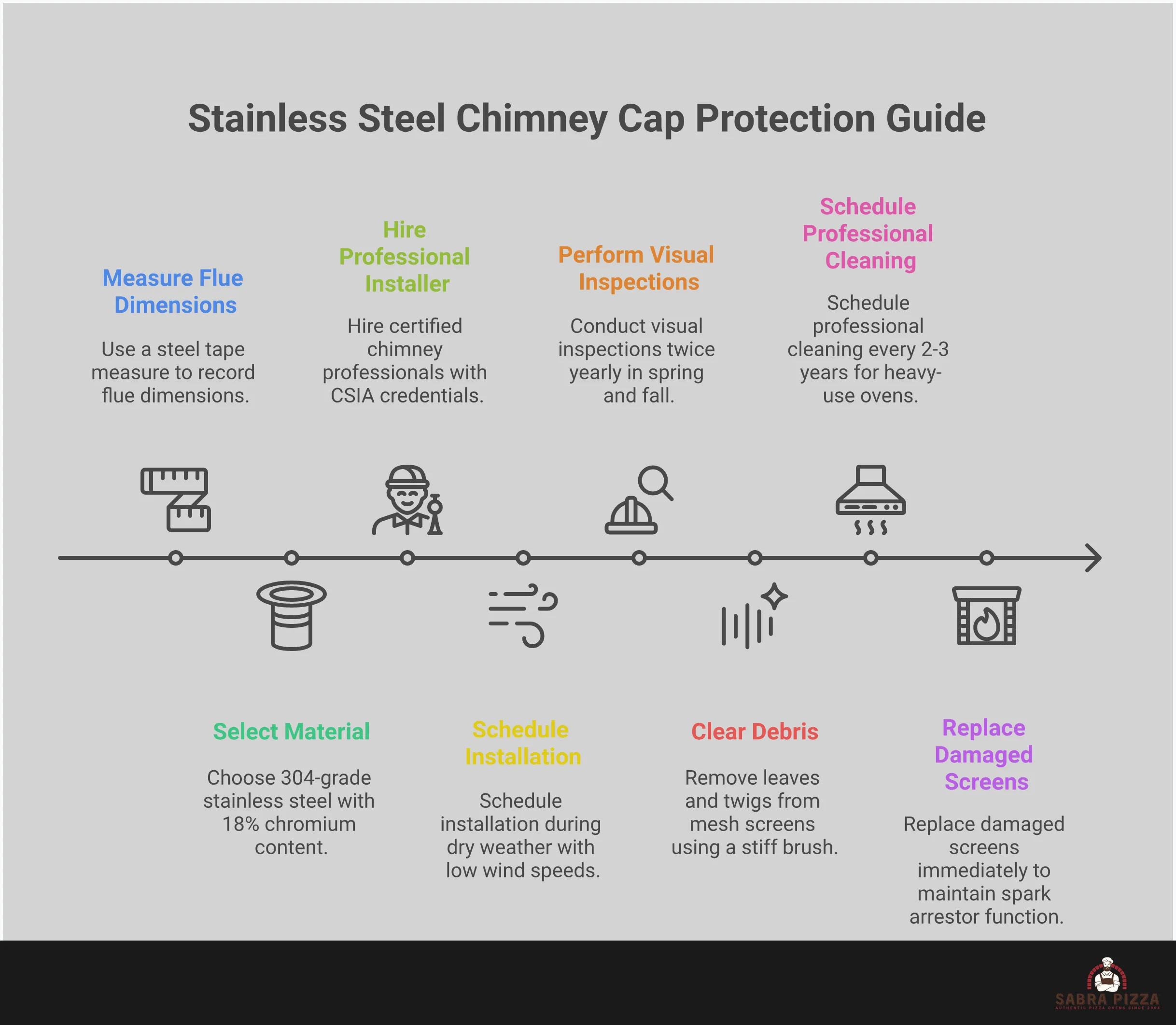
First things first, let's talk about the flue. This is simply the pipe or opening inside your chimney that vents the smoke and gases. You’ll need to measure its dimensions to find a cap that fits snugly. If you have a round flue, measure the diameter straight across the middle. For a square or rectangular flue, measure both the length and the width. Most flues are standard sizes, with round ones typically ranging from 8 to 18 inches wide and rectangular ones from about 9x5 inches to 20x20 inches. Jot these measurements down—they are the most critical piece of information you’ll need.
Determine Your Chimney's Overall Size
Next, take a look at the overall top of your chimney, often called the crown. If you have a single flue that sticks up several inches, your flue measurement might be all you need. However, if you have multiple flues or a flue that is flush with the crown, you’ll need to measure the crown’s dimensions as well. This will help you choose a larger, top-mounted cap that can cover everything. Common stainless steel chimney cap sizes often come in standard dimensions like 13 x 13 or 9 x 13 inches for square shapes and 10 or 12 inches for round ones, making it easy to find one that matches your measurements.
Decide Between DIY and Professional Installation
While you might be tempted to install the chimney cap yourself, this is one of those jobs where calling a professional is almost always the best move. Climbing on a roof can be dangerous, especially without the proper safety equipment and experience. A professional chimney sweep or contractor can install your cap quickly and securely, ensuring it’s done right. The cost for a chimney cap installation can range from $100 to $200 for a simple job on a one-story house. For more complex projects on steeper or taller roofs, the price can go up, but it’s a small investment for your safety and peace of mind.
Understanding the Cost of a Stainless Steel Chimney Cap
Let's talk numbers. Budgeting for a new chimney cap involves more than just the sticker price of the cap itself. You’ll also need to consider the size and style that fit your chimney, plus the cost of professional installation. Breaking down these expenses will help you plan accordingly and see the true value of your investment. Here’s a look at what you can expect to spend on a quality stainless steel chimney cap to protect your home and pizza oven.
Typical Price Ranges by Size and Style
The price of the chimney cap is primarily driven by its size. As you might expect, larger caps require more material and therefore cost more. For a standard stainless steel cap, you can generally expect prices to fall within these ranges:
- Small caps (5–12 inches): $100 to $140
- Medium caps (13–16 inches): $130 to $200
- Large caps (17–20 inches): $180 to $280
Keep in mind that custom shapes or more decorative styles will likely cost more than these standard estimates.
Factoring in Installation Costs
Unless you’re very comfortable working on your roof, hiring a professional for installation is the safest and most effective route. The cost for this service can vary widely depending on your home. For a straightforward job on a single-story house with a low-slope roof, you might pay between $100 and $200. However, if you have a multi-story home or a steep, difficult-to-access roof, the installation cost could range from $500 to $1,500. It's always a good idea to get a few quotes to find a fair price.
What Affects the Final Price?
To summarize, three main things determine your total cost. First is the cap itself—its size, style, and the specific grade of stainless steel used. Second is the size and shape of your chimney's flue, which dictates the cap dimensions you need. Finally, the cost of professional labor, which is influenced by your roof’s height and pitch, will be a significant part of the final bill. Understanding these key elements will help you create an accurate budget for your project.
The Long-Term Value Proposition
While a stainless steel cap might have a higher upfront cost than a galvanized one, it offers significant long-term value. Stainless steel is incredibly durable and stands up to harsh weather without rusting or corroding, meaning you won’t have to worry about replacing it every few years. Think of it as a one-time investment in protecting your chimney from water damage, debris, and animal nests. That durability provides peace of mind and saves you money on potential repairs down the road.
How to Care for Your Stainless Steel Chimney Cap
One of the best things about a stainless steel chimney cap is how little maintenance it requires. It’s built to withstand the elements and the high heat from your pizza oven without rusting or corroding. But low-maintenance doesn’t mean no-maintenance. A little bit of attention a couple of times a year will ensure your chimney cap continues to protect your investment, keeping your outdoor kitchen safe and your pizza oven performing flawlessly for years to come.
Think of it like any other part of your home—a quick check-up can prevent bigger headaches down the road. By creating a simple care routine, you can extend the life of your cap and make sure it’s always ready for your next pizza night. This routine is straightforward and only involves a few key steps: inspecting, cleaning, and knowing when to call for backup. Taking these small, proactive steps ensures your oven vents correctly, keeps unwanted guests out, and maintains the overall safety and integrity of your outdoor cooking setup. It’s a small price to pay for the peace of mind that comes with knowing everything is in perfect working order.
Create a Regular Inspection Routine
Setting aside time for a quick inspection once or twice a year is the most important thing you can do for your chimney cap. A great time to do this is in the spring and fall as you’re preparing your outdoor space for the season ahead. During your check, you’ll want to look for any signs of damage, like dents from falling branches or warping from extreme weather. Also, check to see if the cap is still securely fastened to the flue. A loose cap can be a hazard in high winds. Regular inspections help you spot these small issues before they turn into costly repairs, ensuring your cap remains an effective cover for your chimney flue.
Clean Away Debris
Your chimney cap’s main job is to act as a shield, and over time, it can collect leaves, twigs, and other outdoor debris. It’s also normal for some soot or creosote to build up. Keeping the mesh screen clean is crucial for maintaining proper airflow and preventing a potential fire hazard. A clogged screen can trap sparks and embers. For most light debris, a stiff brush is all you need to clear it away. If you notice a sticky, tar-like buildup, you may need a specialized chimney cleaning product. A clean cap ensures your oven vents properly and continues to protect your chimney from animals and weather.
Know When to Call a Professional
While a basic inspection and cleaning are manageable for many homeowners, safety should always be your top priority. If you’re not comfortable getting on your roof or if the job looks more complicated than you expected, it’s always best to call a professional. A certified chimney sweep has the training and equipment to work safely at heights and can perform a more thorough inspection. You should also call a pro if you notice significant damage to the cap or flue, or if you suspect an animal has managed to build a nest inside. For peace of mind, you can find a certified professional in your area to handle the job safely and correctly.
Check Your Warranty
Before you ever need it, it’s a good idea to know the details of your chimney cap’s warranty. Many premium stainless steel caps, especially those from top manufacturers, come with a lifetime warranty that protects against defects and rust. Keep your proof of purchase and warranty information in a safe place. If you find any issues during your inspection that could be a manufacturing defect, like premature corrosion, knowing your warranty details will make the claims process much smoother. Understanding what’s covered can save you time and money, ensuring you get the full value out of your high-quality chimney cap.
Related Articles
- The Ultimate Pizza Oven Chimney Extension Guide
- The Ultimate Wood Fired Pizza Oven Cover with Chimney Guide
- 5 Best Pizza Oven Covers with Chimney
Frequently Asked Questions
What's the real difference between a stainless steel and a cheaper galvanized steel cap? The main difference comes down to rust resistance and how long the cap will last. A galvanized cap is just regular steel with a thin zinc coating. Once that coating gets scratched or wears away from weather, the steel underneath will start to rust, which can leave ugly stains on your chimney. Stainless steel has chromium mixed into the metal itself, which prevents rust from forming in the first place. It means a stainless steel cap will look great and protect your chimney for much, much longer.
How do I figure out the right size cap for my chimney? Getting the right fit is all about a couple of simple measurements. You'll need to measure the opening the smoke comes out of, which is called the flue. If it's a square or rectangle, measure the length and width. If it's round, just measure the diameter across the middle. For some styles, especially those that cover multiple flues, you might also need to measure the entire top surface of your chimney, called the crown. Having these numbers ready will make it easy to find a cap that fits perfectly.
Will a chimney cap change how my pizza oven works? Yes, but for the better! A properly installed chimney cap actually improves your oven's performance. It helps prevent downdrafts, which is when wind blows smoke back down the chimney and into your cooking space. It also acts as a spark arrestor, keeping hot embers from flying out onto your roof or patio. By keeping rain and debris out, it ensures your flue is always clear, allowing for consistent and reliable airflow every time you fire up the oven.
Is it safe to install a chimney cap myself? While it might seem like a simple task, installing a chimney cap involves getting on your roof, which can be risky without the right safety gear and experience. For your own safety and to ensure the cap is installed securely, I always recommend hiring a professional chimney sweep or contractor. They can get the job done quickly and correctly, giving you peace of mind that your investment is properly protected.
How much upkeep does a stainless steel chimney cap actually need? Honestly, very little. That's one of the best things about them. Plan on doing a quick visual inspection once or twice a year, maybe in the spring and fall. You'll just want to check that it's still secure and clear away any leaves or twigs that might have collected on the mesh screen. This small amount of attention is all it takes to ensure your cap functions perfectly for years.