

If you’ve ever launched a pizza into your outdoor oven only to pull out a sad, soggy-bottomed pie, you know the frustration. The single biggest mistake in high-heat cooking is guesswork. Knowing the air temperature inside your oven isn’t enough; the secret to that perfect, crispy crust lies in the surface temperature of your cooking stone. This is where a digital infrared thermometer becomes the most valuable tool in your arsenal. This simple, handheld device lets you measure the exact temperature of your pizza stone with point-and-shoot ease, ensuring it’s perfectly preheated every single time. This guide will walk you through everything you need to know about these essential gadgets, from key features to the best brands on the market.
Key Takeaways
- Know Your Tool's Job: An infrared thermometer is your secret weapon for checking the surface heat of a pizza stone, which is non-negotiable for a perfect crust. It's not a meat thermometer, so keep your probe handy for checking if your food is cooked through.
- Focus on the Features That Matter: When choosing a thermometer, prioritize a high-temperature range (above 900°F) and a clear, backlit display. If you cook on various surfaces like grills and pans, a model with adjustable emissivity will give you the most accurate readings.
- Use It Like a Pro for Accurate Results: To get a reliable reading, make sure your line of sight is clear of smoke or steam and keep the lens clean. Remember that the laser is just a guide for aiming—never point it at anyone's eyes.
What Is a Digital Infrared Thermometer?
If you’ve ever launched a pizza onto a stone you thought was hot enough, only to end up with a soggy, disappointing crust, you know the frustration. Guesswork in high-heat cooking just doesn’t cut it. This is where a digital infrared (IR) thermometer becomes your best friend. Think of it as a temperature gun for your kitchen. It’s a handheld, non-contact device that lets you measure the surface temperature of anything you point it at, from your pizza stone to a cast-iron skillet.
So, how does it work its magic? An IR thermometer uses a lens to focus the infrared energy—which is just heat—that an object naturally gives off onto a sensor. The device then instantly converts that energy reading into a temperature and displays it on a digital screen. Most models come equipped with a laser pointer, which is a super helpful guide for aiming. It’s important to remember, though, that the laser is just for targeting; it’s the invisible infrared radiation that the sensor is actually measuring. This simple point-and-shoot tool takes all the mystery out of preheating, ensuring your cooking surface is at the perfect temperature every single time.
How Infrared Technology Measures Temperature
It might sound like something out of a sci-fi movie, but the technology behind an infrared thermometer is pretty straightforward. Every object with a temperature above absolute zero emits thermal radiation. The hotter the object, the more radiation it gives off. An IR thermometer is essentially a heat detector. When you aim it at your pizza stone and pull the trigger, its internal lens gathers the infrared energy coming off the stone’s surface.
This collected energy is then funneled to a sensor called a thermopile, which turns the heat into an electrical signal. The device’s internal circuitry processes this signal and converts it into a temperature reading that you see on the screen. The whole process happens in less than a second, giving you an immediate and accurate surface temperature reading without ever having to touch the dangerously hot object.
Non-Contact vs. Contact Thermometers
It’s crucial to understand the difference between a non-contact IR thermometer and a traditional contact thermometer, like a meat probe. An infrared thermometer is designed to measure surface temperature only. It tells you exactly how hot the top of your pizza stone or griddle is, which is vital for getting that perfect sear or crispy crust. It cannot tell you the internal temperature of your food.
A contact thermometer, on the other hand, uses a metal probe to measure the internal temperature of something, like a steak or a loaf of bread. You need both tools in your culinary arsenal for different jobs. Trying to check if your chicken is cooked through with an IR thermometer won’t work, just as you can’t safely check the temperature of a 900°F pizza stone with a meat probe.
Why You Need One for Outdoor Cooking
For anyone serious about outdoor cooking, especially with a high-performance pizza oven, an IR thermometer isn't just a fun gadget—it's a necessity. Achieving the perfect Neapolitan-style pizza requires a deck temperature of around 750°F to 850°F. There’s simply no other safe or accurate way to confirm your oven floor has reached that temperature. Using an IR thermometer removes all the guesswork, so you know the exact moment to launch your pizza for that signature leopard-spotted crust.
Beyond pizza, this tool is incredibly useful for grilling, searing steaks on a plancha, or cooking on a griddle. It helps you find the hot and cool zones on your grill, ensures your pan is ripping hot for the perfect sear, and guarantees consistent results every time you cook. It’s a small investment that pays off with perfectly cooked food.
Key Features to Look For in an Infrared Thermometer
Shopping for an infrared thermometer can feel a bit like you’re gearing up for a science experiment, but it’s simpler than it looks. Once you know what to look for, you can easily pick the right tool for your outdoor kitchen. The goal is to find a thermometer that gives you fast, accurate readings so you can launch your pizza with confidence every single time. From checking the temperature of your pizza stone to making sure your grill is ready for searing, the right features make all the difference.
Think about how you’ll be using it. Are you strictly a pizza maker, or will you be using it for grilling, griddling, and other high-heat cooking? Different models are built for different tasks. We’ll walk through the five most important features to consider: distance-to-spot ratio, emissivity, display and targeting, temperature range, and durability. Understanding these will help you choose a reliable thermometer that becomes an indispensable part of your cooking toolkit, ensuring you get that perfect, crispy crust you’re aiming for.
What Is Distance-to-Spot Ratio?
The distance-to-spot (D:S) ratio tells you how large of an area you’re measuring from a specific distance. Think of it as the thermometer's field of vision. A ratio of 12:1, for example, means that from 12 inches away, the thermometer is measuring the temperature of a one-inch circle. A higher ratio, like 30:1, lets you measure a smaller spot from farther away. For checking the floor of a hot pizza oven, a higher ratio is great because you can get a precise reading on your pizza stone without putting your hand too close to the heat. It ensures you’re measuring the stone and not the surrounding air.
Why Emissivity Settings Matter
Emissivity might sound technical, but it’s just a measure of how well a surface radiates heat as thermal energy. Different materials give off heat differently. A dark, matte pizza stone has high emissivity, while a shiny stainless steel grill grate has low emissivity. A thermometer with a fixed emissivity setting might give you an inaccurate reading on certain surfaces. That’s why you should look for a model with adjustable emissivity, usually ranging from 0.1 to 1.0. This feature lets you calibrate the thermometer to the specific surface you’re measuring, giving you a much more accurate temperature reading every time.
Essential Display and Targeting Features
The best infrared thermometers make it easy to see what you’re doing. A built-in laser pointer is a must-have feature because it shows you exactly where the thermometer is aimed. When you need to know the temperature of a specific spot on your pizza stone, the laser ensures you’re not accidentally measuring the oven wall next to it. Another key feature is a backlit LCD screen. When you’re cooking outdoors in the evening or in low-light conditions, a bright, clear display means you won’t have to squint or grab a flashlight just to see the temperature. These simple features make the tool much more practical and user-friendly.
Temperature Range and Response Time
When you’re working with an outdoor pizza oven that can reach over 900°F, you need a thermometer that can keep up. Always check the device’s temperature range to make sure it can handle the extreme heat of your oven. A wide range is essential for versatility, whether you're searing a steak or baking bread. Just as important is the response time. You want a thermometer that gives you a reading almost instantly—ideally in less than half a second. A quick response time allows you to get a fast, accurate snapshot of the temperature so you can make immediate decisions without losing heat from your oven.
Considering Battery Life and Durability
Your infrared thermometer is a tool that will live in your outdoor kitchen, so it needs to be reliable. Look for models with features that conserve battery, like an automatic shut-off that turns the device off after a period of inactivity. It’s also helpful to choose one that uses common batteries, like AAAs, so you can easily find replacements when needed. Durability is also a factor. While you don’t need a military-grade device, a thermometer with a sturdy casing and a comfortable grip will hold up better to the occasional bump or the general wear and tear of outdoor cooking.
The Best Infrared Thermometer Brands
When you’re ready to find the right infrared thermometer, it helps to know the key players in the market. Some brands specialize in pizza-making tools, while others are known for their professional-grade precision across various industries. Depending on your needs and how you plan to use your thermometer, one of these brands is sure to be the perfect fit for your outdoor kitchen. Let's look at some of the most trusted names out there.
Ooni: For the Pizza Specialist
If you live and breathe pizza, Ooni is a brand that needs no introduction. They designed their Infrared Thermometer with one goal in mind: helping you nail the perfect pizza, every single time. It takes the guesswork out of knowing if your pizza stone is ripping hot and ready for launch. With a clear laser guide for pinpoint accuracy and a wide temperature range from -22°F to 999°F, it’s perfectly calibrated for the high heat of a pizza oven. For anyone who has invested in a quality oven, the Ooni thermometer is an essential tool to ensure consistent, delicious results.
ThermoPro: The All-Around Performer
Maybe you're not just a pizza aficionado—you're the master of the grill, the griddle, and the smoker, too. For the all-around outdoor cook, ThermoPro is a fantastic and versatile choice. Models like the ThermoPro TP30 are true workhorses, built to handle a wide variety of tasks beyond the pizza oven. You can use it to check the surface temperature of a cast-iron skillet, find hot spots on your grill, or even for household tasks like checking HVAC vents. It’s a reliable, multi-purpose tool that delivers accurate readings without a hefty price tag, making it a popular pick for home chefs.
Fluke: Professional-Grade Precision
For those who believe in buying the best and only crying once, Fluke is the gold standard. While often seen in the hands of electricians and HVAC technicians, Fluke infrared thermometers offer unparalleled accuracy and durability that culinary enthusiasts can appreciate. These devices are built for demanding environments, so they can certainly handle the heat of your backyard kitchen. If you value professional-grade precision for everything from cooking to home improvement projects and want a tool that will last a lifetime, investing in a Fluke thermometer is a decision you won’t regret. It’s a serious tool for serious users.
Kizen: A Reliable Alternative
Sometimes you just need a solid, dependable tool that gets the job done without any fuss. Kizen offers exactly that. Their handheld infrared thermometers are a popular and highly-rated alternative to some of the bigger names on the market. The Kizen Infrared Temperature Gun provides quick, accurate surface readings with a simple point-and-shoot design. It’s a great option if you want a dedicated thermometer for your cooking adventures but don’t need the specialized features of a pizza-specific model or the industrial-grade build of a professional one. It’s a practical and effective choice for any home cook.
Our Favorite Budget-Friendly Picks
You don't have to spend a fortune to get an accurate temperature reading. If you're just getting started or want a simple, no-frills device that works, there are some excellent budget-friendly options available. The Digital IR Thermometer from Pulse Grow, for example, offers great functionality for a very low price. While it may lack the advanced features or rugged build of more expensive models, it’s perfectly capable of telling you when your pizza stone is ready. It’s an ideal choice for a backup thermometer or for anyone who wants to try out infrared cooking without a big initial investment.
How Much Should You Expect to Spend?
When you start shopping for an infrared thermometer, you'll find a wide range of prices. The cost generally reflects the device's accuracy, durability, and feature set. You don't necessarily need the most expensive model, but understanding what your money gets you at each level will help you find the perfect tool for your pizza-making goals. Let's break down the typical price points and what you can expect from each.
Entry-Level Models ($15-$50)
Thermometers in this price range are perfect for casual home cooks or anyone just starting their pizza-making journey. These models are straightforward, offering basic point-and-shoot functionality to get a quick surface reading of your pizza stone or steel. While they may lack advanced features like adjustable emissivity, a simple tool like the Digital IR Thermometer from Pulse Grow is more than capable of telling you when your oven is ready to go. For beginners, this is a great way to get comfortable with managing your oven’s temperature without a significant investment.
Mid-Range Options ($50-$150)
This is the sweet spot for most serious home pizza makers. Mid-range thermometers offer a significant step up in accuracy and features that give you greater control. You’ll find things like backlit screens for evening cookouts, adjustable emissivity for more precise readings on different surfaces, and laser targeting. A versatile laser thermometer like the ThermoPro TP30 is a fantastic all-around performer for various cooking tasks. Another reliable choice, the Kizen Infrared Temperature Gun, also provides the quick, accurate readings you need to launch your pizza at the perfect moment.
Professional-Grade Devices ($150+)
For culinary professionals, commercial kitchens, or enthusiasts who demand the highest level of precision, professional-grade devices are the way to go. These thermometers are built for accuracy, speed, and durability in demanding environments. The Fluke infrared thermometer line is a benchmark in this category, known for its exceptional quality and reliability. While prices can range from just over $100 to several thousand for highly specialized equipment, these tools offer superior optics, wider temperature ranges, and rugged construction that can withstand the rigors of a busy kitchen. This is an investment in consistency and performance.
What to Expect at Each Price Point
To sum it up, your budget determines the features and precision you'll get. At the entry-level, expect a simple, lightweight device that handles the basics. Moving into the mid-range introduces essential features for the serious cook, like adjustable settings and the ability to display minimum, maximum, and average temperatures—perfect for tracking your oven's heating cycle. Professional-grade models deliver the highest accuracy, robust build quality, and advanced capabilities for those who need flawless, repeatable results every single time you fire up the oven.
Common Mistakes to Avoid
An infrared thermometer is a game-changer for any outdoor cook, but getting the hang of it involves more than just pointing and shooting. While these tools are incredibly user-friendly, a few common misunderstandings can lead to inaccurate readings and less-than-perfect pizza. Knowing what to watch out for will help you get a precise measurement every single time, ensuring your pizza stone is perfectly preheated for that crispy, delicious crust. Let’s walk through the most frequent slip-ups so you can use your new thermometer like a pro from day one.
Confusing Surface Temp with Internal Temp
This is by far the most common mix-up. An infrared thermometer is designed to read the surface temperature of an object, not its internal core temperature. For making pizza, this is exactly what you want—you need to know if your pizza stone has reached that ideal 750°F. However, it won't tell you if your chicken is cooked through or if your steak is medium-rare. For that, you’ll still need a traditional probe thermometer. Remember, infrared thermometers measure the surface temperature only, so think of it as the perfect tool for checking your cooking surfaces, griddles, and pans.
Ignoring Environmental Factors
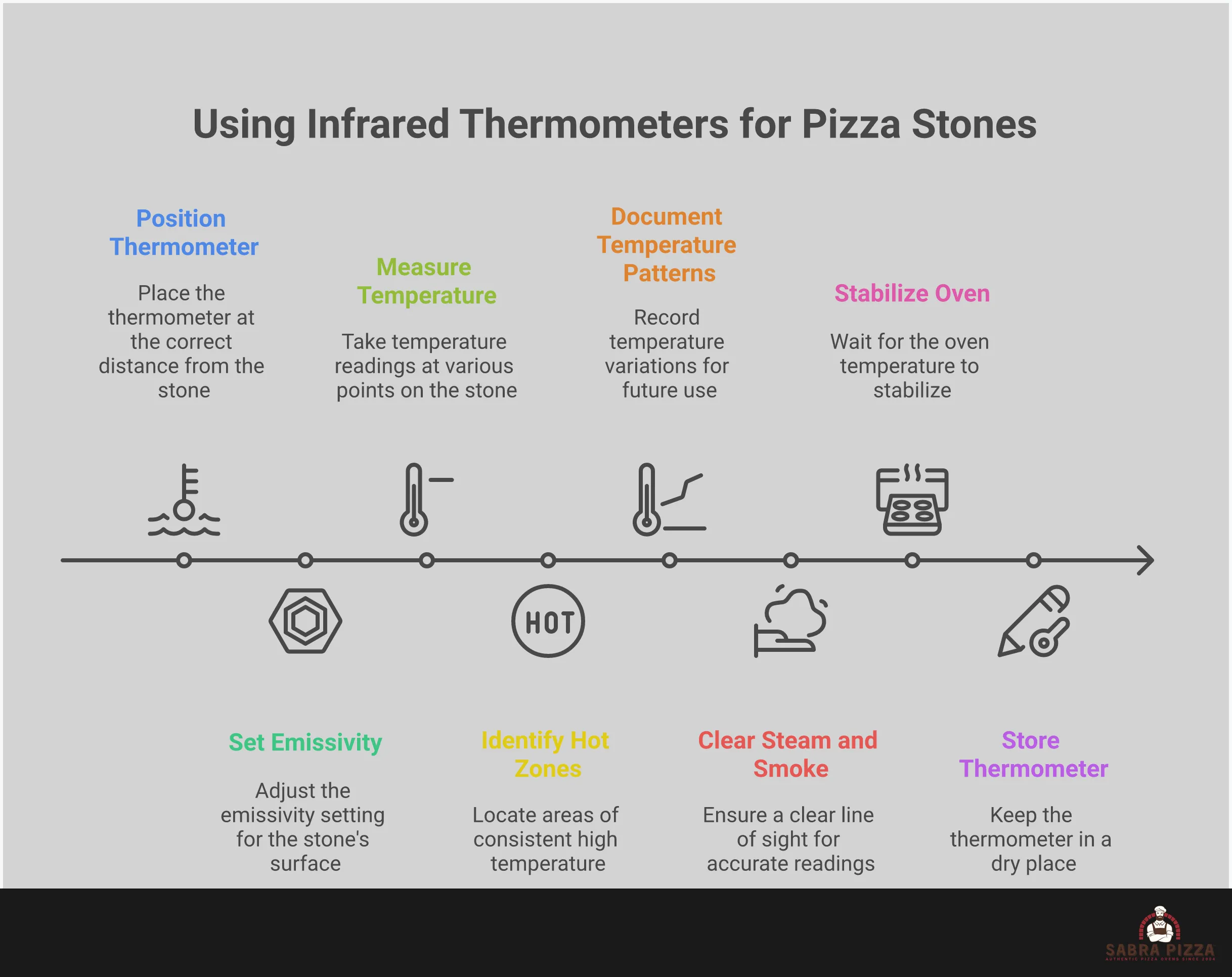
Your infrared thermometer is precise, but it can be fooled by its surroundings. Because the thermometer can't penetrate the surface of an object, things like heavy steam, smoke, dust, or frost can interfere with the reading. For example, if you aim it at a pizza stone right after a burst of steam escapes the oven, you might be measuring the temperature of the water vapor, not the stone itself. To get the most accurate reading, always make sure you have a clear, unobstructed line of sight to the surface you’re measuring. A quick wave of your hand to clear the air can make all the difference.
Skipping Calibration and Maintenance
Just like any precision instrument, your thermometer needs a little care to perform its best. While most quality models come well-calibrated from the factory, it’s good practice to check their accuracy from time to time. An easy way to do this is by measuring a glass of ice water—it should read 32°F (0°C). If the readings seem off, consult your user manual for calibration instructions. Simple maintenance, like keeping the lens clean and free of debris, is also crucial. A smudged or dirty lens can block infrared energy and give you a faulty reading, so a gentle wipe with a soft cloth is all it takes to keep it in top shape.
Forgetting Laser Safety
The laser pointer on your thermometer is a fantastic guide, but it’s important to remember what it’s actually for. It’s easy to assume the laser is doing the measuring, but its real function is to help aim the thermometer at your target. The actual temperature sensor is an infrared lens, and the laser simply shows you the center of the area being measured. This also comes with a simple but critical safety rule: never point the laser at your own eyes or anyone else’s. Treat it with the same care you would any other laser pointer to ensure everyone stays safe while you’re cooking.
How to Choose the Right Thermometer for You
With so many options on the market, picking the right infrared thermometer can feel a bit overwhelming. But it really comes down to understanding your own needs as a cook. By thinking through how you'll use it and which features truly matter, you can find the perfect tool without overspending. Let's walk through how to match a thermometer to your specific cooking style so you can feel confident in your choice.
Match the Features to Your Cooking Style
Think about what you cook most often. If you're a dedicated pizza maker, your main goal is to get a fast, accurate reading of your pizza stone. An infrared thermometer is perfect for this because its sensor collects the heat energy radiating from the stone's surface to give you a precise temperature. Features like laser guidance are incredibly helpful for pinpointing the exact spot you want to measure. Some models even have color-coded backlights or alarms to tell you when you've hit the ideal temperature. Knowing your stone's temperature is the secret to a perfectly cooked pizza crust every time, so a tool designed for that task is a fantastic investment for any pizza enthusiast.
Don't Pay for Features You Don't Need
It’s easy to get drawn in by high-tech features, but you don't always need the most advanced model. Consider the distance-to-spot ratio, for example. A higher ratio like 30:1 means you can measure a small spot from farther away. This is great for industrial settings, but for your backyard oven, a standard 12:1 ratio is usually more than enough. The same goes for adjustable emissivity, which helps get accurate readings on different surfaces. If you’re only measuring your pizza stone, a fixed-emissivity thermometer will work just fine. But if you plan to temp various surfaces, from a shiny grill grate to a dull cast iron pan, then an adjustable model is worth it.
Making the Final Call
To make your final decision, ask yourself a few key questions. Will you only be measuring surface temperatures for pizza and grilling, or do you also need a probe for internal temperatures? Are you cooking in a wide range of temperatures, or do you just need to know when your oven hits 750°F? Accuracy is non-negotiable—a reliable thermometer with a small error margin is essential for consistent results. Ultimately, the best thermometer for you is one that fits your budget and has the specific features you'll actually use. For those who need the highest level of precision for a variety of tasks, exploring professional-grade infrared thermometers can provide that extra peace of mind in the kitchen.
Related Articles
Frequently Asked Questions
Can I use an infrared thermometer to check if my steak is cooked? An infrared thermometer is the perfect tool for measuring the surface of your cooking stone or pan, but it can't tell you the internal temperature of food. It only reads the heat radiating from the very top layer of whatever you point it at. To know if your steak is medium-rare, you'll still need a traditional probe thermometer that you can insert into the thickest part of the meat.
Why does my IR thermometer show a different temperature than my pizza oven's built-in gauge? This is a great question because it highlights two different, but equally important, measurements. Your oven's built-in thermometer typically measures the ambient air temperature inside the dome. Your infrared thermometer, however, measures the direct, radiant heat of the cooking surface itself. For a perfect pizza crust, you need the stone to be incredibly hot, and the only way to know its exact temperature is with an IR thermometer.
Do I really need a model with adjustable emissivity? If you plan to use your thermometer exclusively for your pizza stone, a model with a fixed emissivity setting will work just fine since you're always measuring the same type of material. However, if you want a more versatile tool for measuring different surfaces around your outdoor kitchen—like a shiny stainless steel grill grate or a cast iron skillet—then a model with adjustable emissivity is definitely worth it for getting the most accurate readings.
How do I know I'm measuring the right spot inside my hot oven? The laser pointer is your best friend here. It shows you the center of the area the thermometer's sensor is reading. The key is to aim for the spot where you plan to launch your pizza. Pay attention to your thermometer's distance-to-spot ratio, which tells you how large an area you're measuring from a certain distance. You want to be close enough to measure just the stone, not the surrounding oven walls.
Is it worth spending a lot more on a professional-grade thermometer? For most home pizza makers, a quality mid-range thermometer is the sweet spot. It will provide the accuracy and essential features you need to get consistent, delicious results. Professional-grade models are built for extreme durability and precision, which is excellent but often more than necessary for backyard cooking. You'll find the biggest and most useful jump in quality when moving from an entry-level model to a solid mid-range one.