

The oven you choose is the soul of your pizza. It’s what gives a Neapolitan crust its signature char and a New York slice its perfect fold. The fuel source—whether the smoky kiss of a wood fire, the steady heat of gas, or the precision of an electric deck—directly shapes the flavor, texture, and identity of your final product. Before you can select the right commercial pizza oven, you have to be clear on your culinary vision. This guide will help you connect your menu to the machine, ensuring you invest in an oven that not only meets your production needs but also perfects your unique recipe.
Key Takeaways
- Define Your Pizza Before You Shop: Your menu is your guide. The style of pizza you want to create—from fast-cooking Neapolitan to slow-baking deep-dish—will determine the right fuel source, temperature range, and oven size for your kitchen.
- Think Total Cost of Ownership, Not Just Price: The initial purchase price is only one part of the equation. Factor in long-term energy use, maintenance needs, and durability to make a smart financial investment that supports your business for years.
- Master Your Kitchen Logistics Early: Measure your space, plan your workflow, and understand the ventilation and utility requirements before you buy. A great oven is useless if it doesn't fit your kitchen's layout and comply with local safety codes.
What Makes a Pizza Oven "Commercial"?
So, what’s the real story behind the "commercial" label on a pizza oven? It’s not just about being big enough to feed a crowd. A true commercial oven is engineered from the ground up for the intense demands of a professional kitchen. Think of it as the difference between a family sedan and a race car—while both can get you from point A to point B, one is specifically designed for sustained high performance, durability, and safety under pressure. This means it's built to run for hours on end, day after day, without a drop in performance.
Commercial ovens use superior materials, advanced heating technology, and must pass rigorous third-party testing to prove they’re safe and reliable enough for business use. They are designed to be the workhorse of a kitchen, delivering consistent, predictable results every single time the door opens. Whether you’re opening a pizzeria or are a serious home chef demanding professional-grade equipment for your backyard, understanding these distinctions is the first step to making a smart investment that pays off in quality and longevity.
Key Differences Between Commercial and Home Ovens
The most obvious differences between commercial and home pizza ovens come down to their construction, cost, and cooking technology. Commercial ovens are truly "built tough for long-term use," with thicker insulation, heavier-gauge steel, and more robust components designed to handle constant operation. This level of engineering comes at a price; while a quality home oven might cost a few thousand dollars, commercial pizza ovens can range from $10,000 to over $50,000. This investment gets you superior heat retention, faster recovery times, and specialized cooking mechanisms, like the stone or ceramic decks found in deck ovens, which ensure perfectly crisp crusts, pizza after pizza.
Understanding Essential Certifications and Standards
If an oven is truly commercial-grade, it will have the certifications to prove it. These aren't just fancy stickers; they are your assurance of safety and quality. You’ll often see labels like UL and NSF. A UL certification means the oven has been tested by UL Solutions and "meet[s] important safety standards," covering electrical and fire safety. This is a critical requirement for any business. The NSF certification, on the other hand, focuses on public health. Ovens with an NSF mark are designed with food-safe materials and are easy to clean and sanitize, ensuring they "meet important safety and health rules for businesses." For any commercial application, these certifications are non-negotiable.
A Breakdown of Commercial Pizza Oven Types
Choosing the right commercial pizza oven is one of the biggest decisions you'll make for your business. The fuel source you select will define your pizza's flavor profile, your kitchen's workflow, and even your operating costs. There’s no single "best" type—the right oven is the one that fits your menu, space, and production goals. From the classic allure of a wood-fired flame to the high-tech precision of an electric model, let's walk through the main options to help you find the perfect match for your culinary vision.
Wood-Fired Ovens
If you're chasing that authentic, rustic flavor, nothing beats a wood-fired oven. These ovens are the heart of traditional pizza-making, reaching incredibly high temperatures that cook a Neapolitan-style pizza in as little as 90 seconds. The burning wood imparts a distinct smoky flavor and a beautiful, blistered crust that’s impossible to replicate with other methods. Many brands offer versatile commercial wood-fired pizza ovens as either fully assembled units or modular kits, giving you more flexibility for installation. While they require more skill to operate, the incredible results are well worth the effort for any artisan pizzeria.
Gas Ovens
Gas ovens are the workhorses of the commercial pizza world, prized for their convenience, consistency, and efficiency. They heat up quickly and maintain a steady temperature with the simple turn of a dial, making them incredibly easy for staff of all skill levels to use. This reliability is crucial during a busy dinner rush. You get a consistent bake every time without the learning curve of managing a live fire. Many modern commercial pizza ovens are designed for restaurants and offer the flexibility to use both gas and wood, blending convenience with authentic flavor.
Electric Ovens
Don’t let old myths fool you—electric ovens are a powerful and popular choice in modern commercial kitchens. They offer unparalleled precision in temperature control, allowing you to fine-tune your cooking environment for perfect results every time. They are also a fantastic solution for locations with restrictions on gas or wood fuel. Contrary to what some believe, modern electric pizza ovens are often just as powerful as their gas-fueled counterparts, and sometimes even more so. Their efficiency and ease of use make them a versatile option for any style of pizza, from deep-dish to thin-crust.
Conveyor Ovens
When speed and high volume are your top priorities, a conveyor oven is the answer. These machines use a conveyor belt to move pizzas through a heated chamber at a constant speed, ensuring every pizza is cooked exactly the same way. While some purists worry that conveyor pizza ovens might compromise quality, they are engineered for maximum consistency and output. You’ll find them in high-volume pizzerias, quick-service restaurants, and large-scale food operations where producing hundreds of identical pizzas per hour is the main goal. They are simple to operate and deliver predictable results every time.
Hybrid Ovens
Why choose one fuel source when you can have the best of both worlds? Hybrid ovens, also known as dual-fuel ovens, combine the convenience of gas with the authentic flavor of wood. You can use the gas burner to quickly bring the oven to temperature and maintain it effortlessly, then add wood to impart that classic smoky aroma and taste. This flexibility allows you to have precise control while still creating an artisanal product. While a commercial electric oven is often praised for its precision, a hybrid model gives you the ultimate freedom to adapt your cooking style to fit your menu.
Choosing Your Oven: Features That Matter Most
Once you have a general idea of the oven type that fits your vision, it's time to zoom in on the specifics. The details of an oven's design and construction are what separate a good investment from a future headache. Paying close attention to these features will ensure you get a reliable, high-performing oven that serves you well for years. From cooking capacity to safety and ventilation, let's walk through the key elements that truly matter.
Finding the Right Size and Cooking Capacity
The first question to ask is: how many pizzas do you need to make, and how fast? Your oven's size and capacity should directly reflect your business goals. Think about your peak hours. An oven that's too small will create bottlenecks and frustrated customers, while one that's too large can be inefficient to heat and take up valuable kitchen space. Consider not just the number of pizzas it can hold at once, but also the preheating and recovery time between bakes. Your menu, available space, and projected sales volume are all critical pieces of the puzzle when you choose a pizza oven for your space.
Temperature Control and Heat Retention
Consistency is the secret to a perfect pizza. An oven that maintains a stable, high temperature is essential for achieving that crispy-chewy crust and perfectly melted cheese, pie after pie. Look for ovens built with superior insulation and high-quality refractory materials that excel at heat retention. This not only ensures consistent cooking results but also makes the oven more energy-efficient. While some fuel types, like electric, can offer more precise temperature adjustments, a well-designed wood or gas oven with excellent heat retention can be just as reliable. The goal is an oven that gets hot and stays hot, without wild temperature swings.
Factoring in Energy Use and Operating Costs
Your pizza oven is a long-term investment, and its purchase price is only part of the total cost. It's easy to overlook ongoing expenses, but energy consumption can significantly impact your bottom line. When comparing models, look for information on energy efficiency. An oven with better insulation and modern burner technology might have a higher upfront cost but can save you hundreds or even thousands of dollars in utility bills over its lifespan. Ignoring the long-term operating costs is a common misstep, so be sure to factor fuel or electricity usage into your budget from the start.
Built to Last: Materials and Durability
A commercial pizza oven works hard, so it needs to be built tough. The quality of materials directly affects an oven's performance and longevity. Look for high-grade stainless steel for the exterior, which resists corrosion and is easy to clean. For the cooking chamber, pay close attention to the floor, or deck. High-quality refractory stones are essential for absorbing and radiating heat evenly. When inspecting an oven, always check the stones for any cracks or deep grooves, as these can affect cooking performance and may be costly to replace. Investing in a well-built oven from a reputable brand like Alfa Forni means you're investing in durability.
Critical Safety Features
In a busy kitchen, safety is paramount. A quality commercial oven will have several built-in safety features, such as well-insulated doors and handles to prevent burns, reliable temperature gauges, and automatic shut-off mechanisms. Ensure any oven you consider is certified by relevant safety standards organizations. Beyond the oven itself, safe operation is key. Proper training for your staff on how to load and unload the oven correctly is crucial. Overloading the oven or placing items too close to the heat source can obstruct airflow, creating hot spots and potential fire hazards, so always follow the manufacturer's operational guidelines.
Planning for Ventilation
Proper ventilation is a non-negotiable aspect of installing a commercial pizza oven. It's essential for removing smoke, heat, and grease-laden vapors from your kitchen, ensuring a safe and comfortable working environment for your staff. The type of ventilation you need will depend on your oven's fuel source—wood-fired ovens, for example, have specific chimney and flue requirements. Always check your local health and fire codes to understand the exact requirements for your establishment. Failing to plan for ventilation can lead to costly renovations and delays in opening, so make it a priority early in your kitchen planning process.
Top Commercial Pizza Oven Brands to Consider
Once you know what type of oven you need, it’s time to explore the brands that bring these incredible machines to life. The right brand for you will align with your budget, cooking style, and business goals. Some are known for their artisanal, old-world craftsmanship, while others are famous for being modern workhorses. Let's look at a few of the most respected names in the commercial pizza oven space.
Alfa Forni
When it comes to blending authentic Italian tradition with modern innovation, Alfa Forni is in a class of its own. For over 40 years, this family-owned company has been crafting high-performance ovens just outside of Rome. Known for their patented Forninox™ technology, Alfa ovens heat up incredibly fast and offer exceptional heat retention, all while being surprisingly efficient. They are true statement pieces, combining sleek, beautiful design with the power to produce perfect Neapolitan-style pizzas in minutes. For businesses that want to deliver an unparalleled culinary experience with an oven that looks as good as it cooks, Alfa Forni is the definitive choice.
Forno Bravo
Forno Bravo is a major player in the commercial wood-fired oven market, offering a fantastic range of options for restaurants and mobile caterers. They provide both fully assembled ovens and modular oven kits, giving you flexibility depending on your installation needs. Many of their ovens are dual-fuel, capable of running on either wood or gas, which is perfect for adapting to different cooking demands. A key selling point is that their commercial ovens are UL certified, ensuring they meet rigorous safety standards required for commercial kitchens. This focus on safety and versatility makes Forno Bravo a trusted name for businesses across the country.
Ilfornino
If you're looking for a powerful, ready-to-go solution, Ilfornino is a brand worth your attention. They specialize in pre-built commercial pizza ovens designed for the demands of a busy restaurant. Their ovens are also dual-fuel, giving chefs the choice between the classic flavor of wood and the consistent control of gas. Critically, Ilfornino’s commercial models are certified by UL and NSF, which means they satisfy the strict safety and public health standards required for commercial food service operations. This makes the approval and installation process much smoother for new or renovating restaurants that need to get up and running quickly.
Baker's Pride
Baker's Pride has earned its reputation as a creator of reliable, high-volume deck ovens. These are the workhorses you’ll find in countless pizzerias across the United States, known for their durability and consistent baking results. While they may not have the rustic appeal of a wood-fired dome, their gas and electric deck ovens provide precise temperature control, which is essential for churning out perfect New York-style or pan pizzas one after another. If your business model is built on consistency, high output, and an American-style pizza menu, a Baker’s Pride oven is an incredibly solid and dependable investment that will serve you well for years.
WebstaurantStore
While not a manufacturer itself, WebstaurantStore is a massive online distributor that offers a huge variety of commercial pizza ovens from many different brands. With over 500 models available, it’s a useful resource for comparing a wide range of styles and price points in one place. They are known for fast shipping and wholesale pricing, which can be a major advantage for businesses on a tight timeline or budget. If you need to explore a broad spectrum of options, from countertop electric models to large conveyor ovens, this is a good place to start your research and see what’s available on the market.
What's the Budget? A Look at Commercial Oven Costs
Figuring out your budget is one of the first, and most important, steps in buying a commercial pizza oven. Think of it less as a purchase and more as an investment in the heart of your kitchen. The final price tag can vary quite a bit, influenced by everything from the fuel type and size to the brand name and materials. Whether you're just starting out or upgrading your current setup, there's an oven that fits your financial plan. Understanding the different price tiers will help you make a confident decision that pays off with every pizza you bake. Let's break down what you can expect to spend and what you get for your money at each level.
Entry-Level Pricing
When you're just getting started, an entry-level commercial oven provides a reliable foundation for your business. These ovens typically range from $10,000 to $50,000. Don't let the term "entry-level" fool you; these are serious machines built for commercial demands. Investing in a quality oven from the start ensures you can produce consistent, delicious pizzas while you build your customer base. This price range includes dependable models from reputable brands that will set you up for success without requiring the highest initial investment.
Mid-Range Options
For many pizzerias, the sweet spot is in the mid-range, where you get an excellent balance of performance and price. Ovens in this category often fall between $7,000 and $24,000. Here, you’ll find models with enhanced features, greater durability, and better heat retention. These commercial brick ovens are a popular choice for established businesses looking to upgrade their equipment or for new ventures that want to start with a higher-performance machine. This investment can lead to greater efficiency and consistency as your production volume grows.
Premium Investments
If your goal is to create truly exceptional, artisan-style pizzas, a premium oven is a worthy investment. While the initial cost is higher, a top-of-the-line oven, particularly a traditional wood-burning model, can become a centerpiece of your kitchen and a major selling point. The unparalleled quality of the pizzas you produce can lead to glowing reviews, word-of-mouth marketing, and increased revenue. This is more than just an oven; it's a commitment to craft that your customers will taste and appreciate.
What Influences the Final Price?
Several key factors determine the final cost of your commercial pizza oven. The type of oven is the biggest variable; the price will differ depending on whether you choose wood-fired, gas, electric, or a hybrid model. The right choice often depends on the specific pizza styles you plan to offer. Other major factors include the oven's size, cooking capacity, brand reputation, and materials. Don't forget to consider long-term operating costs, as energy efficiency can impact your overall investment. Doing thorough research upfront helps you avoid common mistakes, like choosing an oven that doesn't fit your menu or space.
Finding the Perfect Size for Your Business
Choosing the right size for your commercial pizza oven is one of the most critical decisions you'll make for your business. It’s about much more than just finding a unit that fits into a designated spot in your kitchen. The perfect oven is the engine of your pizzeria; it dictates your production capacity, influences your service speed, and directly impacts the quality and consistency of every pizza you sell. Get this choice right, and you’ll have a reliable workhorse that supports your team during the busiest rushes and helps you build a reputation for excellence.
Making the wrong choice can create significant operational headaches. An oven that’s too small will inevitably become a bottleneck, leading to longer ticket times, frustrated staff, and unhappy customers who might not return. On the other hand, an oversized oven is an unnecessary expense, both in its initial purchase price and its daily energy consumption. It takes up valuable real estate in your kitchen that could be used for prep space or other equipment. Finding that "just right" fit requires a strategic look at your menu, your space, and your sales projections. Let’s break down the three key areas to consider to find the ideal oven for your business.
Calculate Your Pizza Output Needs
Before you even look at a single oven model, you need to do some math. The most important question to answer is: How many pizzas do you need to produce during your peak hour? Think about your busiest Friday night rush. Your oven must be able to handle that volume without breaking a sweat. Consider the type of pizza you plan to serve, as cook times vary dramatically. A Neapolitan pizza might cook in 90 seconds, while a thick-crust pie takes much longer. This difference will fundamentally change your output potential. Mapping out your menu and estimating your hourly sales will help you determine the right oven size to meet demand effectively and keep orders moving.
Consider Your Kitchen's Space and Layout
Now it’s time to grab a tape measure. It’s easy to fall in love with a big, beautiful oven, but it’s useless if it doesn’t fit. Carefully measure your available space, but don’t forget to account for the necessary clearance on all sides for safety and proper ventilation—this is non-negotiable. Beyond just the physical fit, think about your kitchen’s workflow. Imagine your team during a busy service. Where will the dough be prepped? How will pizzas move from the prep line to the oven and then to the pass? A well-placed oven is central to this kitchen choreography and can optimize efficiency for your entire team, making service smoother and safer.
Match Oven Capacity to Your Sales Volume
Finding the perfect balance between your oven's capacity and your actual sales volume is key to long-term success. As we mentioned, an oven that’s too small will cap your revenue and create a stressful work environment. But it’s also important not to overcompensate. An oven that’s too large for your needs is an inefficient use of capital and energy. You’ll pay more upfront and more on your monthly utility bills for capacity you aren’t using. Trying to push a small oven beyond its limits by overloading it is also a recipe for disaster, leading to unevenly cooked pizzas and inconsistent quality. By accurately forecasting your sales, you can invest in an oven that perfectly matches your business needs from day one.
Common Mistakes to Avoid When Buying Your Oven
A commercial pizza oven is a serious investment, and the last thing you want is buyer's remorse. It's easy to get caught up in the excitement of a shiny new oven, but a few common missteps can lead to major headaches down the road. Taking a moment to think through your purchase from all angles will ensure you get an oven that serves your business well for years to come. Let's walk through some of the most frequent mistakes so you can sidestep them completely.
Forgetting Your Menu's Needs
This sounds obvious, but it happens all the time. You find an oven that looks great and fits the budget, but you forget to ask the most important question: can it make your pizza? The crispy, thin-crust Roman-style pizza you’ve perfected requires a different cooking environment than a deep-dish Chicago pie. A classic Neapolitan pizza, for example, needs blistering temperatures over 900°F that only certain ovens can achieve. Before you even start browsing, map out your menu. Your oven should be a tool that perfects your product, not one that forces you to change it.
Ignoring Space and Installation Requirements
That beautiful brick oven might look perfect online, but will it fit through your kitchen door? It’s crucial to measure your space—and the path to that space—before you click "buy." Think about workflow, too. You need enough room around the oven for your team to operate safely and efficiently. Beyond physical size, consider the utilities. Does the oven need a specific gas line, a 240-volt outlet, or a sophisticated ventilation system? Planning for proper ventilation isn't just a suggestion; it's often a requirement for safety and local health codes. Make a checklist of your site’s specs before you fall in love with an oven that won’t work.
Underestimating Long-Term Costs
The sticker price is just the beginning of your oven's total cost. A less expensive model might seem like a great deal upfront, but it could cost you more in the long run if it’s not energy efficient. Poorly insulated ovens burn through fuel and can drive up your monthly utility bills. You should also factor in maintenance and potential repair costs. High-quality ovens from brands like Alfa Forni are built with superior materials that retain heat better and stand up to the demands of a commercial kitchen, saving you money and stress over time. Think of it as an investment in your business's operational health.
Skipping the Research Phase
In the rush to get your kitchen up and running, it can be tempting to make a quick decision on a major piece of equipment. Please don't. This is one of the most critical purchases you'll make. Take the time to read reviews from other restaurant owners, watch demonstration videos, and compare the specs of different models. Understand the pros and cons of various fuel types and materials. If you feel overwhelmed, that's what experts are for. A reputable dealer can walk you through the options that best fit your menu, space, and budget. Doing your homework now will save you from a costly mistake later.
A Guide to Installation and Maintenance
A commercial pizza oven is the heart of your operation and a significant investment. Just like any high-performance machine, it needs proper setup and consistent care to deliver amazing results for years to come. Think of maintenance not as a chore, but as the secret ingredient to flawless, delicious pizza every single time. By establishing a routine for installation and upkeep from day one, you protect your oven, ensure safety, and guarantee it runs at peak efficiency. This simple commitment to care will pay off with every pizza you slide out of the oven.
Why Professional Installation Is Key
While it might be tempting to handle the setup yourself, professional installation is non-negotiable for a commercial pizza oven. This isn't your standard kitchen appliance. Proper setup is critical for both safety and performance. A professional ensures your oven is connected correctly, has adequate ventilation, and complies with all local fire and safety codes. This step minimizes risks and helps you avoid potential issues down the road. More importantly, an expert installation guarantees your oven operates at maximum efficiency from the start, giving you perfect heat distribution and control for a superior final product.
Your Daily Cleaning and Upkeep Checklist
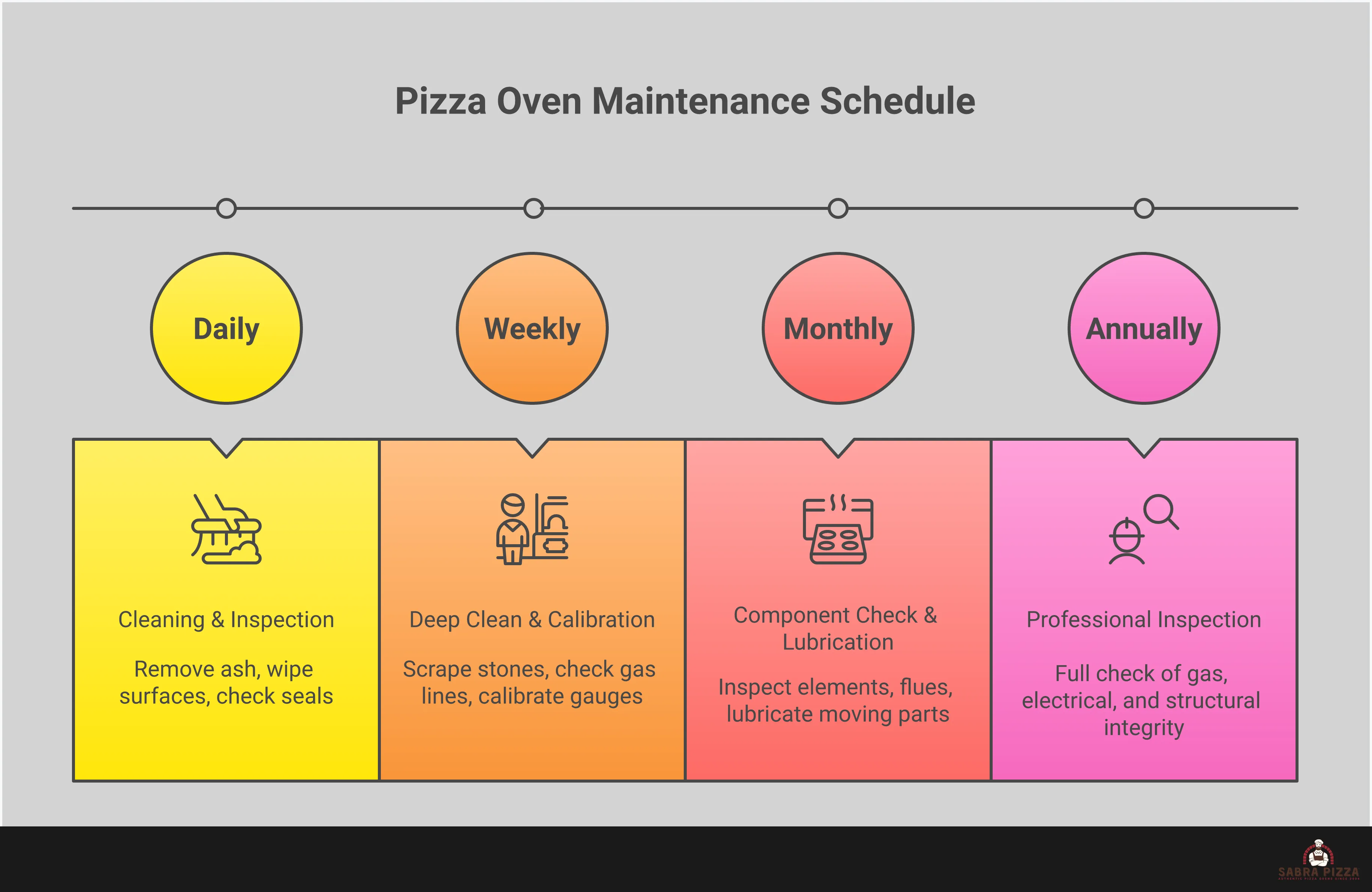
Keeping your oven in top shape starts with a simple daily routine. At the end of each day, take a few minutes to sweep out any ash and food debris from the cooking floor. This prevents buildup that can affect the taste of your pizzas and create smoke. Once the oven is cool, wipe down the exterior surfaces to keep it looking pristine. On a weekly basis, plan for a slightly deeper clean. This is a good time to inspect the oven door and its seals to make sure you aren't losing precious heat, which can lead to longer cooking times and higher energy bills.
Long-Term Care for Peak Performance
Beyond daily cleaning, a little long-term care will dramatically extend the life of your oven. Make it a habit to regularly inspect the key components. For wood-fired ovens, check the dome and hearth for any cracks. For gas or electric models, look over the heating elements for signs of warping or discoloration, which could signal a future problem. Having the right pizza oven accessories and tools, like a sturdy copper brush for the deck and a heat-resistant scraper, makes this process much easier. A small amount of preventative maintenance ensures your oven remains a reliable workhorse for your business or backyard kitchen.
Where to Buy Your Commercial Pizza Oven
Once you’ve narrowed down the type and features you need, the next big question is where to make your purchase. This decision can impact everything from the price you pay to the support you receive down the line. Let’s walk through the key factors to consider so you can buy with confidence.
Authorized Dealers vs. Buying Direct
Going straight to the manufacturer might seem like the most direct route, but you could miss out on a crucial resource: specialized expertise. Think of authorized dealers as your personal oven consultants. They carry multiple brands and have a deep understanding of how different models perform in real-world settings. A great dealer will ask about your menu, volume, and space before ever recommending a product, helping you avoid the common mistake of buying an oven that isn’t right for your specific needs. They act as your advocate, ensuring you get the perfect fit for your business, not just the one a single brand wants to sell.
Finding Promotions and Financing Options
A commercial pizza oven is a significant investment, but there are ways to make it more manageable. Authorized dealers often have access to exclusive promotions, holiday sales, or bundle deals that aren't advertised elsewhere. It’s always worth asking what current offers are available. Furthermore, many retailers provide excellent financing options to help you spread out the cost. This allows you to get the high-quality oven you need now without a massive upfront cash outlay, freeing up capital for other essential parts of your business. Look for simple application processes and clear terms that fit your budget.
What to Look for in a Warranty and Service Plan
Your relationship with the seller shouldn’t end once the oven is delivered. A strong warranty is your safety net, protecting your investment against defects and unexpected issues. Before you buy, read the fine print. Understand what’s covered, the duration of the coverage, and what actions on your part are required to keep it valid. To maintain the oven's performance, you must follow all guidelines for cleaning and service. Beyond the standard warranty, ask about service plans. Having a reliable, expert team to call for maintenance or repairs provides invaluable peace of mind for years to come.
Related Articles
- The Best Patio Pizza Oven: A Buyer's Guide
- Outdoor Pizza Ovens for Sale: A Buyer's Guide
- A Guide to Buy a Stainless Steel Pizza Oven Online
- Freestanding Wood Fired Pizza Oven: A Buyer's Guide
- What's the Best Outdoor Pizza Oven?
Frequently Asked Questions
Can I put a commercial pizza oven in my backyard? Absolutely. Many serious home chefs opt for commercial-grade ovens to get professional results. The key is to treat the installation with the same seriousness as a restaurant would. You'll need to ensure you have adequate space, proper ventilation, and a stable, non-combustible surface. It's also wise to check local regulations, as some areas may have specific rules for this type of equipment in a residential setting.
What's the most important factor when choosing between wood, gas, or electric? The most important factor is what you value most in your cooking process. If your goal is authentic, smoky flavor and you enjoy the hands-on craft of managing a fire, a wood-fired oven is your best bet. If you need foolproof consistency, fast heat-up times, and ease of use for a busy team, a gas oven is a reliable workhorse. For ultimate temperature precision or if you have ventilation restrictions, a modern electric oven offers incredible control and power.
How can I be sure an oven is truly commercial-grade? Look for the certifications. A legitimate commercial oven will have labels like UL and NSF on it. The UL certification tells you it has passed strict fire and electrical safety tests, which is essential for any business. The NSF mark means it's designed with food-safe materials and is easy to properly clean and sanitize. These aren't just suggestions; they are your proof of quality and safety.
Is professional installation really necessary? Yes, it's a non-negotiable part of the investment. A commercial oven is a complex piece of equipment that requires proper connection to fuel lines and sophisticated ventilation systems. A professional installer ensures everything is set up according to safety codes, which protects your property, your staff, and your customers. It also guarantees the oven will perform efficiently and correctly from day one.
With so many brands, how do I pick the right one for me? Instead of looking for the "best" brand, focus on the best brand for your specific needs. A brand like Alfa Forni is perfect if you value high-performance technology and beautiful Italian design. If your business is all about high-volume and consistency for American-style pizza, a workhorse deck oven from a brand like Baker's Pride might be a better fit. Start with your menu, your budget, and your kitchen's workflow, and then find the brand that aligns with those goals.